
High Income, Low Stability: Why Earning More Isn’t Fixing Your Financial Stress
You did what everyone said to do.
You studied.
You worked harder.
You negotiated your salary.
You increased your income.
And yet…
You still feel financially unstable.
You’re earning more than you ever have before — maybe even six figures — but the anxiety hasn’t disappeared. The stress is still there. The sense of fragility hasn’t gone away.
If you’ve ever thought:
Why am I broke making good money?
Why does a six figure salary still feel tight?
Why am I living paycheck to paycheck at this income level?
You are not alone.
And you are not irresponsible.
The truth is this: Income and stability are not the same thing.
And until you understand the difference, earning more will not fix the underlying stress.
The Illusion: “When I Make More, Everything Will Be Fine”
We’re conditioned to believe financial problems are income problems.
Struggling? Earn more.
Stressed? Earn more.
In debt? Earn more.
While increasing income can absolutely help, it does not automatically create structure, emotional regulation, or financial clarity.
Income is fuel.
Stability is architecture.
Without architecture, more fuel just burns faster.
Why High Income Financial Stress Is So Common
Many high earners experience what’s rarely discussed openly: high income financial stress.
Here’s why.
1. Income Growth Often Outpaces Financial Skills
When your income increases rapidly, your financial systems may not evolve with it.
If you never learned:
Cash flow management
Tax planning
Investment allocation
Risk assessment
Long-term planning
More income simply increases the scale of misalignment.
The behavior remains the same — only the numbers get bigger.
2. Lifestyle Inflation Is Subtle — and Powerful
Lifestyle inflation doesn’t feel reckless.
It feels deserved.
You upgrade your apartment.
You finance a nicer car.
You travel more comfortably.
You dine differently.
You move into higher social circles.
None of these choices are inherently wrong.
The problem is unconscious escalation.
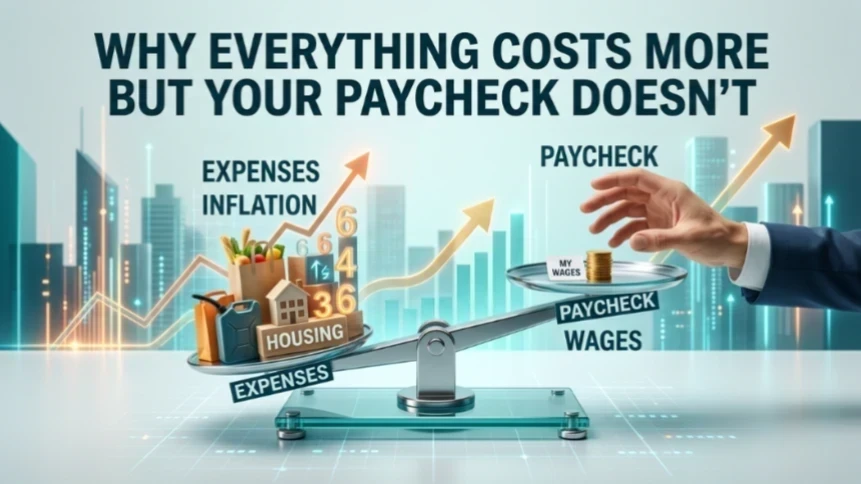
Expenses expand to match income.
Savings stay flat.
Financial pressure quietly increases.
The higher your lifestyle baseline, the more income required to sustain it.
That creates fragility.
Six Figures and Still Living Paycheck to Paycheck
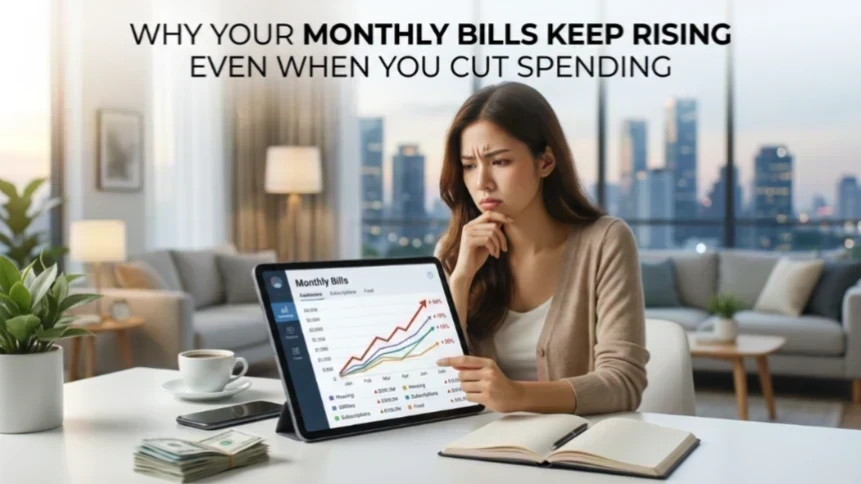
It shocks people to learn that many individuals earning $100,000+ per year report living paycheck to paycheck.
This happens because:
Fixed expenses are too high relative to income
Debt obligations absorb cash flow
Irregular expenses aren’t planned
Savings are not automated
Taxes are underestimated
Social pressure increases spending
A six figure salary can disappear quickly when structure is missing.
Stability is not about income size.
It’s about income allocation.
Income vs. Structure: The Critical Difference
Let’s break this down clearly.
Income
The amount of money you earn.
Structure
How that money is:
Distributed
Automated
Protected
Invested
Buffered
Two people earning the same income can have completely different stability levels.
One has:
3 months emergency savings
Automated investments
Controlled fixed costs
No high-interest debt
Clear tax strategy
The other has:
High lifestyle obligations
Minimal savings
Credit card balances
Irregular cash flow
Emotional spending
Same income.
Different stability.
Structure determines resilience.
The Emotional Trap of “More”
There’s also a psychological component.
When you earn more, expectations rise — both internally and externally.
You may feel:
Pressure to maintain a certain image
Fear of losing status
Responsibility to financially support others
Increased comparison to peers
Anxiety about sustaining performance
Higher income can increase psychological load.
Instead of feeling secure, you feel exposed.
More to maintain.
More to lose.
More to manage.
Without internal grounding, more income amplifies stress.
Why “Why Am I Broke Making Good Money?” Is the Wrong Question
The real question isn’t why you’re broke.
It’s:
Where is my cash flow structurally misaligned?
Common misalignments include:
Fixed expenses exceeding 50–60% of take-home pay
Lack of sinking funds for irregular expenses
No emergency buffer
Over-reliance on monthly income continuity
Lifestyle built around peak income rather than average income
When income drops temporarily — bonus delay, freelance dip, commission fluctuation — instability appears instantly.
That’s not an income problem.
That’s a resilience problem.
The Hidden Risk of High Fixed Costs
High earners often commit to:
Expensive mortgages
Luxury car payments
Private school tuition
Premium subscriptions
High-end social commitments
When fixed costs are high, flexibility disappears.
Flexibility is the true marker of financial stability.
The lower your mandatory monthly obligations relative to income, the higher your resilience.
Stability Is About Margin
Margin is the gap between what you earn and what you must spend.
High income without margin equals stress.
Moderate income with strong margin equals stability.
Margin creates:
Breathing room
Investment capacity
Psychological calm
Flexibility during setbacks
Without margin, even high earners feel trapped.
How to Create Stability — Independent of Income
You don’t need to earn less.
You need to structure better.
Here’s how.
1. Audit Fixed Costs First
List all mandatory monthly obligations.
Housing, car, insurance, subscriptions, minimum debt payments.
Ask:
If my income dropped 20% tomorrow, could I sustain this?
If the answer is no, your structure is fragile.
2. Build a Real Emergency Fund
Not symbolic savings.
Not $1,000 “just in case.”
Aim for:
3–6 months of essential expenses
Kept in liquid, accessible accounts
Emergency funds reduce income dependency stress.
They create psychological security.
3. Automate Investments Before Lifestyle Expansion
When income increases:
Automate:
Retirement contributions
Brokerage investments
High-yield savings
Before upgrading lifestyle.
Lifestyle inflation should follow structure — not precede it.
4. Create Sinking Funds for Irregular Expenses
High earners often underestimate:
Annual insurance premiums
Travel
Gifts
Car maintenance
Medical costs
When these aren’t pre-planned, they feel like emergencies.
Sinking funds convert chaos into predictability.
5. Separate Identity From Income
You are not your salary.
When identity fuses with income:
Risk feels threatening
Career changes feel terrifying
Market downturns feel personal
Investment volatility feels destabilizing
Detach identity from earnings.
Income is a tool — not self-worth.
The Freedom of Lower Pressure
Ironically, many people feel calmer after restructuring — even if they don’t increase income further.
Why?
Because structure reduces uncertainty.
Financial stress often stems from unpredictability, not insufficiency.
When you know:
Your essentials are covered
Your savings are automated
Your investments are consistent
Your risk is managed
The emotional charge around money decreases.
High Income Is a Privilege — But Not Immunity
Earning well provides opportunity.
But it does not automatically provide:
Discipline
Financial literacy
Emotional regulation
Strategic allocation
Tax awareness
Those must be built intentionally.
Without them, income becomes a moving target.
You earn more.
You spend more.
You worry more.
And the cycle continues.
What Real Financial Stability Feels Like
It feels like:
Not panicking over minor expenses
Not depending entirely on next month’s paycheck
Not feeling trapped by fixed costs
Not obsessing over maintaining status
Not fearing temporary income fluctuations
Stability feels quiet.
It’s not flashy.
It’s controlled margin and intentional structure.
The Hard Truth
If earning more hasn’t reduced your stress, the problem is not your ambition.
It’s your architecture.
More income without systems creates expansion.
More income with systems creates stability.
You don’t need to chase another raise to feel secure.
You need to:
Lower fragility
Increase margin
Automate growth
Reduce fixed obligations
Build buffers
Income creates opportunity.
Structure creates peace.
And peace — not income — is the real goal.
If this article resonated with you, take a moment to reflect on your own relationship with money.
Awareness is often the first real step toward financial clarity.
For more insights on money psychology, financial decision-making, and long-term well-being, explore our latest articles and continue building a healthier, more intentional approach to your finances.
Why Money Guilt Is More Common Than You Think
How Money Affects Your Mental Health
Emotional Spending: What It Is and How to Stop
Financial Anxiety: Causes and Practical Solutions
Why Organizing Money Feels Overwhelming
FAQ (YMYL – EUA)
1. Why am I broke making good money?
Earning a high income does not automatically create financial stability. High fixed expenses, lifestyle inflation, debt obligations, lack of savings automation, and poor cash flow structure can cause financial stress even at higher income levels.
2. How can someone with a six figure salary live paycheck to paycheck?
Living paycheck to paycheck on a six figure salary often results from high lifestyle costs, large fixed monthly obligations, insufficient emergency savings, unmanaged debt, and inconsistent financial planning.
3. What is lifestyle inflation?
Lifestyle inflation occurs when spending increases as income increases. Instead of directing raises toward savings or investments, expenses expand to match earnings, reducing financial margin and stability.
4. Is earning more the best solution to financial stress?
Not always. While increasing income can help, financial stability depends more on structure, margin, and cash flow management than income alone.
5. What creates real financial stability?
Real stability comes from having controlled fixed expenses, an emergency fund covering several months of essential costs, automated savings and investments, manageable debt, and flexible cash flow.
6. How can I reduce financial stress without earning more?
You can reduce stress by auditing fixed expenses, lowering mandatory obligations, building an emergency buffer, automating savings, creating sinking funds for irregular costs, and increasing financial visibility.