
Investing in the United States used to be seen as something distant, complex, and restricted to a few.
Today, in 2026, that has completely changed.
Technology has removed barriers. Access has been democratized. And more importantly, opportunities have become global.
But there is a critical point that few people truly understand.
The problem is not lack of access.
It is the overload of information without direction.
You can open an international account in minutes, access thousands of assets, and still… not know what to do.
That’s why this guide exists.
To simplify what seems complex.
To turn uncertainty into clarity.
And, most importantly, to help you make decisions that actually make sense in the real world.
Why Investing in the U.S. in 2026 Makes So Much Sense (And Why Ignoring It Can Be Costly)
There is a silent decision happening every single day — and most people don’t even realize they are making it.
On one side are those who continue concentrating their entire financial life in a single scenario, relying on one economy, one currency, and one path.
On the other side are those who start thinking differently.
They don’t just earn money.
They position money.
And that difference, over time, changes everything.
Because while some people work to maintain stability… others build systems that generate growth.
And when you look closely at where smart capital is flowing, a clear pattern emerges:
It flows to the United States.
Not by trend.
Not by chance.
But by strategy.
A System That Keeps Growing Even When the World Shakes
The United States is not just the largest economy in the world — it is one of the few environments where growth, innovation, and capital consistently move together.
Here’s the game-changing insight:
You are not investing in a moment.
You are investing in a system.
A system that:
Adapts quickly to crises
Reinvents itself through innovation
Continues expanding even in adverse scenarios
While more fragile economies stall, the U.S. market reorganizes.
And those who are positioned… move with it.
Where the Companies Shaping the Future Are
Now pause for a second and think:
Who really dominates the world today?
It’s not just countries.
It’s companies.
Companies that shape behavior, technology, consumption — and even the way you live.
And many of them are here:
Apple
Microsoft
Amazon
Tesla
These companies are not just competing in the present.
They are building the future.
And there is a massive difference between watching that growth… and participating in it.
Those who invest, participate.
Those who don’t, simply watch.
The Invisible Mistake That Erodes Wealth (Even If You Don’t Notice)
Now comes the part that almost no one talks about — and precisely because of that, it has one of the biggest impacts on results.
Keeping all your money in a single currency is a silent risk.
Because the loss doesn’t happen dramatically.
It happens slowly:
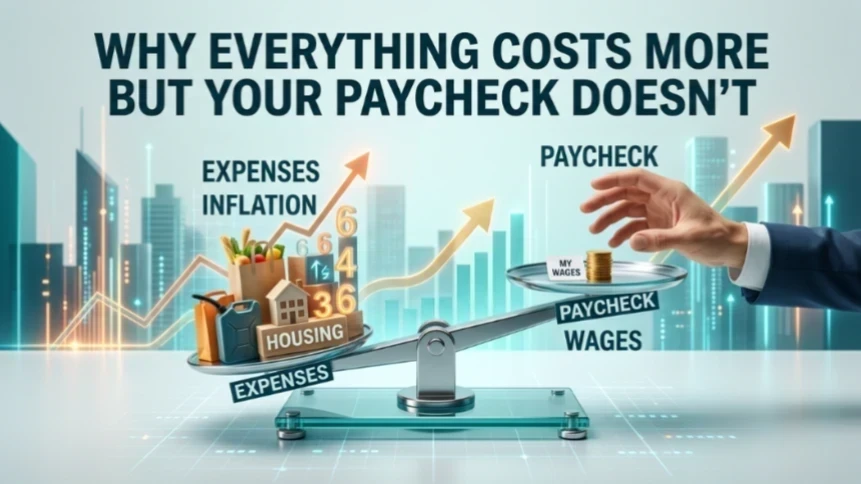
Money loses value
The cost of living rises
Purchasing power declines
And by the time you realize it… it has already happened.
Investing in dollars is not just about returns.
It’s about protection.
It’s about moving from a vulnerable position… to a strategic one.
Because in times of instability, those exposed to strong currencies don’t just protect wealth — they often move forward while others fall behind.
Real Diversification Is Not What Most People Think
Many people believe they are diversified.
But in reality, they are just spreading money within the same risk.
Same economy.
Same currency.
Same environment.
That is not protection.
That is the illusion of safety.
Real diversification begins when you cross borders.
When you stop depending on a single environment to grow.
By including the U.S. market, you create something much more solid:
You reduce vulnerability
You expand opportunities
You balance risks
You strengthen your financial structure
And that changes the game permanently.
The Difference Between Those Who Stay Stuck and Those Who Move Forward
In the end, it all comes down to a choice — even if it’s never made consciously.
Keep doing what has always been done…
Or adjust your path while there is still time.
Because the truth is simple, direct, and for many, uncomfortable:
Your salary does not define your future.
Your positioning does.
And while some people keep waiting for the perfect moment… others have already understood that the moment never appears.
It is created.
A Next Step That Can Change Your Trajectory
If you’ve made it this far, you already understand something most people ignore:
You don’t need perfection to start.
You need direction.
And maybe the smartest move right now is not trying to do everything at once…
But taking the right first step.
Learn.
Get exposure.
Start small — but start.
Because there is something time rewards relentlessly:
Consistency.
And the sooner you align your money with strategies that actually work in the long run, the sooner you stop chasing… and start building.
Now the decision is in your hands.
Will you keep watching the game…
Or finally step onto the field?
What Few People Say (But You Need to Understand)
Investing in the U.S. in 2026 is not about trends.
It’s not about hype.
And it is definitely not about getting rich quickly.
It’s about positioning.
It’s about consciously choosing to participate in one of the strongest, most resilient, and most innovative economic ecosystems in the world.
While many are still stuck in the idea of “working for money,” others have already understood something different:
Money can work too.
And when it is placed in the right environment, with the right structures, growth stops depending solely on effort — and becomes the result of strategy.
The Biggest Mistake Beginners Make When Investing Abroad
Most people believe the challenge is understanding the market.
But it’s not.
The real mistake is trying to do everything at once.
Buying multiple assets without a strategy
Following random recommendations
Chasing quick gains without a solid foundation
This creates confusion, anxiety, and impulsive decisions.
And impulsive decisions are expensive.
Simple Investing Works Better
There is a clear pattern among consistent investors:
They simplify.
They don’t try to predict the market.
They don’t try to time the “perfect moment.”
They follow a simple logic:
Consistency in investing
Intelligent diversification
Long-term vision
It may sound basic.
And that’s exactly why it works.
How to Start Investing in the U.S. in 2026
You don’t need a complex plan to begin.
You need a clear one.
1. Open an International Account
Today, several brokers allow direct access to the U.S. market with ease.
The process is fast, digital, and accessible.
2. Start with ETFs
For beginners, ETFs are one of the smartest ways to enter the market.
They allow you to invest in multiple companies at once, reducing risk.
A classic example is the S&P 500 index, which includes some of the largest U.S. companies.
3. Invest Consistently
Don’t wait for the perfect moment.
Invest regularly.
Consistency beats timing.
4. Think Long-Term
Markets fluctuate in the short term.
But they grow in the long term.
Those who understand this gain an advantage.
Strategies That Work in the Real World
Buy and Hold
Simple and effective.
You buy quality assets and hold them for years — without trying to predict every market move.
Dollar-Cost Averaging
Investing a fixed amount regularly reduces the impact of volatility.
You automatically buy more when prices are low and less when they are high.
And over time… that consistency compounds.
Dividend Reinvestment
Gains generate new gains.
Reinvested dividends accelerate growth over time.
The Role of Mindset in Investing
Investing is not just technical.
It’s emotional.
Fear and greed are real forces.
Fear makes you exit too early
Greed makes you enter too late
Managing this is more important than choosing the perfect asset.
Discipline beats emotion.
Always.
What to Expect from the Market in 2026
The current landscape is shaped by:
Advances in artificial intelligence
Growth in the technology sector
Global energy transition
Continuous innovation in healthcare and biotechnology
Companies leading these areas tend to keep growing.
But remember:
The goal is not to predict the future.
It’s to position yourself for it.
Mistakes You Must Avoid
1. Trying to get rich quickly
This leads to risky decisions.
2. Investing without understanding
Basic knowledge is essential.
3. Reacting to news
The market has already priced in most of it.
4. Stopping investments during downturns
Downturns are part of the process.
How Much Do You Need to Start?
Less than you think.
Today, it’s possible to start with small amounts.
What matters is not how much you invest at the beginning.
It’s how often you invest.
The Difference Between Those Who Grow and Those Who Stay Stuck
It’s not income.
It’s not luck.
It’s behavior.
Those who grow:
Invest consistently
Stick to a strategy
Control emotions
Those who don’t:
Wait for the perfect moment
Act on impulse
Interrupt the process
FAQ — Frequently Asked Questions (Strategic Guide to Investing in the U.S. in 2026)
Is it still worth investing in the U.S. in 2026, or is it “too late”?
This is one of the biggest misconceptions. The U.S. market is not a short-term opportunity — it’s a long-term growth system. Those who think it’s “too late” are usually focused on the short term. Consistent long-term investing remains one of the most reliable strategies available.
What is the biggest risk when investing abroad?
The biggest risk is not the market — it’s investor behavior. Impulsive decisions, lack of consistency, and absence of strategy cause far more damage than normal market fluctuations.
Do I need deep economic knowledge to start?
No. You don’t need to be an expert. You need to understand the basics and apply them consistently. Many people delay investing trying to learn everything first, but learning while doing is far more effective.
Is it better to invest all at once or gradually?
For most people, investing gradually is the smarter approach. It reduces volatility impact and removes the pressure of trying to time the market perfectly.
Are ETFs enough to build wealth?
Yes. For many investors, ETFs provide diversification, exposure to major companies, and simplicity. The mistake is assuming complex strategies are always better.
How can I handle market drops without panicking?
First, accept that downturns are normal. Second, understand they are part of long-term growth. Having a clear strategy before declines happen prevents emotional decisions during volatility.
Is a strong dollar good or bad for investors?
It depends. For current investors, it can be beneficial due to currency appreciation. For beginners, it may seem like a barrier — but in the long term, consistency matters more than timing.
How long does it take to see real results?
Investing is not immediate. Real results appear over years, not months. Those who understand this avoid frustration and stay focused on long-term growth.
Do I need to follow the market daily?
No — and in most cases, it does more harm than good. Constant monitoring increases anxiety and leads to impulsive decisions. Consistent investors focus on long-term strategy.
Should I pick individual stocks or stick with ETFs?
It depends on your knowledge and time. For simplicity and efficiency, ETFs are enough. Picking individual stocks requires deeper analysis and higher risk tolerance.
Is there a “perfect” investment strategy?
No. There is no perfect strategy — only consistent ones. What works is what you can follow over time, regardless of market conditions.
What is the biggest mistake that prevents financial growth?
Waiting. Waiting to learn more, waiting for the perfect moment, waiting for the market to “correct.” This cycle of waiting prevents action — and without action, there are no results.
Conclusion
Investing in the United States in 2026 is not about complexity.
It’s about clarity.
You don’t need to predict the market.
You don’t need perfect timing.
And you definitely don’t need to complicate the process.
What you need is:
A simple plan
Consistency
Discipline
And above all, action.
Because the biggest risk is not investing.
It’s not starting.
Start Now, Not Later
If you’ve made it this far, you already have more clarity than most people.
Now there is only one difference between you and those already building wealth:
The decision to act.
Open your account.
Choose a simple strategy.
Make your first investment.
Not tomorrow.
Not when you “feel ready.”
Now.
Because in the investing game, time doesn’t wait.
And those who start earlier… go much further.
Alternative Investments: Diversify Beyond Stocks and Bonds
REITs (Real Estate Investment Trusts): Passive Real Estate Income
Bonds and Fixed Income: Stable Returns for Conservative Investors