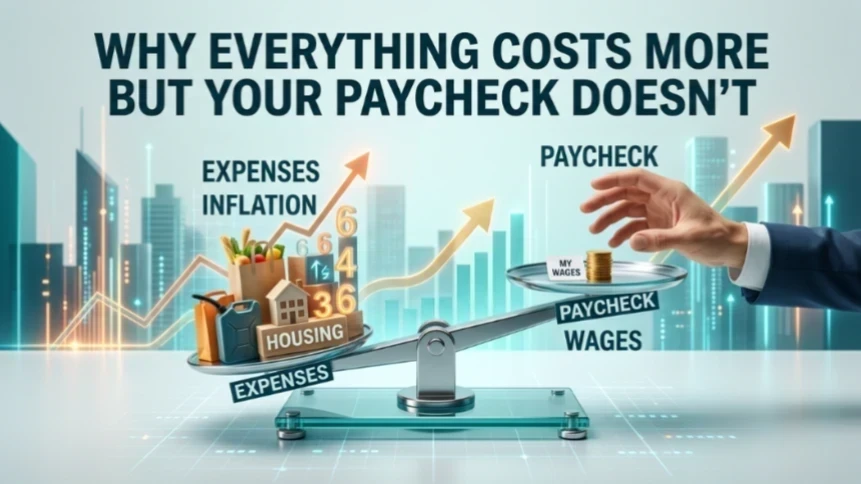

There comes a moment when you realize that working and earning money is not enough.
You need to make money work for you.
But then the block appears:
Where do you even start?
Accounts, brokers, budgeting, investments… it all feels too complex.
And that is exactly where most people get stuck — not because they lack intelligence or ability, but because they are overwhelmed by disorganized information.
The truth is simple:
You don’t need to know everything to start.
You just need to take the right first step.
This guide was created for that — to show you, in a clear and strategic way, how to break inertia and start investing safely, even if you are starting from zero.
The Mistake That Keeps You Stuck
Before any account or investment, there is a silent mistake that blocks progress:
waiting until you feel “ready” to start.
The idea that you must understand everything before taking action creates paralysis.
While you wait for the perfect moment:
Time passes
Money loses value
Opportunities disappear
People who build wealth don’t start perfectly.
They just start.
Step 1: Organize Your Starting Point
Before any investment, there is a step that seems simple — but becomes deeply transformative when done honestly: facing your financial reality without filters.
Because the real problem is not lack of money.
It is lack of clarity about it.
When you don’t know exactly how much you earn, how much you spend, and how much is left, you lose control invisibly. Money comes in, money goes out… and at the end of the month, it feels like it simply “disappeared.” Without realizing it, you start making decisions in the dark.
Clarity is not about having everything perfect.
It is about stopping the self-deception.
It is about replacing assumptions with real numbers.
When you accurately answer how much you earn each month, something shifts: you stop guessing and start knowing. And that completely changes how you see your financial potential.
But the second question is where most people avoid going deeper:
how much do you really spend?
Not what you think.
Not what you remember.
What actually leaves your account.
Small, ignored expenses — a delivery here, a subscription there, an impulsive purchase — create silent leaks. And these leaks are exactly what prevent money from accumulating.
The third question is the most revealing:
how much is left… or how much could be left?
Because often, the initial answer is: “nothing.”
But when you look closely, you realize it’s not a lack of money.
It’s a lack of direction.
And this is where the shift happens.
You stop seeing investing as something distant — something you might do “someday.”
And you start seeing space.
Even if it’s small.
Even if it’s imperfect.
But real.
Without this clarity, investing becomes trial and error.
And trial without direction is dangerous — because it creates the illusion of progress without actually moving forward.
You might invest here and there…
But if you don’t know where the money came from, how much you can sustain, and what your limits are, you won’t build consistency.
And without consistency, there are no results.
Now, when you have clarity, everything changes:
You know how much you can invest without harming yourself.
You identify where you can adjust.
You create strategy.
And most importantly, you stop operating on autopilot.
Clarity is power.
Because when you see your money with precision, you start making decisions with intention.
And that is what separates those who are constantly putting out financial fires… from those who actually begin to build wealth.
Step 2: Create a Smart Budget (Without Overcomplicating It)
Budgeting is not about cutting your life down.
It’s about taking control of it.
There is a silent — yet powerful — difference between those who “try to save” and those who operate with strategy. Those who try to save react. Those with a budget decide.
And decisions change everything.
When you see a budget as a restriction, it feels heavy. It feels like limitation, sacrifice, loss of freedom.
But when you understand it as a strategy, something shifts internally: you realize you’re not taking anything away — you’re directing it.
You are telling your money exactly where it should go.
And that creates power.
The 50-30-20 model is not just a division of numbers. It’s a way to organize your financial life with balance — without extremes.
50% for Needs
This includes everything that sustains your life: housing, food, transportation, essential bills.
This category represents stability.
But here’s something most people don’t realize: what we call “needs” is often inflated.
Adjusting this area is not suffering — it’s intelligence.
Small optimizations here can free up invisible space in your budget.
30% for Lifestyle
This is where life feels lighter.
Leisure, comfort, small rewards — the things that make life enjoyable.
And here’s a common mistake: cutting this category entirely in an attempt to accelerate results.
In reality, that only creates frustration and rebound behavior.
You need to live in the present while building your future.
The goal is not to eliminate pleasure.
It’s to control it — so it doesn’t control you.
20% for Investments
This is the category that changes your life.
This is where you stop working only for money… and start making money work for you.
At first, it may feel difficult.
20% might seem far away.
And that’s okay.
Because the most important thing is not reaching the perfect number.
It’s starting.
It can be 5%.
It can be 10%.
What truly builds wealth is not the isolated amount.
It’s repetition.
It’s commitment.
It’s consistency over time.
And here is the most important point of all:
Consistency beats intensity.
There is no point in investing a lot in one month and stopping for the next three.
There is no point in making an extreme effort you cannot sustain.
What builds results is a steady rhythm.
It’s turning investing into part of your identity — not a temporary effort.
When you apply a strategic budget, something shifts deeply:
You stop asking, “Where did my money go?”
And start saying, “I know exactly where it’s going.”
And that change may seem simple.
But it creates security.
It reduces anxiety.
It builds real growth.
Because in the end, it’s not about earning more.
It’s about using better.
And those who learn this… completely change their financial game.
Step 3: Open Your Investment Account
This is where many people get stuck.
But the reality is simple:
You need an account with a brokerage.
Brokerages are companies that connect you to the financial market.
They allow you to invest in:
Stocks
Real estate funds (REITs)
Fixed income securities
ETFs
And the best part: today, many of them are free.
Opening an account takes just a few minutes.
And it is the first practical step to move from theory into action.
Step 4: How to Choose a Good Brokerage
Not all brokerages are the same.
You need to evaluate a few key factors:
Security
Make sure the brokerage is regulated and trustworthy.
Fees
Prefer brokerages with low or zero fees.
Ease of Use
Simple platforms help you avoid mistakes.
Support
Especially important if you’re a beginner.
Remember: the best brokerage is not the most famous one.
It’s the one that works for you.
Step 5: Understand Where to Put Your Money
This is where everything starts to make sense.
There are two main paths:
Fixed Income
More predictable, lower risk.
Examples:
Government bonds
Bank-issued securities (like CDs)
Tax-advantaged fixed income products
Variable Income
Higher return potential — and higher risk.
Examples:
Stocks
Real estate funds (REITs)
You don’t have to choose just one.
The ideal approach is balance.
Step 6: Start Simple (And That’s Powerful)
One of the biggest mistakes beginners make is trying to do everything at once.
You don’t need 10 different investments.
Start with 1 or 2.
The goal is not complexity.
It’s consistency.
Step 7: The Power of Small Contributions
There’s a dangerous myth:
“It’s only worth investing if you have a lot of money.”
That’s not true.
Investing small amounts every month is far more powerful than investing large amounts occasionally.
Time amplifies consistency.
Step 8: Automate the Process
If your strategy depends on motivation, you will fail.
That’s human.
The solution is simple:
Automate it.
Automatic transfers
Recurring investments
When it becomes a system, it stops being an effort.
Step 9: Avoid the Most Common Mistakes
Chasing quick returns
Investing is a long-term game.
Following “hot tips”
If it sounds too easy, be careful.
Constantly changing strategy
Inconsistency destroys results.
Investing without understanding the basics
You don’t need to know everything — but you must know the essentials.
Step 10: Long-Term Mindset
This is the real differentiator.
Investing is not about getting rich fast.
It’s about building over time.
Those who think short-term get frustrated.
Those who think long-term thrive.
What No One Tells You About Getting Started
The hardest part is not learning.
It’s starting.
Because starting requires stepping out of your comfort zone.
But here’s something important:
Once you start, everything becomes easier.
Clarity comes through action.
The Invisible Power of Time
Time is the most powerful asset you have.
The earlier you start, the greater the effect.
Even small amounts, over time, grow significantly.
But those who wait…
lose that advantage.
How to Know If You’re on the Right Path
You don’t need immediate results.
You need signs:
Monthly consistency
Clarity in your decisions
Less financial anxiety
These are indicators that you are in control.
The Turning Point
There comes a moment when something shifts.
You stop thinking like someone who spends.
And start thinking like someone who builds.
This shift doesn’t happen all at once.
It happens decision by decision.
Conclusion
Starting to invest is not complicated.
What’s complicated is continuing to delay it.
You don’t need perfection.
You need action.
Open your account.
Organize your budget.
Start with what you have.
The financial future you want doesn’t begin when you have more money.
It begins when you decide to use better what you already have.
FAQ — Frequently Asked Questions (Complete Beginner’s Guide)
Do I really need extra money to start investing?
Not necessarily. What you need is to build the habit. Even small amounts can start the process and, more importantly, build discipline. Often, the problem is not a lack of money — it’s a lack of strategy on how to use it.
What is the ideal minimum amount to start?
The ideal is to start with whatever you can without compromising your stability. Today, there are investments accessible with very low amounts. What matters most is not the starting value, but consistency over time.
Should I pay off debt before investing?
In most cases, yes — especially if the debt has high interest (like credit cards or overdrafts). The interest on these debts is usually higher than any investment return, which causes long-term losses.
How long does it take to see results from investing?
It depends on your strategy, but the truth is: investing is a long-term game. Consistent results usually appear after months or years of discipline. Those who seek quick returns often get frustrated or make mistakes.
What is the biggest mistake beginners make?
Waiting too long to start or trying to be perfect. Many people get stuck in learning mode without taking action. Real learning happens when you get into the game — even with small amounts.
Is fixed income enough to build wealth?
Fixed income is excellent for security and stability, but on its own, it may limit wealth growth. To maximize results, it’s often necessary to balance it with variable income over time.
Is investing risky?
It depends on the type of investment and your level of knowledge. There are very safe options and others that are more volatile. Risk increases when you invest without understanding or make decisions based on emotion.
How do I know if I’m choosing a good brokerage?
Look at factors such as security, regulation, fees, ease of use, and customer support. A good brokerage should be reliable and simple enough for you to use with confidence.
Should I invest all at once or gradually?
For beginners, investing gradually is usually safer. It reduces the impact of market fluctuations and helps build a healthy habit of consistent contributions.
What should I do when the market drops?
Stay calm. Market drops are part of the process, especially in variable income investments. Those who understand this see downturns as opportunities — those who don’t often panic and make poor decisions.
Is there a “best investment”?
There is no single answer. The best investment depends on your goals, time horizon, risk profile, and life situation. What works for one person may not work for another.
How can I stay disciplined and invest every month?
Automation is one of the best strategies. When you turn investing into an automatic habit, you reduce emotional effort and increase consistency.
Can I invest even if I earn little?
Yes — and in many cases, it’s even more important. Learning to invest with small amounts builds a skill that becomes extremely powerful as your income grows.
When will I feel confident investing?
Confidence comes with time and practice. In the beginning, it’s normal to feel uncertain. But the more you learn and apply, the more confidence you build.
Should I start now or wait for the “right moment”?
The best time is now. Waiting for the perfect moment is often just a way to delay important decisions. In the long run, those who start earlier always have the advantage.