
If someone asks why so many people in the United States struggle with financial difficulties, the common answer is usually simple: lack of money.
But the truth is much deeper.
Millions of Americans earn reasonable salaries, have access to credit, education, and opportunities — and yet still live with financial anxiety, debt, and a constant feeling of instability.
This happens because money problems are rarely just about money.
Most of the time, they are connected to invisible factors such as:
emotional beliefs about money
habits learned in childhood
social and cultural pressure
impulsive consumption
fear, shame, or guilt related to finances
In other words, money is often just the symptom — not the real cause.
Understanding this completely changes the way we approach personal finance.
And that is exactly what we will explore in this in-depth guide.
The Psychology of Money: What Really Controls Your Finances
In the United States, traditional financial education teaches things like:
budgeting
investing
saving
avoiding debt
All of this is important.
But there is one problem.
Knowing what to do does not mean people will actually do it.
If financial knowledge alone were enough, almost no one would have credit card debt.
According to data from the Federal Reserve, credit card debt in the U.S. has surpassed one trillion dollars.
This reveals something powerful:
financial decisions are emotional before they are rational.
The human brain works through two main systems:
Rational system — planning, calculation, and logic
Emotional system — impulses, rewards, and immediate pleasure
When someone buys something impulsively, the emotional system usually wins.
That explains why even financially intelligent people still make mistakes with money.
Money as an Emotional Language
For many people, money is not just an economic resource.
It represents much deeper things, such as:
security
social status
love and approval
freedom
power
personal identity
For example:
Someone may overspend on clothes or technology not because they need them, but because those purchases create a sense of belonging.
Another person may accumulate excessive wealth because they associate money with protection from abandonment or insecurity.
This means financial behaviors are often emotional messages in disguise.
How Childhood Shapes Your Relationship With Money
Much of the way we handle money begins very early in life.
Without realizing it, children absorb messages about finances simply by observing the adults around them.
Some common examples include:
Growing up in an environment of scarcity
The child learns that money is rare and may develop:
constant fear of spending
financial anxiety
obsession with security
Growing up in an environment of excessive consumption
The child learns that happiness comes from buying things.
This can lead to:
impulsive shopping
difficulty saving
emotional dependence on consumption
Growing up in an environment where money is taboo
When parents avoid talking about money, the child grows up without developing financial literacy.
These experiences create what experts call “money scripts.”
Money scripts are psychological patterns about money that influence financial decisions throughout life.
Financial Stress in the United States
Even in one of the largest economies in the world, financial stress is extremely common.
Research shows that money is one of the biggest sources of anxiety for Americans.
Among the most cited factors are:
housing costs
student loan debt
medical expenses
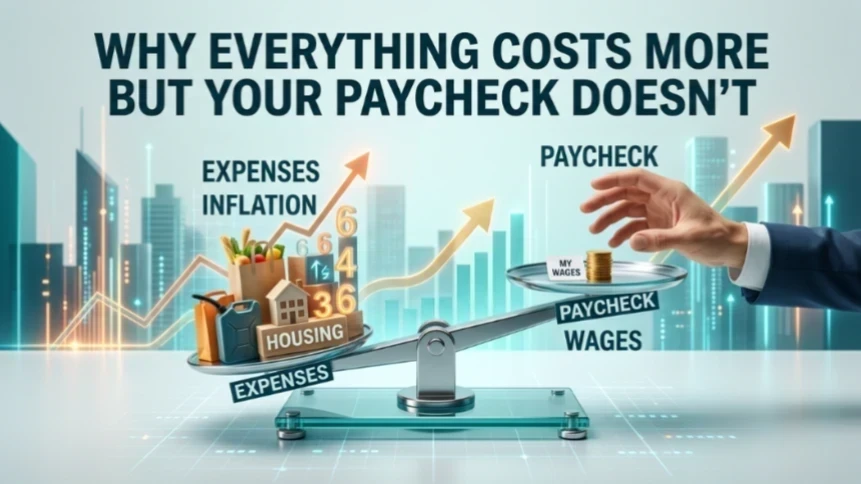
inflation
job instability
But the impact goes far beyond finances.
Money problems are also associated with:
mental health issues
family conflict
low self-esteem
relationship difficulties
This reinforces an essential point:
money and emotional well-being are deeply connected.
The Trap of Emotional Spending
One of the most common manifestations of financial psychology is emotional spending.
This happens when people use shopping as a way to deal with emotions.
For example:
buying things to relieve stress
spending money to compensate for sadness
purchasing products to feel successful
The problem is that this behavior creates a dangerous cycle:
negative emotion
impulsive purchase
temporary relief
guilt or debt
new negative emotion
This cycle keeps many people trapped in financial difficulties.
The Social Pressure of Lifestyle
In the United States, there is a strong culture where status is tied to consumption.
Bigger houses.
More expensive cars.
The newest technology.
This phenomenon is known as lifestyle inflation.
As income increases, spending also increases.
This explains why many people with high salaries still live paycheck to paycheck.
They are not necessarily earning too little.
They have simply increased their lifestyle at the same pace as their income.
The Power of Money Mindset
If financial problems are rarely just about money, then the solution is not only about earning more.
It begins with the way we think about money.
This is known as money mindset.
People with a healthy financial mindset tend to:
see money as a tool
avoid constant social comparison
plan for the future
spend with intention
invest in growth
Meanwhile, negative money mindsets can lead to:
constant fear of losing money
compulsive spending
financial self-sabotage
impulsive decisions
Transforming your money mindset can completely change your financial trajectory.
Small Changes That Transform Financial Life
The good news is that major financial transformations usually begin with simple habits.
Some powerful examples include:
1. Making spending visible
Many people never truly examine where their money goes.
Tracking expenses creates immediate awareness.
2. Building small reserves
Even a small emergency fund can significantly reduce financial anxiety.
3. Separating emotion from decisions
Waiting 24 hours before making a purchase can prevent impulsive spending.
4. Defining personal values
When someone knows what truly matters, it becomes easier to spend with purpose.
5. Learning continuously
Financial education is a lifelong process.
Why This Topic Is Growing in Online Searches
In recent years, topics related to the psychology of money have grown rapidly in online searches.
Examples include:
financial therapy
money mindset
emotional spending
financial trauma
This is happening because more people are realizing that personal finance is also emotional finance.
And this understanding is changing the way experts approach financial education.
Today, the focus is not only on spreadsheets and investments.
It is also about human behavior.
The New Path to Financial Freedom
True financial transformation begins when someone understands three fundamental ideas:
1. Money amplifies existing behaviors
If someone already has poor financial habits, earning more money can make the problem worse.
2. Emotions influence financial decisions
Recognizing this allows people to make more conscious choices.
3. Small changes create large results
Consistency over time is more powerful than impulsive decisions.
This modern approach combines three essential areas:
financial education
behavioral psychology
long-term planning
When these three dimensions work together, a person’s relationship with money can change completely.
Conclusion
Money problems are rarely just about money.
They are connected to emotions, habits, beliefs, and life experiences.
Understanding this connection is one of the most important steps toward building a healthier financial life.
When someone begins to observe their financial behavior with curiosity — instead of guilt — something powerful happens.
Money stops being a battlefield.
And it becomes a tool for freedom.
If You Want to Learn More
If you want to keep learning about:
financial education in the United States
strategies to improve your money mindset
smart ways to build income online
keep following our content.
On this blog, we publish in-depth guides designed to help you turn financial knowledge into real decisions that transform your life.
FAQ – Frequently Asked Questions
Are financial problems always caused by lack of money?
Not necessarily. Many financial problems are related to habits, emotions, beliefs about money, and impulsive decisions.
What is money mindset?
Money mindset refers to the way a person thinks and feels about money, which directly influences their financial decisions.
What is emotional spending?
Emotional spending is the habit of using money to cope with emotions such as stress, sadness, or anxiety.
Does psychology really influence finances?
Yes. Studies show that financial decisions are strongly influenced by emotional and behavioral factors.
How can I improve my relationship with money?
Strategies include developing financial awareness, building saving habits, avoiding impulsive purchases, and investing in financial education.