


The Silent Cycle Keeping You Stuck Financially
The silent cycle keeping you stuck financially is more common than most people realize—and more dangerous than it appears. At first glance, it looks like normal life: earning money, paying bills, trying to save when possible. However, beneath the surface, a pattern is quietly repeating itself, preventing real progress. If you have ever felt like you are working hard but getting nowhere, this is not coincidence. It is a system—one that operates automatically unless you interrupt it.
In other words, financial stagnation is rarely about lack of effort. It is about patterns. And once you see them clearly, everything begins to change.
The Invisible Loop: Why Your Money Disappears Without You Noticing
At first, it feels harmless.
You get paid. You handle your responsibilities. You buy what you need—and maybe a few things you feel you deserve. Nothing extreme. Nothing irresponsible. Just life.
But then something subtle happens.
The money is gone.
Not in a dramatic way. Not in a single bad decision. It disappears quietly—through small, fragmented, almost invisible expenses that never seem significant on their own.
A coffee here. A delivery there. A subscription you forgot about. A “quick purchase” that felt justified in the moment.
Individually, they are insignificant.
Collectively, they are devastating.
The Psychology Behind the Disappearing Money
This is where the silent cycle becomes dangerous.
Your brain is not wired to track micro-decisions. It focuses on big, visible expenses—rent, bills, major purchases. Everything else gets categorized as “manageable.”
As a result, your mind tells you a comforting story:
“I didn’t spend that much this month.”
But reality tells a different one.
Moreover, these small expenses create emotional relief in the moment. They feel rewarding. They reduce stress. They give you a sense of control or pleasure.
In other words, you are not just spending money—you are reinforcing a habit loop.
Trigger (stress, boredom, reward)
Action (spend)
Relief (temporary satisfaction)
Repeat
Over time, this loop becomes automatic.
And that is exactly why it is so hard to break.
The Illusion of Control (And Why It Keeps You Stuck)
Here is the most deceptive part:
You feel in control.
After all, you are not making reckless decisions. You are not overspending in obvious ways. You are simply living your routine.
However, this is not control—it is unconscious repetition.
This loop creates a false sense of normality. It convinces you that:
“This is just how expenses work”
“Saving is hard for everyone”
“I’ll do better next month”
And so, the cycle resets.
Month after month.
Year after year.
Without visible crisis—but also without real progress.
Why Cutting Expenses Alone Doesn’t Work
At some point, most people try to “fix” the situation.
They cut back.
They cancel a few subscriptions. They stop ordering food. They become more cautious—for a while.
And it works… temporarily.
But then life happens.
Stress returns. Convenience becomes necessary. Discipline fades.
And slowly, almost invisibly, the old patterns come back.
Why?
Because the problem was never the expenses.
The problem was the behavior behind them.
Without addressing the emotional triggers and unconscious habits, any financial improvement is fragile.
It depends on effort.
And effort always runs out.
Making the Invisible Visible: The Real Turning Point
Real change begins with awareness.
Not surface-level awareness.
Radical, uncomfortable, undeniable clarity.
You need to see exactly where your money is going—not in general terms, but in precise detail.
Because once you see it, you cannot unsee it.
This is why tools like <strong>Smart Budget Planner Pro</strong> become powerful—not because they magically fix your finances, but because they expose the truth.
They show patterns you were blind to.
They reveal:
How much those “small” expenses actually add up
When you are most likely to spend emotionally
Where your money leaks are happening consistently
And suddenly, the illusion breaks.
The First Crack in the Cycle
Awareness is not the final solution—but it is the first irreversible step.
It creates friction.
The next time you are about to make an impulsive purchase, something feels different.
You pause.
You think.
You question.
That moment—that tiny hesitation—is the first crack in the cycle.
And once the cycle cracks, it can no longer operate with the same power.
What Happens Next (And Why Most People Miss It)
Here is where most people stop.
They become aware… but they do not act consistently.
They see the problem, but they underestimate its depth.
Breaking the cycle requires more than noticing.
It requires replacing.
Replacing unconscious spending with intentional behavior.
Replacing emotional reactions with structured decisions.
Replacing randomness with systems.
Because if you don’t build a new pattern, the old one will return.
Always.
Why Your Mindset Is the Real Trap
The silent cycle keeping you stuck financially is not just about numbers—it is deeply rooted in mindset. What you believe about money shapes how you handle it. For instance, if you subconsciously believe that money is scarce or difficult to maintain, your actions will reflect that belief.
Moreover, these beliefs are often inherited. Family patterns, cultural narratives, and past experiences all contribute. As a result, you may be following a financial script that was never consciously chosen.
Emotional Spending and Hidden Triggers
Another powerful force in this cycle is emotion. Stress, boredom, and even celebration can trigger spending. In other words, money becomes a tool for emotional regulation rather than strategic growth. This is where many people lose control without realizing it.
To counter this, tracking not just what you spend—but why you spend—is crucial. Tools like Money Insight Tracker allow you to connect financial decisions with emotional patterns. This deeper awareness shifts you from reactive to intentional behavior.
The Illusion of Progress
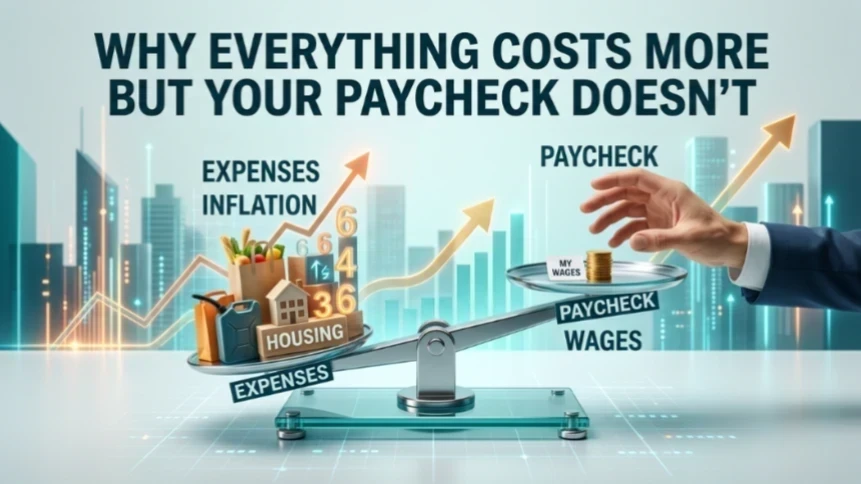
One of the most deceptive aspects of the silent cycle keeping you stuck financially is the illusion of progress. You may receive a raise, earn extra income, or reduce a few expenses. However, if your lifestyle expands at the same pace, nothing truly changes.
This phenomenon is known as lifestyle inflation. As income grows, spending grows with it. Consequently, your financial position remains exactly where it was before. It feels like movement—but it is actually stagnation.
Breaking the Illusion
To break this illusion, you must create separation between income growth and lifestyle growth. For example, committing a fixed percentage of any increase directly to savings or investments can interrupt the cycle. This creates real progress instead of perceived progress.
Additionally, using a system like Wealth Growth Blueprint Kit helps structure this process. It transforms random financial actions into a clear, repeatable strategy—something the cycle cannot easily override.
How To Break The Silent Cycle
Now that you understand how the silent cycle keeping you stuck financially works, the next step is disruption. Breaking the cycle requires intention, consistency, and awareness. However, it is absolutely possible—and often faster than you expect once the right changes are made.
Step 1: Create Radical Awareness
You cannot change what you do not see. Start by tracking every financial movement. This includes income, expenses, subscriptions, and even small daily purchases. The goal is clarity, not perfection.
Write down all expenses for 30 days
Identify patterns and unnecessary spending
Analyze emotional triggers behind purchases
This process alone often reveals surprising insights.
Step 2: Redefine Your Financial Identity
Instead of seeing yourself as someone who struggles financially, begin to shift your identity. For example, start thinking: 'I am someone who manages money intentionally.' This may sound simple, but identity drives behavior.
As a result, your decisions begin to align with this new standard.
Step 3: Build Systems, Not Willpower
Willpower is unreliable. Systems, on the other hand, create consistency. Automate savings, set spending limits, and create predefined rules for financial decisions. This reduces the need for constant self-control.
Automate a percentage of income to savings
Set fixed spending categories
Review finances weekly
Over time, these systems replace the old cycle with a new one—one that works in your favor.
The Emotional Shift That Changes Everything
Breaking the silent cycle keeping you stuck financially is not just a tactical shift—it is an emotional one. You move from frustration to control, from confusion to clarity, and from reaction to intention.
Moreover, this shift creates momentum. Small wins build confidence. Confidence leads to better decisions. Better decisions create better results. This is how a new cycle begins—one that compounds positively over time.
In other words, financial freedom is not a single event. It is the result of repeated, aligned actions.
Final Thoughts: The Moment of Decision
There is a quiet moment in every financial journey where everything can change. It is not dramatic. It is not visible to others. But it is powerful. It is the moment you decide to stop operating on autopilot and start acting with intention.
That moment is available to you right now.
Break the cycle today. Take control of your finances with clarity, intention, and strategy. The longer you wait, the stronger the pattern becomes—but the moment you act, everything begins to shift. Start now and create the financial future you deserve.
FAQ – Breaking the Silent Financial Cycle
1. What is the silent cycle that keeps you stuck financially?
The silent financial cycle is a repeating pattern of earning, spending, and resetting with little to no wealth accumulation. It operates unconsciously through habits, emotional spending, and limiting beliefs, making you feel productive while keeping you financially stagnant.
2. Why do I feel like I make money but never move forward financially?
This usually happens due to lifestyle inflation and lack of financial awareness. As your income increases, your expenses rise at the same pace, preventing real progress. Without intentional systems, money flows in and out without building wealth.
3. What are the main signs that I am stuck in a financial cycle?
Common signs include living paycheck to paycheck, struggling to save consistently, increasing expenses with income, relying on emotional spending, and feeling like your financial situation never improves despite effort.
4. How does mindset affect my financial situation?
Your mindset shapes your financial behavior. Limiting beliefs like “money is hard to keep” or “I’ll never get ahead” lead to self-sabotaging decisions. A growth-oriented financial mindset encourages saving, investing, and long-term planning.
5. Can budgeting alone break the financial cycle?
No, budgeting alone is not enough. While it creates awareness, lasting change requires behavioral shifts, emotional control, and automated systems that support consistent financial growth.
6. What is the fastest way to break the financial cycle?
The fastest way is to combine awareness, automation, and identity change. Track your money, automate savings, reduce unnecessary expenses, and start seeing yourself as someone who builds wealth intentionally.
7. Why is emotional spending so dangerous?
Emotional spending creates unconscious leaks in your finances. It replaces strategic decisions with impulsive ones, often leading to regret and reinforcing the cycle of financial instability.
8. How can I stop living paycheck to paycheck?
Start by tracking all expenses, cutting non-essential costs, creating a fixed savings system, and building an emergency fund. Consistency in small actions is key to breaking the paycheck-to-paycheck cycle.
9. What role does financial discipline play in building wealth?
Financial discipline ensures consistency. It allows you to follow systems, avoid impulsive decisions, and prioritize long-term gains over short-term satisfaction—essential for breaking the cycle permanently.
10. Is it really possible to change my financial life starting from zero?
Yes. Many people transform their financial reality by changing habits, mindset, and systems. The key is consistency, awareness, and taking action—small steps repeated over time create powerful results.
Start by observing your financial habits without judgment. Small changes in awareness can lead to meaningful transformation over time. As you begin to understand your patterns, you’ll find it easier to make decisions that truly support the life you want.
Why Smart People Still Struggle With Money (And How to Fix It for Good)
Money Awareness Changes Everything: How One Mental Shift Can Build Real Wealth