
There’s a silent phenomenon affecting millions of people — and it might be happening to you right now.
You start earning more.
Your lifestyle improves.
You feel like you’re finally “moving forward.”
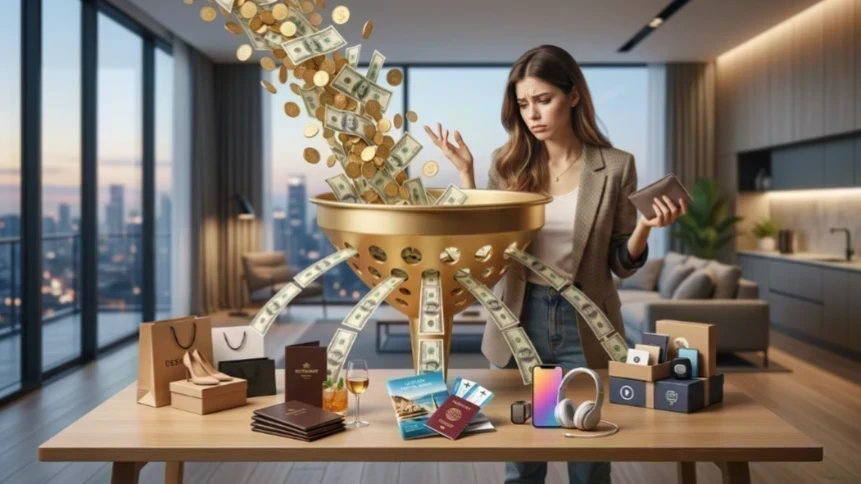
But at the end of the month… nothing is left.
And then the question shows up, almost like an uncomfortable whisper:
“If I’m making more… why am I still in the same place?”
The answer has a name: lifestyle inflation.
And here’s the truth no one explains clearly:
➡️ earning more doesn’t make you wealthy — controlling your lifestyle does.
In this complete guide, you’ll understand how this mechanism works, why it traps so many people in an invisible cycle, and how to break free strategically.
What Is Lifestyle Inflation (And Why It’s So Dangerous)
Lifestyle inflation happens when:
➡️ your expenses increase at the same pace — or even faster — than your income.
On the surface, this feels like progress.
You earn more…
and naturally start living better.
But here’s what most people don’t realize:
not every lifestyle upgrade is financial progress.
The “Now I Can” Illusion
When your income increases, your brain automatically triggers a response:
👉 reward.
You feel like you’ve reached a new level.
And almost without noticing, you begin adjusting your life to match it.
higher salary → better apartment
higher income → more delivery, more comfort
promotion → travel, clothes, experiences
And it all feels… justified.
It feels deserved.
It feels natural.
And that’s exactly why it’s dangerous.
The Problem Isn’t Spending — It’s the Automatic Upgrade
There’s nothing inherently wrong with spending more.
The problem isn’t spending.
The problem is not realizing you’re upgrading your lifestyle without strategy.
Because when this happens automatically, you enter an invisible cycle:
➡️ you quickly adapt to the new standard
➡️ that standard becomes your new baseline
➡️ cutting back feels like loss
➡️ maintaining that lifestyle becomes an obligation
And suddenly, what used to be luxury… becomes necessity.
When Comfort Becomes a Trap
Here’s the turning point:
the more you increase your lifestyle without awareness,
the more you increase the cost of your own freedom.
Because now you need to:
earn more to sustain everything
work more to maintain your lifestyle
avoid any drop in income
keep consuming to feel like you’re progressing
And this is how one of the most silent financial traps is created:
👉 you’re not actually growing…
👉 you’re just sustaining a more expensive life
The Truth That Sets You Free
Lifestyle inflation doesn’t feel like a mistake.
It feels like success.
But without control, it does something dangerous:
➡️ it turns income growth into dependency growth
And that changes everything.
Because real financial growth isn’t about how much you can spend…
👉 it’s about how much you can keep, invest, and turn into freedom.
The Mistake That Feels Like a Reward
Here’s one of the most dangerous aspects of human behavior:
Your brain associates higher income with reward.
You think:
“I deserve this.”
“I worked for this.”
“Now I can.”
And yes — you can.
But that’s not the right question.
👉 The real question is:
is this building wealth… or just maintaining a more expensive lifestyle?
The Invisible Cycle of Lifestyle Inflation
This cycle traps even financially smart people:
You earn more
You upgrade your lifestyle
Your fixed expenses increase
Your savings margin stays the same (or shrinks)
You need to earn even more to sustain everything
And then the trap is set:
➡️ the more you earn, the more you need to earn.
Neuromarketing: Why Your Brain Falls Into This Trap
Your brain doesn’t want wealth.
It wants immediate comfort.
And that changes everything.
It’s programmed to:
avoid discomfort
seek quick pleasure
validate success through rewards
And consumption becomes the fastest way to feel progress.
➡️ New phone
➡️ New car
➡️ New lifestyle
But here’s the truth:
this isn’t financial growth.
It’s emotional adaptation to consumption.
What Almost No One Realizes
Lifestyle inflation doesn’t make you happier in the long run.
Because of something called hedonic adaptation:
You quickly get used to any level of comfort.
What used to feel like luxury… becomes normal.
What felt like success… becomes expected.
And then you need more.
And more.
And more.
Signs You’re Stuck in This Cycle
You earn more, but nothing is left
Your lifestyle increases automatically with income
You feel pressure to maintain an image
Cutting back feels like going backward
You depend on your next raise to breathe financially
If this sounds like you…
this isn’t lack of discipline.
It’s an invisible pattern.
How to Break the Lifestyle Inflation Cycle (Real Strategy)
Now we get to what actually changes your life.
1. Create a Lifestyle Delay
When your income increases:
👉 don’t upgrade your lifestyle immediately.
Wait. Observe. Redirect.
2. Increase Your Wealth Rate — Not Your Cost of Living
Every time you earn more:
increase your investments
increase your savings
increase your assets
Only then consider spending more.
3. Define an Intentional Lifestyle
Stop living on autopilot.
Ask yourself:
Is this necessary?
Is this sustainable?
Does this create freedom or dependency?
4. Automate Your Financial Growth
Before the money reaches you:
allocate a portion to investments
limit what’s available to spend
This reduces emotional decisions.
5. Reprogram Your Definition of Success
Success is not looking rich.
➡️ It’s having freedom.
➡️ It’s having control.
➡️ It’s not depending on your next paycheck to survive.
The Difference Between People Who Build Wealth and Those Who Just Earn Well
Two people can earn the same amount.
One builds assets.
The other builds expenses.
The difference isn’t income.
➡️ It’s behavior.
Conclusion: The Truth That Sets You Free
Lifestyle inflation isn’t about money.
It’s about awareness.
You’re not stuck because you earn too little.
You’re stuck because your life adjusts to consume everything you earn.
And as long as that continues…
➡️ your income grows, but your freedom doesn’t.
Change begins when you decide:
👉 to stop rewarding the present
👉 and start building the future
Continue Here:
If this content made you stop for a moment and think:
“this is exactly what’s happening to me”…
don’t ignore that signal.
Because awareness without action turns into frustration.
And most people do exactly that:
they understand… agree… and go back to the same pattern the next day.
Don’t be that person.
Do something different now.
Save this post — you’ll need to revisit it
Read it again carefully — the second reading brings clarity the first one doesn’t
Choose one strategy and apply it today — not tomorrow, not later
Because change doesn’t happen when you learn.
It happens when you apply.
Now let me be direct with you:
👉 every month you keep the same pattern…
is money you don’t accumulate
is freedom you delay
is a life that moves further away
And it adds up.
Silently.
Consistently.
Until it becomes years.
But here’s the good news:
you can interrupt this cycle today.
If you want to build real wealth — without falling into invisible traps that keep so many people stuck:
👉 Keep following our content
👉 Learn how to play the money game strategically
👉 And start, now, building a life where your money works for you — not the other way around
The decision is simple:
Stay on autopilot…
or take control. 💰
FAQ (Frequently Asked Questions)
1. What is lifestyle inflation?
Lifestyle inflation is a financial behavior where your spending increases at the same pace — or even faster — than your income.
In practice, this means that every raise or increase in earnings doesn’t actually improve your financial situation… it simply supports a more expensive lifestyle.
The danger lies in how subtle this process is. You don’t consciously notice that you’re spending more — you just feel like you “deserve more.” And by the time you realize it, you’re already stuck in a pattern that’s hard to reverse.
2. Does lifestyle inflation really prevent you from building wealth?
Yes — and it’s one of the biggest financial traps in adulthood.
Because building wealth isn’t just about how much you earn. It’s about how much you keep, invest, and grow over time.
When your expenses rise along with your income, your ability to build assets disappears.
➡️ You work more…
➡️ You earn more…
➡️ But you stay in the same place.
It’s a cycle that creates the illusion of progress while keeping you financially stuck.
3. How can you avoid falling into this cycle?
Avoiding lifestyle inflation doesn’t mean you can’t enjoy your money — it means being intentional about how you use it.
Here are some strategies that make a real difference:
create a delay between earning more and spending more
set a conscious limit for lifestyle upgrades
automatically allocate part of your income to investments
question whether each new expense adds real value or just temporary satisfaction
The key is simple:
👉 don’t let your emotions decide your lifestyle.
4. Is it wrong to improve your lifestyle as you earn more?
No — and this is an important distinction.
You can — and should — improve your quality of life. The problem isn’t spending more. The problem is spending without awareness.
Healthy lifestyle growth means:
increasing comfort without compromising your future freedom
balancing present enjoyment with long-term security
growing in a sustainable way, not impulsively
➡️ The goal isn’t to live with less.
➡️ It’s to live better — with control.
5. What is the biggest mistake related to lifestyle inflation?
The biggest mistake is turning temporary income increases into permanent expenses.
When you raise your fixed lifestyle — like rent, financing, or subscriptions — you create monthly obligations that are hard to undo.
And that leads to a dangerous effect:
➡️ You lose flexibility
➡️ You increase your dependence on income
➡️ You reduce your financial freedom
In the end, you’re no longer building wealth…
you’re just sustaining a more expensive lifestyle.