Have you ever noticed that, suddenly, mortgage rates go up?
Or that your credit card has become more expensive?
Or even that your high-yield savings account has started paying more interest?
Behind almost all of these movements is a powerful institution: the Federal Reserve.
Even if you don’t live in the United States, Fed decisions influence global markets, international investments, the U.S. dollar, inflation, and even assets in Brazil.
Understanding what the Fed does isn’t just economic knowledge — it’s strategic financial education.
This is a decisional topic . Your financial choices depend on it.
What Does the Federal Reserve Do?
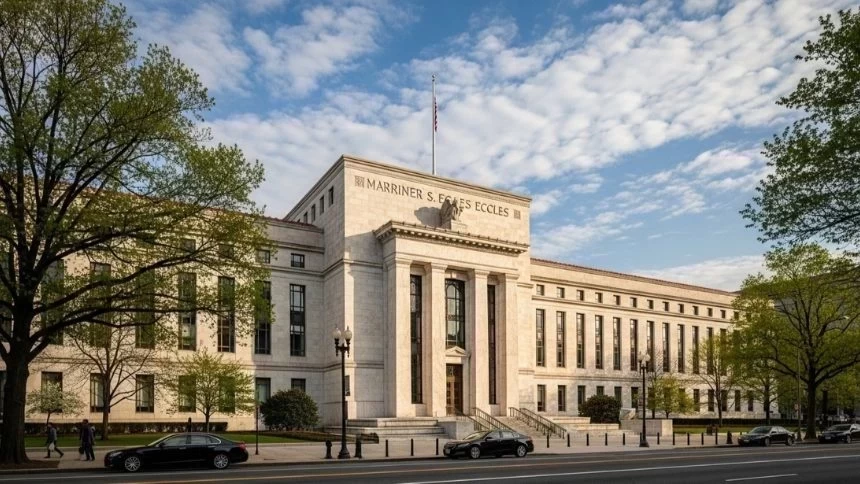
The Federal Reserve is the central bank of the United States.
Its primary role is to conduct the country’s monetary policy with three major objectives:
Promote maximum employment
Maintain price stability (control inflation)
Ensure moderate long-term interest rates
In practice, the Fed controls the cost of money in the U.S. economy.
And when the cost of money changes, everything changes.
The Most Important Interest Rate in the Economy: The Federal Funds Rate
The Fed’s main tool is the Federal Funds Rate.
This is the interest rate U.S. banks charge each other for very short-term (overnight) loans.
It may seem distant from your reality — but it’s not.
When the Fed raises this rate:
Borrowing becomes more expensive
Consumer spending slows
Credit tightens
Inflation tends to fall
When the Fed lowers this rate:
Credit becomes cheaper
Businesses invest more
Consumer spending increases
The economy accelerates
This rate directly influences:
Mortgages
Credit cards
Personal loans
Auto loans
Savings yields and CDs
The stock market
The real estate market
That’s why announcements about “Federal Reserve interest rates” move markets within seconds.
How the U.S. Interest Rate System Works
The system operates in a cascading effect:
The Fed sets the Federal Funds Rate target
Banks adjust the Prime Rate
Consumer financial products are repriced
The bond market reacts
Mortgage rates adjust
For example:
If the Fed raises rates by 0.50%, variable-rate credit cards increase almost immediately.
Mortgages react through the U.S. Treasury bond market — but still under the direct influence of monetary policy expectations.
The impact is systemic.
Inflation Control: Why Does the Fed Raise Rates?
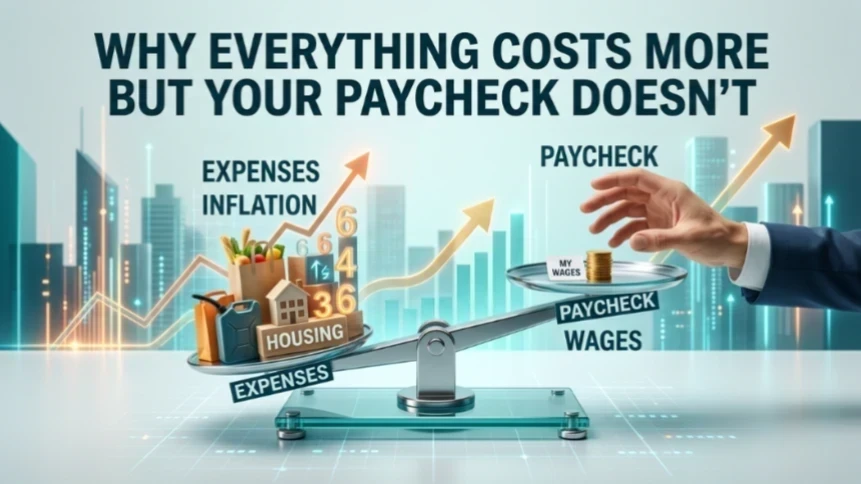
Inflation means loss of purchasing power.
When inflation is high:
Groceries become more expensive
Rent increases
Energy costs rise
Services get pricier
The Fed fights this by raising interest rates.
Higher rates:
Reduce consumer spending
Discourage borrowing
Lower overall demand
Help contain price increases
But there’s a delicate balance:
Rates that are too high can slow the economy excessively and increase unemployment.
That balance between growth and stability is the Federal Reserve’s core responsibility.
What Is Quantitative Easing (QE)?
When simply lowering interest rates isn’t enough, the Fed uses another tool: Quantitative Easing (QE).
In this process, the Fed purchases large volumes of government bonds and financial assets to inject liquidity into the economy.
This:
Lowers long-term interest rates
Encourages lending
Stimulates investment
Supports financial markets
QE was widely used after the 2008 financial crisis and during the pandemic.
The opposite move is called Quantitative Tightening (QT) — when the Fed reduces liquidity.
These decisions directly affect stock markets, real estate, and global investments.
Impact on Mortgages
Although the Fed does not directly set 30-year mortgage rates, its policy strongly influences the bond market.
When rate hikes are expected:
Mortgage rates rise
Monthly payments increase
Housing affordability declines
Home prices may slow
A 1% increase in a mortgage rate can mean hundreds of extra dollars per month.
That changes buying, selling, and real estate investment decisions.
Impact on Credit Cards
Credit cards are highly sensitive to Fed decisions.
Most variable rates are based on the Prime Rate.
When the Fed raises rates:
The Prime Rate increases
Credit card APRs rise
Debt becomes more expensive
Revolving balances cost more
If you carry a balance, rising rate cycles require aggressive debt reduction strategies.
Impact on Savings and Conservative Investments
The upside of higher rates:
High-yield savings accounts pay more
Certificates of Deposit (CDs) offer better returns
Fixed-income funds become more attractive
But be careful:
If inflation exceeds your yield, your real return remains negative.
That’s why inflation control is essential.
Global Impact: Why This Affects Even People in Brazil
The U.S. dollar is the world’s primary reserve currency.
When the Fed raises rates:
The dollar tends to strengthen
Emerging markets face pressure
Investors move capital into U.S. assets
Commodities may fluctuate
Even Brazilian investors feel the Fed policy impact.
The cost of money in the United States influences capital flows worldwide.
How to Use This Knowledge to Your Advantage
Understanding what the Fed does helps you:
Decide between fixed and variable rates
Anticipate housing market movements
Prioritize paying off debt
Adjust your investment portfolio
Take advantage of high-rate cycles in fixed income
Strategic financial education means acting before the majority.
Those who understand monetary policy make less emotional and more rational decisions.
Conclusion — The Invisible Force Shaping Your Finances
The Federal Reserve does not decide how much you earn each month.
But it profoundly influences how much that money is truly worth.
It defines the economic environment in which your money:
Costs more or less (loan and credit interest)
Earns more or less (savings, bonds, fixed income)
Buys more or less (inflation and purchasing power)
And everything revolves around one central mechanism: the Federal Funds Rate.
This rate is one of the most important variables in the global economy because it functions as the “base price” of money in the United States — and, by extension, the world.
When it rises:
Credit becomes more expensive
Consumer spending slows
Risk investments weaken
Fixed income becomes more attractive
The dollar tends to strengthen
When it falls:
Credit expands
The housing market gains momentum
Businesses invest more
Stock markets tend to rise
Risk appetite increases
Understand this: the Fed doesn’t directly change your bank account.
But it changes the rules of the financial game.
If you have a mortgage, you feel it.
If you invest, you feel it.
If you save, you feel it.
If you consume, you feel it.
Ignoring monetary policy is making financial decisions in the dark.
It’s financing a home without watching the rate cycle.
It’s carrying revolving debt during a tightening cycle.
It’s investing impulsively without considering macroeconomic conditions.
On the other hand, understanding how the Federal Reserve operates allows you to:
Anticipate market movements
Reduce risk during tightening periods
Seize opportunities during expansion cycles
Protect wealth against inflation
Make rational decisions instead of emotional ones
Strategic financial education isn’t just about saving money.
It’s about understanding who sets the cost of money.
The Federal Funds Rate is not just a number announced after central bank meetings.
It is a signal. A guide. A thermometer.
Those who watch that thermometer adjust their decisions.
Those who ignore it react too late.
In the end, the Federal Reserve does not control your salary.
But it influences:
Its real value
The cost of your debts
The return on your investments
The speed at which your wealth grows or shrinks
Understanding this is not optional for anyone seeking financial stability.
It’s a competitive advantage.
Scenario 1: You Have Credit Card Debt
If rates are rising:
Prioritize paying off variable-rate debt immediately
Avoid minimum payments
Consider balance transfer options before further hikes
Why? Credit card APR adjusts quickly with Fed increases.
Scenario 2: You’re Buying a Home
If the Fed is signaling future hikes:
Lock in a fixed-rate mortgage early
Compare lender rate lock options
Calculate long-term payment impact
If rates are peaking:
Monitor refinancing opportunities
Scenario 3: You Have Cash Savings
In rising rate cycles:
Move money to high-yield savings accounts
Consider short-term CDs
Evaluate Treasury securities
But always compare yield vs inflation.
Scenario 4: You’re Investing
High-rate environment:
Growth stocks face pressure
Fixed income becomes attractive
Dollar strength impacts global diversification
Lower-rate environment:
Risk assets typically benefit
Borrowing costs decline
Real estate may rebound
FAQ
What does the Federal Reserve do in simple terms?
It manages U.S. monetary policy by controlling interest rates and inflation to maintain economic stability.
Why does the Fed raise interest rates?
To reduce inflation and slow excessive consumer spending.
How do Fed rate hikes affect mortgages?
They influence the bond market, which determines long-term mortgage rates.
Who benefits from higher interest rates?
Savers and conservative investors benefit, while borrowers face higher costs.
What is Quantitative Easing?
It is the Fed’s purchase of financial assets to inject money into the economy and stimulate growth.