
There is a belief that quietly controls millions of lives:
“If I just earned more money, everything would be fine.”
It sounds logical. It feels true. And for a moment, it even brings relief.
But it’s also one of the biggest financial illusions.
Because the truth is uncomfortable:
More money doesn’t fix financial problems.
It often amplifies them.
“Income doesn’t create wealth. Behavior does.”
If money alone solved financial struggles, every high earner would be financially secure. But that’s not reality.
There are people making thousands every month and still living paycheck to paycheck.
So what’s really going on?
The Real Problem: It’s Not Income — It’s Behavior
Most financial problems are not caused by lack of money.
They are caused by patterns.
Spending patterns.
Emotional patterns.
Decision-making patterns.
When your habits are not aligned with financial growth, more money simply fuels the same cycle at a higher level.
You don’t eliminate the problem.
You upgrade it.
This is why someone who struggles with money at $1,000 per month often struggles at $5,000 — just on a bigger scale.
Because behavior doesn’t change automatically with income.
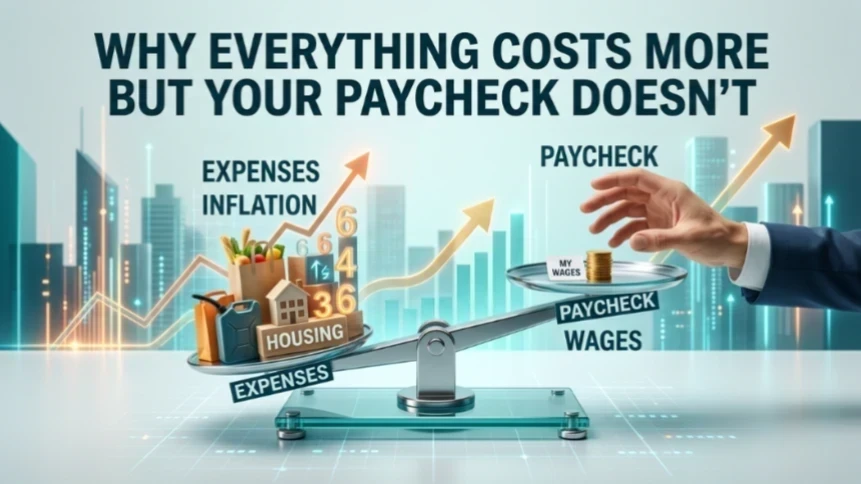
The Hidden Trap: Lifestyle Inflation
One of the biggest reasons why earning more doesn’t solve financial problems is something called the Lifestyle Inflation.
This happens when your expenses increase as your income increases.
You earn more… so you spend more.
You upgrade your lifestyle.
You justify new expenses.
You normalize higher costs.
And without realizing it, you stay in the same place financially.
The problem is not that you’re earning more.
The problem is that your lifestyle grows at the same speed — or even faster.
And suddenly, that salary increase disappears.
Why Your Brain Works Against You
Here’s where things get deeper.
Your brain is not designed to build wealth.
It’s designed to seek comfort.
Spending money triggers pleasure.
Saving money delays gratification.
This creates internal conflict.
And unless you consciously change your behavior, your brain will always choose what feels good now over what builds your future.
This is why people reward themselves after earning more.
“I deserve this.”
“I worked hard.”
“I can afford it now.”
And while that feels justified… it quietly reinforces the same financial pattern.
More Money Without Control = Bigger Problems
Imagine this:
Someone who doesn’t track expenses starts earning more.
What happens?
They don’t suddenly become organized.
They just spend more freely.
Someone who buys impulsively doesn’t stop with a higher income.
They just make bigger impulse purchases.
Someone who avoids financial planning doesn’t change overnight.
They just have more money — with the same lack of direction.
More money without control doesn’t create freedom.
It creates chaos with a higher budget.
The Emotional Side of Money (No One Talks About This)
Money is not just numbers.
It’s emotional.
People spend money to feel better.
To reduce stress.
To reward themselves.
To escape discomfort.
So when income increases, these emotional patterns don’t disappear.
They expand.
If you use money to cope, more money gives you more ways to cope — not more stability.
And that’s why financial problems persist.
The Turning Point: Awareness Changes Everything
Here’s the moment where everything shifts:
When you realize that money is not the solution — you are.
That your habits, your mindset, and your decisions are what define your financial reality.
This awareness is powerful.
Because once you see the pattern, you can break it.
What Actually Fixes Financial Problems
If more money isn’t the solution, what is?
It comes down to five core changes:
1. Financial Awareness
You need to know exactly where your money goes.
Without clarity, there is no control.
2. Spending Discipline
Not restriction — intention.
You decide where your money goes instead of reacting emotionally.
3. Consistent Saving
Even small amounts matter.
Consistency builds structure.
4. Income Growth With Strategy
Earning more is important — but only when combined with control.
5. Identity Shift
You must start seeing yourself as someone who manages money well.
Because behavior follows identity.
The Truth Most People Avoid
Building wealth is not about luck.
It’s not about one opportunity.
It’s about who you become.
If your habits don’t change, your results won’t change.
No matter how much you earn.
How to Break the Cycle (Simple Action Plan)
Start here:
Track your spending today.
Avoid one unnecessary expense.
Save a small amount.
Reflect before every purchase.
Take one step to increase income — but with intention.
These steps are simple.
But repeated daily, they change everything.
Conclusion: Money Doesn’t Change You — It Reveals You
Money doesn’t fix problems.
It exposes them.
It shows your habits.
Your priorities.
Your patterns.
And that’s not a bad thing.
Because once you see clearly…
You can finally change.
keep reading
If you want a different financial future, don’t wait for a higher income.
Start with better habits.
Choose one behavior to change today.
Just one.
And commit to it.
Because real change doesn’t start with money.
It starts with you.
FAQ – Frequently Asked Questions About Money, Income, and Financial Problems
Does earning more money solve financial problems?
No — and this is one of the biggest financial misconceptions.
Earning more money can create temporary relief, but it does not fix the root cause of financial problems. If your habits don’t change, your expenses will likely increase along with your income.
Without financial control, more money simply amplifies the same patterns at a higher level.
Why do people still struggle financially even with a high income?
Because income alone doesn’t create stability — behavior does.
Many high earners fall into patterns like overspending, poor planning, and lack of financial awareness. As their income grows, their lifestyle grows with it, leaving them in the same financial position.
This is why some people earn a lot but still live paycheck to paycheck.
What is lifestyle inflation?
Lifestyle inflation is when your spending increases as your income increases.
Instead of saving or investing the extra money, people upgrade their lifestyle — bigger expenses, more subscriptions, more comfort.
Over time, this cancels out any financial progress and keeps you stuck, no matter how much you earn.
If more money isn’t the solution, what actually works?
What truly fixes financial problems is behavior change.
This includes:
Tracking your spending
Controlling impulsive purchases
Saving consistently
Making intentional financial decisions
Increasing income with strategy (not emotion)
Wealth is built through systems and habits — not just income.
Can small habits really make a difference?
Yes — and they are more powerful than big, inconsistent actions.
Small daily habits create momentum. Over time, they compound into real financial results.
What feels insignificant today becomes impactful when repeated consistently.
Do I need to earn more before I start managing my money?
No — this is a common mistake.
If you don’t learn how to manage a small amount, managing a larger income becomes even harder.
Financial discipline is built before income increases — not after.
What is the biggest mistake people make with money?
Waiting.
Waiting to earn more. Waiting for the “right moment.” Waiting to feel ready.
This delay keeps people stuck for years. Financial change starts when you take action with what you have now.
How can I improve my financial life starting today?
Start simple:
Track everything you spend
Avoid one unnecessary expense
Save a small amount
Think before every purchase
Take one action to increase your income
You don’t need a perfect plan — you need consistent action.