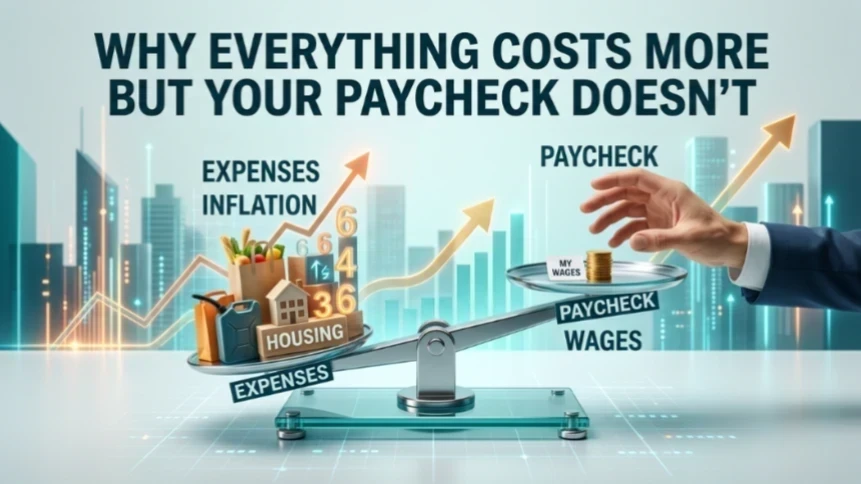







The simple mindset shift that helps you keep more money has very little to do with complicated budgets or extreme frugality. In fact, it starts somewhere most people never think to look: your mind.
If you've ever reached the end of the month wondering where your paycheck disappeared, you're not alone. Millions of people, especially women balancing careers, families, responsibilities, and invisible emotional labor, feel like they're constantly working without ever getting ahead.
The hidden truth is uncomfortable. Modern life has normalized mental overload. We celebrate productivity while quietly ignoring exhaustion. We praise people for holding everything together, even when they're barely okay inside.
That constant emotional pressure doesn't just affect your energy. It affects your money.
When your brain is overwhelmed, it naturally looks for quick relief. Sometimes that's another online order. Sometimes it's takeout after an exhausting day. Sometimes it's buying something simply because, for a few minutes, it feels like control.
The good news? Once you understand what's really happening, everything begins to change.
The simple mindset shift that helps you keep more money starts here
Most financial advice tells you to stop spending.
But what if that's solving the wrong problem?
The real shift is learning to stop seeing saving money as losing something.
Instead, begin viewing every dollar you keep as something you're giving to your future self.
That tiny change sounds almost too simple.
Yet it completely changes how your brain evaluates purchases.
Instead of asking, 'Can I afford this?' you begin asking, 'Is this worth giving up a little more freedom later?'
As a result, saving becomes an act of self-care instead of self-denial.
Your brain wants safety, not just money
This is where many people get stuck.
Financial habits are rarely about numbers alone. They're connected to emotions, stress, uncertainty, and identity.
Creating a simple daily reflection habit can dramatically increase awareness. Some people enjoy writing down spending patterns in a Rocketbook Smart Notebook, making it easier to recognize emotional triggers without adding more mental clutter.
The notebook itself isn't the solution. The awareness it creates is.
Mental fatigue quietly drains your bank account
One of the biggest reasons people overspend isn't a lack of discipline.
It's decision fatigue.
Every single day you make hundreds of choices.
Work decisions.
Family decisions.
Health decisions.
Relationship decisions.
By evening, your brain simply wants relief.
That's when emotional spending quietly takes over.
In other words, you're not buying products.
You're buying a temporary emotional escape.
Recognizing this pattern removes unnecessary guilt and replaces it with understanding.
Small pauses create powerful financial changes
Before making any non-essential purchase, try creating a twenty-four-hour pause.
Save the item instead of buying it immediately.
Ask yourself how you'll feel tomorrow.
Think about the future goal that money could support.
Notice whether you're tired, stressed, or emotionally overwhelmed.
Moreover, improving your sleep can significantly improve financial decisions. Many people who build healthier evening routines using tools like the Hatch Restore report feeling calmer and less impulsive throughout the day.
Better rest often leads to better choices.
Your identity shapes your financial future
There's a subtle but powerful difference between saying, 'I'm trying to save money,' and saying, 'I'm someone who manages money wisely.'
Your identity influences your habits.
Your habits shape your future.
When you begin seeing yourself as someone who protects your financial peace, your daily decisions naturally become more consistent.
You no longer rely on motivation.
You rely on who you believe you are.
Celebrate progress instead of perfection
Many people quit because they expect dramatic results immediately.
Instead, celebrate every small financial win.
Saving your first $100.
Completing one week without impulse shopping.
Building the first layer of an emergency fund.
Canceling an unused subscription.
Planning purchases instead of reacting emotionally.
Each success teaches your brain that financial stability feels rewarding.
Likewise, developing gratitude through a simple journal such as the Five Minute Journal can help reduce emotional spending by shifting attention toward what you already have instead of what you temporarily want.
You may be functioning, but are you actually okay?
This question matters more than most people realize.
Many readers searching for money advice are actually searching for relief.
They're exhausted.
They're overwhelmed.
They're carrying invisible emotional loads every single day.
Financial stress becomes even heavier when burnout is left untreated.
That doesn't mean something is wrong with you.
It means you're human.
Modern life often rewards constant productivity while ignoring emotional recovery.
That said, healing your relationship with money often begins by giving yourself permission to slow down long enough to notice your patterns.
You may also enjoy reading our guide on emotional spending triggers and our article about building financial habits that actually last, both of which expand on the ideas discussed here.
The future version of you is created one decision at a time
Financial freedom rarely arrives through one huge breakthrough.
Instead, it grows quietly through thousands of small choices.
Each purchase.
Each pause.
Each intentional decision.
Every dollar you keep becomes another vote for the life you want to build.
Eventually, those votes become habits.
Those habits become confidence.
And confidence becomes lasting financial peace.
If something has felt off lately—if you've been functioning but not truly feeling okay—this mindset shift may be exactly the reset you've been looking for.
You don't need to become a different person overnight.
You only need to make one better decision today than you made yesterday.
Start today by choosing one financial habit that protects your future instead of rewarding a stressful moment. Your future self is built by today's smallest decisions. Read more, keep learning, and begin creating a calmer, stronger, and more confident relationship with your money—one intentional choice at a time.
FAQ – The Simple Mindset Shift That Helps You Keep More Money
1. What is the simple mindset shift that helps you keep more money?
The shift is seeing saving money as gaining freedom rather than giving something up. Instead of focusing on what you can't buy today, focus on the financial security, flexibility, and peace of mind you're creating for your future.
2. Why do I spend money even when I know I should save it?
Emotional spending is often triggered by stress, mental fatigue, boredom, or burnout—not a lack of discipline. When you're overwhelmed, your brain looks for quick rewards, making impulse purchases feel temporarily comforting.
3. Can mindset really improve my finances?
Yes. While budgeting and earning more are important, your daily financial decisions are driven by habits and beliefs. A healthier money mindset helps you make better choices consistently, leading to long-term financial growth.
4. How can I stop impulse spending?
Create a pause before buying. Wait 24 hours before non-essential purchases, remove saved payment methods from shopping apps, and ask yourself whether the purchase supports your long-term financial goals or only solves a temporary emotion.
5. Is saving money possible if I live paycheck to paycheck?
Yes. Even small amounts saved consistently can make a difference. Building the habit of saving—even $10 or $20 at a time—creates momentum, improves financial confidence, and prepares you for unexpected expenses.
6. Why does earning more money not always solve financial problems?
Higher income doesn't automatically lead to wealth. Without healthy financial habits, lifestyle inflation and emotional spending often increase along with income, leaving little room for savings or investing.
7. How does burnout affect financial decisions?
Burnout reduces mental energy and self-control, making it harder to evaluate purchases logically. People experiencing chronic stress are more likely to spend money seeking comfort, convenience, or temporary relief.
8. What are the first habits I should build to keep more money?
Start with simple habits such as tracking your expenses weekly, automating savings, setting clear financial goals, avoiding emotional purchases, and reviewing your budget regularly. Small, consistent actions usually produce better results than extreme financial changes.
Continue Building Your Financial Clarity
Now that you understand why money anxiety doesn’t go away even when you earn more, the next step is learning how to build a healthier and more peaceful relationship with your money.
You don’t need to fix everything at once.
Start with one small change — one habit, one tool, or one moment of awareness — and observe how your financial mindset begins to shift over time.
You may also like:
👉 The Truth About Money Discipline No One Talks About)
👉 You Don’t Have a Money Problem — You Have a Behavior Pattern
👉 Why You Struggle With Money Even When You Know What To Do
👉 You're Not Bad with Money: You're Repeating Patterns