







Living paycheck to paycheck despite earning more can feel like one of the most confusing financial problems imaginable. Your salary increased. Maybe you even received a promotion, changed jobs, or started bringing home more than you did a few years ago. Yet somehow, the end of the month still feels exactly the same: bills are waiting, your checking account feels too low, and one unexpected expense can turn a normal week into a financial emergency.
If that sounds painfully familiar, there is something important you need to hear: you are not necessarily bad with money. You may simply be caught inside a financial system where higher income, higher expectations, higher expenses, and constant mental pressure rise together.
And that is where the story gets interesting. The problem is often not the size of your paycheck. It is what your paycheck has quietly become responsible for.
Why Americans Are Living Paycheck to Paycheck Despite Earning More
One of the biggest financial myths is that earning more automatically makes you financially secure. In reality, income can rise while financial breathing room stays exactly the same.
Think about what happens after a raise. At first, the extra money feels exciting. Then rent increases. Insurance costs more. Groceries become more expensive. A new monthly subscription appears. You upgrade the phone. You eat out a little more often because you are working longer hours. Maybe you finance a newer car because your income finally seems to justify it.
None of these decisions necessarily feels reckless.
That is the trap.
Financial pressure rarely arrives wearing a warning label. It often looks like convenience, comfort, responsibility, or a well-deserved reward. As a result, you can make dozens of completely understandable decisions that collectively consume every extra dollar you earn.
For many Americans, this creates a strange emotional contradiction: I make more money than I used to, so why do I still feel broke?
The answer is often that your lifestyle expanded faster than your financial margin.
The paycheck grew, but so did the obligations
A larger paycheck can create larger commitments. A bigger apartment means a bigger rent payment. A newer vehicle means a larger payment, higher insurance, and potentially higher maintenance costs. More convenience can mean more delivery fees, subscriptions, and impulse purchases.
Before long, your income has become fully assigned before it even arrives.
A simple budgeting tool such as YNAB can help make this invisible problem easier to see because it forces you to connect your available money with actual priorities rather than relying on a vague feeling that there should be enough.
The Hidden Cost of Lifestyle Inflation
Lifestyle inflation is one of the quietest reasons people remain stuck while earning more. It happens when spending gradually increases as income increases.
It rarely starts with one dramatic purchase. Instead, it happens through small upgrades.
A slightly nicer home.
A newer vehicle.
More restaurant meals.
Premium subscriptions.
Frequent online shopping.
More expensive vacations.
Convenience services that save time but add recurring costs.
Individually, these expenses can look harmless. Collectively, they can transform a raise into a lifestyle rather than an opportunity to build wealth.
This is particularly powerful because humans tend to adapt quickly to improvements. The apartment that once felt luxurious eventually becomes normal. The upgraded car becomes your baseline. The weekly restaurant meal stops feeling like a splurge.
In other words, yesterday's luxury quietly becomes today's expectation.
Why cutting everything is not the answer
There is a reason extreme budgeting often fails. If your financial plan requires you to eliminate every enjoyable purchase, constantly monitor every transaction, and feel guilty whenever you spend money, your brain will eventually push back.
The goal is not to create a life you cannot stand.
The goal is to create enough margin that your money starts giving you choices again.
A simple Erin Condren Budget Book can be useful for people who prefer a physical system because writing down expenses can turn an abstract financial problem into something concrete and visible. Sometimes seeing the numbers on paper creates the pause that an app notification cannot.
When Mental Fatigue Starts Controlling Your Spending
There is another part of this problem that rarely gets enough attention: mental fatigue.
You can be functioning and still not be okay.
You can go to work, answer emails, take care of your family, pay your bills, keep appointments, and appear completely responsible while privately feeling overwhelmed by the constant number of decisions required to manage modern life.
Money becomes another mental tab that never closes.
Did the mortgage come out? Can I afford groceries? Why is the credit card balance higher? Did I cancel that subscription? How much is left until payday? What happens if the car breaks down?
That constant background noise can lead to what feels like financial autopilot.
When you are mentally exhausted, convenience becomes incredibly attractive. You order dinner because cooking feels impossible. You buy something online because you need a small emotional lift. You ignore the bank statement because looking at it feels stressful.
Then guilt arrives.
And guilt creates more stress.
And stress makes it harder to make thoughtful financial decisions.
This cycle has very little to do with intelligence or discipline. It has a lot to do with cognitive overload.
Functioning does not mean financially healthy
Modern life has normalized emotional overload to such an extent that many people do not recognize how exhausted they are until their finances force them to stop.
You may not be experiencing a financial crisis. You may simply be carrying too many invisible responsibilities at once.
That distinction matters because the solution changes.
If the problem is purely mathematical, you might need to reduce expenses or increase income. But if the problem is also mental, you need a system that reduces the number of financial decisions you make every day.
Tools that support rest can indirectly support better money decisions. Something as simple as a Hatch Restore 3 can fit into a broader reset routine for people who struggle to disconnect from the mental noise of work, money, and daily responsibilities. Better rest does not magically fix a budget, but reducing exhaustion can make it easier to make deliberate decisions instead of automatic ones.
The Credit Card Effect Nobody Wants to Talk About
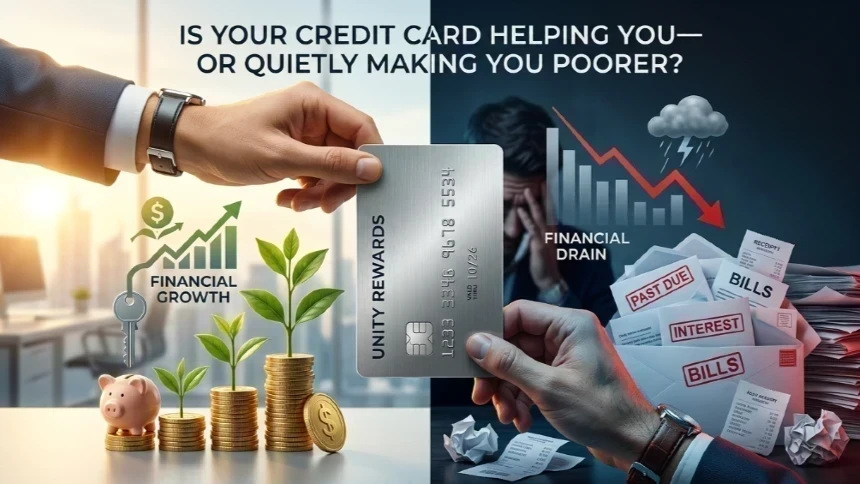
Credit cards can make the paycheck-to-paycheck cycle harder to recognize because they separate spending from the emotional pain of payment.
You buy something today. The financial consequence arrives later.
That delay can create the illusion that your current income has more room than it actually does.
Then the statement arrives, and part of your next paycheck is already spoken for.
This is how a higher income can coexist with persistent financial pressure. Your paycheck may look healthy, but previous spending is continuously reaching into future income.
The issue becomes even more complicated when balances carry interest. Now the money you earn tomorrow is not entirely yours to use tomorrow. A portion is being consumed by yesterday's decisions.
Look at recurring obligations before blaming small purchases
People often obsess over small purchases while ignoring the larger commitments that determine whether a budget has breathing room.
Before worrying about every $5 coffee, look at the expenses that automatically leave your account every month.
Housing.
Transportation.
Insurance.
Debt payments.
Subscriptions.
Utilities.
Childcare and family expenses.
Recurring memberships and services.
These costs can matter more than dozens of tiny discretionary purchases combined.
That does not mean small spending is irrelevant. It means your financial strategy should attack the biggest sources of pressure first.
The Truth About Earning More
Earning more absolutely can improve your financial life. But only when some of that additional income becomes margin.
Margin is the money left after your necessary expenses and intentional spending. It is what allows you to save, invest, pay down debt, handle emergencies, and eventually stop feeling terrified of the next unexpected bill.
Without margin, a raise can disappear.
With margin, even a moderate income increase can become transformative over time.
This is why the question should not simply be, How much do I earn?
A better question is, How much of what I earn actually creates future freedom?
Give every raise a job before it arrives
One of the simplest ways to prevent lifestyle inflation is to decide where additional income goes before you get used to spending it.
For example, if your take-home pay increases by $500 per month, you might decide that $300 goes toward savings or debt and $200 improves your current lifestyle.
Now the raise does two things at once: it makes today slightly better while making tomorrow significantly safer.
That balance matters. You do not have to reject every improvement in your quality of life. You simply need to make sure your future receives a portion of the improvement too.
A Financial Reset Can Start With One Hour
If reading this has made you realize that something is off, do not immediately create a complicated budget with twenty categories.
Start smaller.
Give yourself one focused hour with no distractions.
Check your current checking and savings balances.
List your fixed monthly expenses.
Review your last 30 days of discretionary spending.
Write down every debt payment and interest rate you know.
Identify recurring subscriptions you no longer value.
Choose one expense to reduce, renegotiate, or eliminate.
Choose one automatic amount to move toward savings each payday.
The objective is not perfection. It is awareness.
Awareness breaks autopilot.
Once you can see where your money is going, you can begin deciding where you actually want it to go.
What Changes When You Stop Living on Autopilot
The biggest financial transformation may not happen when you earn another $20,000. It may happen when you finally stop allowing every new dollar to disappear without a plan.
Imagine opening your bank account without immediately feeling dread.
Imagine having money set aside for an unexpected repair instead of reaching for a credit card.
Imagine getting paid and knowing that part of the money is already protecting your future.
That is financial breathing room.
And it can change more than your bank balance. It can change how you sleep, how you make decisions, and how much mental space money occupies in your life.
Moreover, once you create even a small cushion, financial emergencies stop feeling like personal failures. They become problems you are prepared to handle.
You do not need to become a different person
If you are living paycheck to paycheck despite earning more, you do not necessarily need more discipline, more guilt, or another lecture about skipping coffee.
You need clarity.
You need to know what is actually consuming your income. You need to recognize where lifestyle inflation has become automatic. You need systems that reduce decision fatigue. And, most importantly, you need to give your extra income a purpose before your lifestyle claims it.
That is a much more sustainable approach than constantly trying to be perfect.
Do not wait for your next raise to fix this. Take one hour today, open your accounts, face the numbers, and find the first place your money is quietly leaking. Then make one change before the day ends. Your future self does not need perfection from you. She needs you to finally take control.
Living paycheck to paycheck despite earning more is not always a sign that you are failing. Sometimes it is a signal that your financial life has outgrown the system you were using to manage it.
And that is good news.
Because systems can change.
Your income can become more than money that arrives and disappears. It can become protection. It can become flexibility. It can become savings, investments, options, and peace.
You do not have to overhaul your entire life tonight.
Just stop moving through your money on autopilot.
Start paying attention.
Start creating margin.
And let your higher income finally work for the life you are trying to build.
FAQ — Why Americans Are Living Paycheck to Paycheck Despite Earning More
Why am I still living paycheck to paycheck if I earn a good salary?
Because earning more does not automatically mean keeping more. Housing, car payments, credit card debt, subscriptions, insurance, food, convenience spending, and lifestyle inflation can consume every additional dollar. The real issue may not be your income—it may be the lack of financial margin.
Can a higher income actually make someone feel poorer?
Yes. When income rises, people often increase their spending without realizing it. A nicer home, newer car, more dining out, additional subscriptions, and bigger financial commitments can quickly become the new normal. You earn more, but your lifestyle also costs more.
What is lifestyle inflation and why is it so dangerous?
Lifestyle inflation happens when your spending increases as your income increases. The danger is that it happens gradually, so you rarely feel like you made one huge financial mistake. Instead, dozens of small upgrades can quietly prevent your raises from becoming savings or investments.
Why does money feel harder to manage when I am mentally exhausted?
Mental fatigue reduces your ability to make thoughtful decisions. When you are overwhelmed, convenience becomes more attractive, financial statements feel harder to face, and impulse spending can become a form of temporary relief. This is why money problems can sometimes be connected to burnout and emotional overload—not simply poor discipline.
Is living paycheck to paycheck always a sign that someone is bad with money?
No. Rising living costs, debt, housing expenses, family responsibilities, and unexpected bills can put significant pressure on even responsible earners. The important question is not whether you are “bad with money,” but whether your current financial system is creating enough breathing room.
How can I stop living paycheck to paycheck without earning more?
Start by identifying where your money is actually going. Review recurring expenses, debt payments, subscriptions, housing and transportation costs, and discretionary spending. Then eliminate or reduce one meaningful expense and automatically redirect that money toward savings or debt repayment.
Should I focus on cutting small expenses or large monthly bills?
Start with the largest recurring expenses. Reducing a major monthly obligation can create more lasting breathing room than obsessing over every small purchase. Once the big expenses are under control, smaller spending habits become much easier to manage.
How much emergency savings do I need to stop feeling financially trapped?
There is no single number that works for everyone. A practical starting point is building a small emergency cushion that can handle an unexpected expense without immediately requiring credit. From there, gradually work toward several months of essential expenses.
What should I do with my next raise?
Decide before the raise arrives. Give the additional income a specific purpose, such as building emergency savings, paying down high-interest debt, investing, or improving one area of your life. The key is preventing the entire raise from automatically becoming new spending.
What is the first financial change I should make today?
Look at your last 30 days of spending without judging yourself. Find the expenses that repeatedly consume money without significantly improving your life. Then make one concrete change today. You do not need a perfect financial plan—you need to break the cycle of financial autopilot.
Continue Building Your Financial Clarity
Now that you understand why money anxiety doesn’t go away even when you earn more, the next step is learning how to build a healthier and more peaceful relationship with your money.
You don’t need to fix everything at once.
Start with one small change — one habit, one tool, or one moment of awareness — and observe how your financial mindset begins to shift over time.
You may also like:
👉 The Truth About Money Discipline No One Talks About)
👉 You Don’t Have a Money Problem — You Have a Behavior Pattern
👉 Why You Struggle With Money Even When You Know What To Do
👉 You're Not Bad with Money: You're Repeating Patterns