









Small changes that can save you hundreds every year rarely look impressive in the moment. That is exactly why they are so easy to ignore. Five dollars here, ten dollars there, one forgotten subscription, one rushed takeout order, another convenience purchase because you are simply too tired to think about it. None of it feels like a financial emergency. Yet repeated quietly for months, these tiny decisions can become hundreds of dollars.
And if you are mentally exhausted, functioning but not really okay, you may not need another complicated budget telling you what you are doing wrong. You may need something much simpler: fewer decisions, less friction, and a few small systems that work quietly in the background.
This is especially important when life already feels full. Work, family, errands, notifications, appointments, meals, responsibilities, and the invisible mental list that never seems to end can make money management feel like one more job. As a result, spending can become automatic. You are not necessarily careless. You may simply be tired.
Here are 12 small changes that can save you hundreds every year while also giving you something money cannot easily buy: a little more breathing room.
1. Find the subscriptions you stopped noticing
One of the easiest places to begin is with recurring charges. Subscriptions are designed to be convenient, which also means they can become almost invisible. A streaming service you barely use, an app you downloaded for one project, a premium membership you forgot to cancel, or a subscription you intended to pause can continue charging month after month.
Instead of trying to audit your entire financial life, review your last two or three bank and credit card statements. Look specifically for recurring charges. Then ask one simple question: Would I sign up for this again today?
If the answer is no, cancel it. Even removing two $10 monthly subscriptions can free up $240 a year. That is money you can redirect toward an emergency fund, debt, groceries, or something that genuinely improves your life.
A simple budgeting app such as YNAB can also make recurring expenses easier to see because the goal is not merely tracking money. It is creating awareness before money disappears automatically.
2. Create a pause before convenience spending
Convenience spending often has less to do with wanting something and more to do with being overwhelmed. When you are hungry, rushed, stressed, or mentally drained, paying for convenience can feel like buying relief.
That does not mean every takeout meal or delivery order is a mistake. The problem is when convenience becomes the default because your brain is running on empty.
Try creating a 10-minute pause before nonessential convenience purchases. Ask: Am I buying this because I truly want it, or because I am exhausted?
That tiny pause can interrupt autopilot without turning your life into a punishment. If you reduce just one unnecessary $15 purchase each week, that can represent roughly $780 over a year.
3. Make your grocery spending easier to control
Food spending can quietly expand when every grocery trip becomes a fresh decision. You walk into the store without a plan, buy ingredients that look useful, forget what is already in the refrigerator, and later discover that some of it never gets eaten.
The goal is not to create a restrictive meal plan. Instead, choose five to seven reliable meals your household already likes and rotate them. Keep a short list of inexpensive staples and check your kitchen before shopping.
Small improvements in food waste can make a meaningful difference. A Weston Vacuum Sealer, for example, can be useful for extending the storage life of foods you already purchased, particularly when buying larger quantities makes financial sense.
More importantly, make your kitchen work for your real life. If a complicated recipe repeatedly ends up abandoned because you are too tired to cook, it is not saving you money. Simple food you will actually prepare usually wins.
4. Use a weekly money reset instead of a complicated monthly overhaul
If checking your finances feels overwhelming, waiting until the end of the month can make the problem feel even bigger. Bills have accumulated, transactions are everywhere, and suddenly you are trying to reconstruct four weeks of decisions.
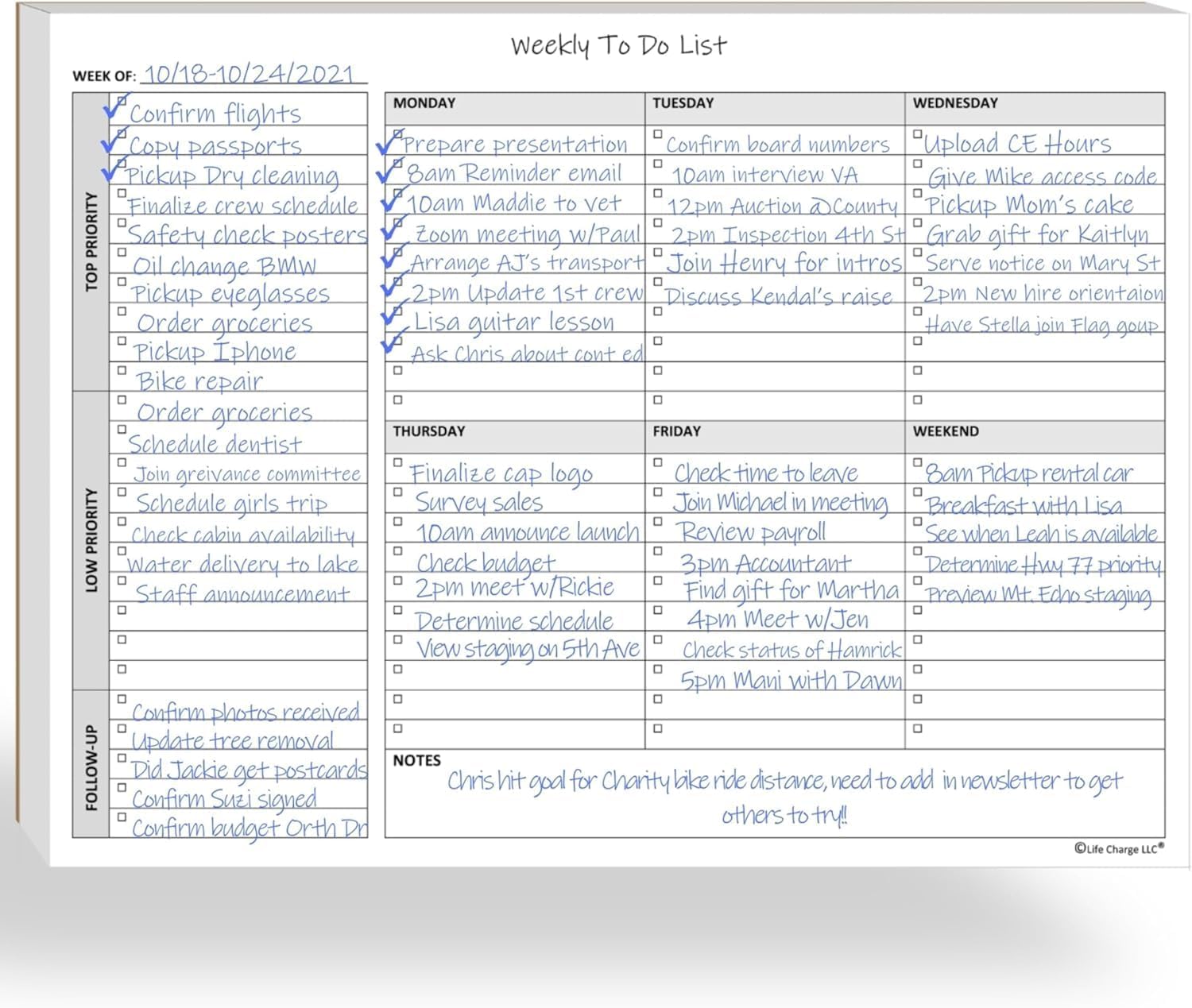
A 15-minute weekly money reset can be much easier. Pick one consistent day and review three things: what came in, what went out, and what needs attention next.
That is it.
You do not need to analyze every purchase or create a perfect spreadsheet. The purpose is awareness. When you look at your money regularly, financial surprises tend to become smaller because you notice them sooner.
If writing helps you think, a simple Erin Condren Budget Book or another physical budgeting journal can turn the process into a short visual routine rather than another screen-based task.
5. Stop paying for things you can easily prevent
Late fees, overdraft charges, missed cancellation windows, and avoidable renewal fees can feel especially frustrating because they provide almost no value. You are simply paying for a mistake or a missed deadline.
Create reminders for annual renewals, insurance reviews, memberships, and bills that have consequences when forgotten. A few minutes of planning can prevent charges that otherwise repeat every year.
Moreover, put important due dates somewhere you will actually see them. Your phone calendar is useful, but a visible reminder can be more effective when your mind is already carrying too much.
6. Lower one recurring household cost
You do not need to reduce every bill. Choose one recurring household expense and investigate it.
Check whether your internet plan still matches your needs. Review insurance coverage and premiums when renewal arrives. Look at energy usage. Compare service tiers. Ask whether you are paying for features you rarely use.
The important part is focusing on one bill at a time. When you are burned out, an enormous financial makeover can create resistance. One bill feels manageable.
Even a $20 monthly reduction becomes $240 a year. A $40 reduction becomes $480. The savings become especially powerful because recurring reductions happen automatically after the initial effort.
7. Build a default meal and coffee routine
Small daily purchases become expensive because repetition hides their total cost. A $5 coffee does not feel like $1,300 a year, but buying one five days a week can approach that amount over a full year.
This does not mean you have to stop buying coffee. Instead, create a default. Perhaps you make coffee at home on workdays and buy your favorite drink once or twice a week.
The same idea works for breakfast, lunch, snacks, and convenience-store purchases. You are not eliminating enjoyment. You are deciding in advance when you want to spend money on it.
That distinction matters because financial peace does not require saying no to everything. It requires making fewer unconscious decisions.
8. Have a 24-hour rule for nonessential purchases
Impulse purchases often feel urgent because marketing creates a sense that you need to decide immediately. You do not.
For nonessential purchases above a personal threshold, wait 24 hours. It could be $30, $50, or $100 depending on your circumstances. During that pause, the emotional intensity usually decreases.
Sometimes you will still want the item. That is fine. The purpose is not to prevent every purchase. It is to separate genuine desire from temporary emotional pressure.
This can be particularly useful during stressful periods when shopping becomes a form of escape. If you are functioning but emotionally overloaded, recognizing that pattern can save money without requiring shame.
9. Use what you already own before buying another version
There is a strange psychological trap in modern shopping: the feeling that a new version will make an old problem disappear.
Sometimes a new product genuinely solves a problem. But often, the thing you need is already somewhere in your home.
Before buying another organizer, kitchen gadget, notebook, beauty product, storage container, or piece of clothing, spend five minutes looking for what you already own.
Create a simple rule: use it, repair it, borrow it, or repurpose it before replacing it.
This is not about becoming extremely frugal. It is about interrupting the assumption that every inconvenience requires a purchase.
10. Automate a small amount of savings
Saving money becomes much harder when you rely on willpower at the end of the month. By then, life has already taken its share.
Instead, automate a small transfer shortly after payday. Even $20 per week equals about $1,040 over a year. If $20 feels uncomfortable, start with $5 or $10. The amount matters less than creating a repeatable system.
The psychological benefit can be just as important as the financial one. Every successful transfer becomes evidence that you are capable of making progress, even when life feels chaotic.
Over time, you can increase the amount when your income changes or another expense disappears.
11. Create a comfort budget for burnout spending
This may sound unusual, but intentionally budgeting for comfort can actually make saving easier.
When people try to eliminate every enjoyable expense, they can eventually feel deprived. Then one stressful day arrives, and the carefully controlled budget collapses under a wave of spending.
Instead, create a small category for things that genuinely make life easier or more enjoyable. Maybe it covers one restaurant meal, a book, a favorite coffee, a relaxing bath product, or another modest comfort.
The key is intention. You are giving yourself permission to enjoy money without letting every stressful moment become a shopping event.
12. Ask one powerful question before spending
Perhaps the most valuable change costs nothing.
Before spending money, ask: Is this worth the life I am building?
That question is more useful than simply asking whether something is affordable. You can technically afford many things that do not support your priorities.
Maybe the answer is yes. Wonderful. Spend intentionally.
Maybe the answer is no. Then you have just protected your future self from another purchase that would have disappeared into the background.
This question can also reveal something deeper. Sometimes overspending is not really about the item. It is about exhaustion, loneliness, stress, boredom, or the desire to feel rewarded after a difficult day.
Once you recognize that, you can look for other forms of relief that do not require opening your wallet.
Why small changes that can save you hundreds every year work better than extreme budgeting
Extreme financial changes can create excitement because they feel dramatic. But dramatic plans often demand dramatic amounts of energy.
And energy is exactly what many overwhelmed people do not have.
Small changes work differently. They reduce friction. They turn decisions into defaults. They make expensive habits visible. They create small wins that build confidence instead of triggering another cycle of guilt.
In other words, you are not trying to become a completely different person overnight. You are making your existing life slightly easier to manage.
That matters when you are experiencing mental fatigue or silent burnout. Modern life often normalizes being constantly available, constantly productive, and constantly behind. It can become normal to function while feeling completely drained.
Your finances can reflect that exhaustion. Forgotten subscriptions, rushed purchases, food waste, convenience spending, and neglected bills are sometimes less about irresponsibility and more about a brain that needs fewer things to manage.
How much could these changes actually save?
There is no universal number because everyone's income, expenses, household size, and priorities are different. Still, the math behind small recurring changes is powerful.
Save $5 per day on unnecessary spending and the annual difference can approach $1,825.
Reduce spending by $20 per week and you can free up about $1,040 per year.
Cut $30 from monthly recurring expenses and that is $360 per year.
Eliminate two $10 monthly subscriptions and you can save $240 per year.
Prevent a $15 weekly convenience purchase and the annual difference can be about $780.
You do not need to accomplish all of these. In fact, trying to do everything at once can recreate the same overwhelm you are trying to escape.
Choose two changes. Make them automatic. Let them become boring. Then add another when you are ready.
The real goal is not just saving money
Saving hundreds of dollars is useful, but the deeper benefit may be something else: clarity.
When you know where your money is going, you stop carrying the same vague financial anxiety around all day. When recurring expenses are under control, you have fewer surprises. When savings happen automatically, you no longer have to negotiate with yourself every payday.
And when you stop treating every financial mistake as evidence that something is wrong with you, you can finally start making decisions from a calmer place.
That is the shift worth protecting.
You are not trying to win at budgeting. You are trying to build a life where your money supports your actual priorities instead of quietly disappearing while you are too exhausted to notice.
Do not wait for the perfect month to start. Pick two changes from this list today, remove one unnecessary expense, automate one small savings transfer, and give your future self something concrete to work with. Small decisions become powerful when you repeat them long enough.
Because the goal is not to make your life smaller. It is to stop letting money disappear in ways that do not make your life better.
1. What are the easiest small changes that can save you hundreds every year?
Some of the easiest changes include canceling unused subscriptions, reducing food waste, limiting convenience spending, reviewing recurring bills, avoiding impulse purchases, and automating a small weekly savings transfer. The key is to focus on expenses that repeat because small recurring savings can add up surprisingly quickly.
2. Can small money-saving changes really make a difference?
Yes. The power comes from repetition. Saving $20 a week, for example, adds up to about $1,040 over a year. You do not necessarily need a dramatic lifestyle change. Several small adjustments can create meaningful annual savings while allowing you to maintain the things that genuinely matter to you.
3. How can I save money when I already feel financially overwhelmed?
Start with one small task instead of trying to fix everything at once. Review your subscriptions, check one recurring bill, or set up a small automatic savings transfer. Financial overwhelm often becomes worse when money requires constant attention, so creating simple systems can reduce both spending and mental fatigue.
4. What expenses should I check first when trying to save money?
Start with recurring expenses because they can continue draining your account without requiring a new decision every month. Check streaming services, memberships, apps, insurance, phone plans, internet services, bank fees, and other automatic charges. Then look at frequent convenience purchases such as delivery, takeout, coffee, and impulse shopping.
5. How much can I save by cutting unnecessary subscriptions?
The amount depends on how many subscriptions you have, but even a few small cancellations can make a noticeable difference. Eliminating two $10 monthly subscriptions would free up about $240 over a year. The bigger benefit is that the savings continue month after month without requiring ongoing effort.
6. How can I stop impulse spending without feeling deprived?
Instead of banning yourself from buying things, create a pause. A 24-hour rule for nonessential purchases can give you enough time to determine whether you genuinely want something or are reacting to stress, boredom, exhaustion, or pressure. Intentional spending tends to be more sustainable than extreme restriction.
7. Can saving money actually reduce financial stress?
It can. Having even a small amount of money set aside can provide a buffer when an unexpected expense appears. More importantly, knowing what is happening with your money can reduce the uncertainty that often fuels financial anxiety. A simple weekly money check-in can help you feel more aware and less reactive.
8. What is the easiest way to start saving consistently?
Automate a small amount shortly after payday. Start with an amount that feels realistic, even if it is only $5 or $10 per week. Once the habit becomes normal, you can increase it. The objective is to make saving a default rather than something you have to remember after everything else has been paid.
9. How much money can I save by spending $20 less per week?
Reducing spending by $20 per week can free up approximately $1,040 over a year. That money could be directed toward an emergency fund, debt repayment, a planned purchase, or another financial priority. The important lesson is that a relatively small weekly change can create a meaningful annual result.
10. Should I stop buying coffee, eating out, or spending on things I enjoy?
Not necessarily. Saving money does not have to mean eliminating every enjoyable expense. A more sustainable approach is to decide which purchases genuinely add value to your life and which ones happen mostly because you are tired, stressed, rushed, or on autopilot. Intentional spending can leave room for enjoyment while reducing unnecessary expenses.
11. Why does saving money feel so difficult even when I know what I should do?
Financial behavior is not purely mathematical. Mental fatigue, stress, emotional spending, convenience, social pressure, and constant decision-making can all affect how people spend. When someone is functioning under chronic stress, managing money can become another source of mental overload. Simplifying the process can therefore be more effective than simply demanding more discipline.
12. What is the biggest mistake people make when trying to save money?
One common mistake is attempting too many changes at once. A complicated budget, dozens of spending restrictions, and unrealistic savings targets can create an exhausting cycle of motivation followed by burnout. Starting with two or three manageable changes gives you a better opportunity to build habits that can actually last.
13. How can I reduce grocery spending without completely changing my diet?
Begin by reducing food waste rather than cutting out everything you enjoy. Check your refrigerator and pantry before shopping, plan a few reliable meals, use ingredients you already have, and avoid buying food simply because it looks appealing in the moment. Small reductions in waste can lower grocery spending without making meals feel restrictive.
14. Is budgeting still necessary if I am trying to make small changes?
A detailed budget is not the only way to manage money. Some people benefit from traditional budgeting, while others find a simple weekly spending check-in easier to maintain. The important thing is having enough awareness to know what is coming in, what is going out, and whether your spending reflects your priorities.
15. How do I know which money-saving changes are right for me?
Look for expenses that are frequent, automatic, or easy to overlook. Then consider which changes would require the least mental effort. The best starting point is usually not the expense that looks most dramatic on paper, but the one you can realistically change without creating more stress in your daily life.
16. Can small changes help if I am living paycheck to paycheck?
They may help create some breathing room, although the amount available to save depends heavily on income, essential expenses, debt, and household circumstances. When money is extremely tight, the first priority may be reducing avoidable expenses and building even a very small buffer rather than pursuing an aggressive savings target.
17. What should I do with the money I save?
Give the savings a specific purpose. You might build an emergency fund, pay down high-interest debt, prepare for an upcoming expense, or save toward a personal goal. Giving the money a destination makes it easier to see why the small sacrifices are worth making.
18. What is one money-saving habit I can start today?
Do a 15-minute money reset. Look at your recent transactions, identify one recurring expense or unnecessary purchase you can eliminate, and move a small amount into savings. You do not need to solve your entire financial life today. You only need to make one decision that helps your future self.
Continue Building Your Financial Clarity
Now that you understand why money anxiety doesn’t go away even when you earn more, the next step is learning how to build a healthier and more peaceful relationship with your money.
You don’t need to fix everything at once.
Start with one small change — one habit, one tool, or one moment of awareness — and observe how your financial mindset begins to shift over time.
You may also like:
👉The Truth About Money Discipline No One Talks About)
👉You Don’t Have a Money Problem — You Have a Behavior Pattern
👉Why You Struggle With Money Even When You Know What To Do
👉You're Not Bad with Money: You're Repeating Patterns