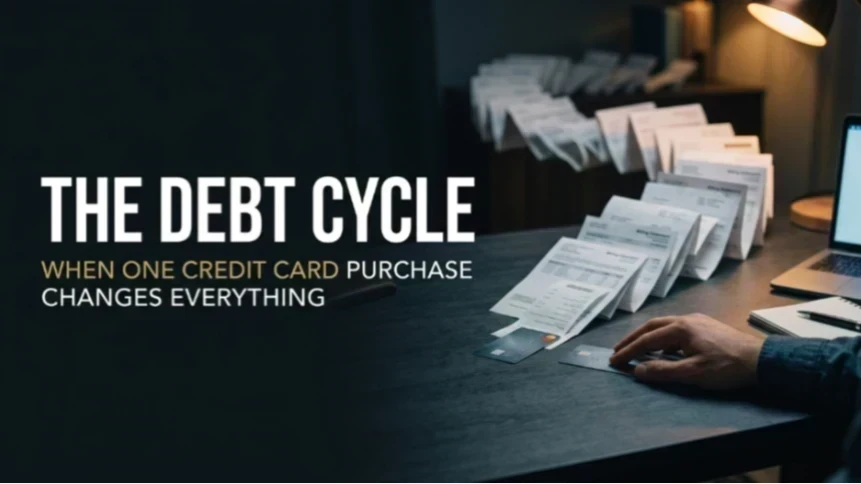








Credit card debt becoming a financial emergency does not always look dramatic from the outside. Sometimes, there is no missed payment, no collection call, and no obvious financial disaster. You are still going to work. You are still buying groceries. You are still showing up for everyone who needs you. And yet, something feels wrong.
You may be functioning, but not okay. You may be mentally exhausted from constantly calculating what can wait until the next paycheck. You may open your banking app, see a number you do not like, and immediately close it. Then life moves on, and the balance follows you.
That quiet pressure matters. Credit card debt can become a financial emergency long before it looks like one to anyone else.
If you have been feeling that strange combination of financial stress, mental fatigue, and autopilot living, do not automatically blame yourself. Modern life makes emotional overload feel normal. But normal does not mean harmless. The sooner you recognize the warning signs, the more options you may have to change what is happening.
Credit Card Debt Becoming a Financial Emergency: The First Warning Signs
The most important thing to understand is that a financial emergency is not defined only by a huge balance. It can begin when your debt starts controlling decisions that used to feel ordinary.
Maybe you use a credit card for groceries because your checking account is running low. Maybe you pay one bill with another card. Maybe the minimum payment looks manageable, but there is almost nothing left after it clears. These moments can seem temporary, especially when you tell yourself that next month will be different.
But repeated temporary problems can become a permanent pattern.
1. You are using credit cards for basic necessities
One of the clearest warning signs is using credit for essentials because your available cash is no longer enough. Groceries, utilities, transportation, medication, or other necessary expenses are fundamentally different from occasional discretionary purchases.
If your credit card is regularly filling the gap between your income and your essential expenses, the problem is bigger than the card itself. Your monthly cash flow may no longer be supporting your actual life.
That realization can feel uncomfortable. Still, it is valuable information. You cannot solve a cash-flow problem by pretending it is simply a spending problem.
For people who spend their days managing work, family responsibilities, appointments, and countless small decisions, financial exhaustion can make this pattern almost invisible. You are not necessarily making reckless choices. You may simply be trying to keep everything moving.
A simple budgeting tool such as YNAB can be useful for seeing where available money is already committed and where the pressure is coming from. The goal is not perfection. It is visibility.
2. You keep making minimum payments without reducing the balance
Minimum payments can create a dangerous sense of relief. The bill gets paid, the account stays current, and you can move on to everything else demanding your attention.
But if you repeatedly make only the minimum payment while continuing to use the card, your balance may barely move. Interest can consume a significant portion of what you send to the lender, making progress feel painfully slow.
This is where emotional burnout enters the picture. You might think, “I am paying my bills, so why am I still behind?” That question can create shame, even when the numbers themselves explain the problem.
Look at the actual statement. Compare the current balance with the balance from several months ago. Then look at how much you have paid during that period. The difference can be a powerful reality check.
When Debt Starts Changing the Way You Live
Credit card debt becoming a financial emergency often becomes easier to recognize when you stop looking only at the balance and start looking at your behavior.
Debt can quietly change how you sleep, shop, plan, communicate, and make everyday decisions. You might postpone something important because you are afraid of another expense. You might avoid opening financial emails because you cannot handle one more number.
In other words, the emergency may show up in your nervous system before it appears in your spreadsheet.
3. You are avoiding your credit card statements
Avoidance is one of the most human responses to financial stress. When a number makes you anxious, looking away can provide immediate emotional relief.
The problem is that avoidance does not make the debt disappear. It removes information you need to make decisions.
If you have started ignoring statements, notifications, emails, or banking apps because you are afraid of what you will see, take that seriously. You do not need to solve everything in one afternoon. You simply need to know what is happening.
Try creating a short financial reset instead of forcing yourself into a massive budgeting session. Ten or fifteen quiet minutes can be enough to write down your total balances, minimum payments, interest rates, and due dates.
For some people, a physical notebook such as a Leuchtturm1917 Notebook can make this process feel less overwhelming because the numbers are placed somewhere tangible instead of remaining as vague worries in your head.
4. You are using one credit card to pay another
Moving balances around does not automatically mean something is wrong. Certain financial strategies can involve balance transfers or consolidation. However, repeatedly borrowing from one source to keep another account current can be a serious warning sign.
The question is not whether you have moved debt. The question is whether the total debt is actually becoming smaller.
If your financial routine has become a cycle of shifting balances, delaying payments, and waiting for the next paycheck to rescue you, pause. That cycle deserves attention before it becomes harder to break.
This is also where social pressure can make things worse. From the outside, everything may look completely normal. You may still have a job, a home, family responsibilities, and ordinary routines. Nobody sees the mental spreadsheet running in your head all day.
That invisible workload can become exhausting. Financial stress is not always loud. Sometimes it is the background noise you have learned to live with.
5. Your credit cards are close to their limits
High credit utilization can be another important warning sign, especially when multiple cards are carrying large balances.
When available credit keeps shrinking, your financial breathing room shrinks with it. A car repair, medical expense, broken appliance, or unexpected bill can suddenly become much harder to handle.
That is why an emergency is not only about what you owe today. It is also about how vulnerable your budget has become to the next unexpected expense.
Imagine having only a small amount of cash available while several cards are nearly full. Even if you are technically current on every payment, your margin for error may be extremely thin.
This is a moment to stop thinking only about paying down debt and start thinking about financial resilience. Protecting a small cash buffer, reducing unnecessary recurring expenses, and understanding your monthly obligations can help you see the entire picture.
A simple budgeting app such as Goodbudget can provide another way to organize spending categories and make upcoming obligations more visible. Again, the tool is not the solution by itself. Awareness is the important part.
6. You are missing payments or paying them late
Late payments deserve immediate attention because they can create additional fees and, depending on the circumstances, may affect your credit history.
If you have missed a payment because you forgot, that is one situation. If you are missing payments because there simply is not enough money to cover everything, that is a different and more urgent signal.
The distinction matters.
When several bills compete for the same limited dollars, you need to understand exactly where your money is going. Start with essential housing, utilities, food, transportation, insurance, and other critical obligations. Then examine debt payments and discretionary spending.
Do not let shame make the decision for you. Shame says, “I should have handled this already.” Clarity asks, “What is happening, and what needs to happen next?” The second question is far more useful.
7. You feel trapped even though you are still functioning
This may be the most emotionally important warning sign.
You can be employed and still be financially overwhelmed. You can pay bills and still feel trapped. You can look responsible to everyone around you and still spend your nights worrying about money.
Credit card debt becomes especially concerning when it starts consuming your mental energy. You constantly think about the next paycheck. You calculate purchases before making them. You feel guilty spending money on yourself. You lie awake replaying financial decisions.
That is not simply a math problem anymore. It has become part of your daily emotional load.
And for women carrying work, household responsibilities, caregiving, relationships, and the invisible labor of remembering everything, financial stress can become one more weight added to an already overloaded system.
You do not need to wait until you are completely overwhelmed before deciding that something needs to change.
Why Financial Emergencies Often Start Quietly
One reason credit card debt can become so difficult to confront is that modern life rewards functioning, not necessarily well-being.
You keep going because you have to. You answer the messages. You go to work. You make dinner. You handle the appointment. You pay whatever bill is most urgent. You promise yourself that you will deal with the bigger financial picture later.
Then later becomes next month.
And next month becomes another year.
This is how financial problems can grow quietly. There may be no single catastrophic decision. Instead, there are dozens of small moments when you choose immediate relief because you are tired.
That does not make you irresponsible. It means your financial system may be demanding more mental energy than you currently have available.
What to Do If Your Credit Card Debt Feels Like an Emergency
The first step is not to panic. It is to stop operating on guesses.
Write down every credit card balance. Include the current balance, interest rate, minimum payment, and due date.
Separate essentials from optional spending. Focus first on housing, utilities, food, transportation, insurance, and other necessary expenses.
Stop adding avoidable debt where possible. If you can safely use cash or another existing resource for a necessary expense, avoid increasing a high-interest balance.
Contact your card issuer if you are struggling. Ask about available hardship programs, payment options, or other assistance before the situation becomes more severe.
Consider qualified nonprofit credit counseling. A reputable counselor can help you understand your options and create a debt-management plan when appropriate.
Create a small financial reset routine. A weekly check-in can be less intimidating than waiting until the end of the month and discovering a problem after it has grown.
Most importantly, do not confuse awareness with failure. Knowing your numbers may feel uncomfortable for a few minutes, but uncertainty can keep you stressed for months.
You Do Not Need to Fix Everything Tonight
When debt has been hanging over you for a long time, it is easy to believe that the only acceptable solution is a dramatic turnaround.
Pay everything off. Build a huge emergency fund. Never use a credit card again. Completely transform your spending.
That pressure can actually make it harder to begin.
Instead, look for the first clear move. Maybe that means opening the statement you have been avoiding. Maybe it means adding up your balances. Maybe it means canceling one forgotten subscription. Maybe it means calling the card issuer and asking what options exist.
Small actions matter because they restore something debt often takes away: a sense of control.
And once you can see the problem clearly, you can start making decisions based on facts instead of fear.
The Truth About Credit Card Debt and Financial Peace
Credit card debt becoming a financial emergency is not always about the size of the number. It is about what that number is doing to your life.
If debt is forcing you to borrow for necessities, avoid statements, miss payments, use one card to cover another, or live in constant financial anxiety, those are meaningful signals.
You are allowed to take them seriously.
You are also allowed to start without having a perfect plan.
Financial progress rarely begins with one heroic decision. More often, it begins with an honest look at what is happening and one action that makes tomorrow slightly easier than today.
Do not wait for your credit card debt to become impossible to ignore. Take 15 minutes today, open the numbers, write down what you owe, and choose one concrete next step. The goal is not to fix your entire financial life tonight. The goal is to stop letting uncertainty make the decisions for you.
Once the numbers are visible, the fear often becomes more specific. And specific problems can be worked on. Start there.
FAQ: Credit Card Debt Becoming a Financial Emergency
1. How do I know if my credit card debt has become a financial emergency?
Credit card debt may be becoming a financial emergency when it starts affecting your ability to pay for basic necessities or maintain your normal monthly expenses. Warning signs include relying on credit for groceries and bills, making only minimum payments, missing due dates, using one credit card to pay another, reaching your credit limits, or constantly worrying about your next payment.
The biggest warning sign is often not the balance itself. It is when debt starts controlling your everyday decisions and leaving you with little financial breathing room.
2. Is making only the minimum credit card payment a sign of financial trouble?
It can be, especially when you are making minimum payments month after month and the balance is barely decreasing.
A minimum payment can keep an account current, but interest charges can make it difficult to make meaningful progress. If you are also continuing to use the card, your debt can remain stuck or increase.
If the minimum payment is the only amount you can realistically afford, that is important information about your current cash flow—not a reason to feel ashamed.
3. What does it mean if I use my credit card for groceries and other necessities?
Regularly using credit cards for necessities can indicate that your income and essential expenses are no longer comfortably aligned.
There is an important difference between using a credit card as a payment method and using it because you do not have enough cash to cover the purchase. If you are repeatedly charging groceries, utilities, transportation, or other essentials because your checking account is running short, it is worth examining your monthly cash flow immediately.
4. Can credit card debt cause financial anxiety and mental exhaustion?
Yes. Persistent financial pressure can become a major source of mental and emotional overload.
You may find yourself thinking about money while working, lying awake at night, avoiding your bank account, feeling guilty about ordinary purchases, or constantly calculating whether your paycheck will last.
This can create a cycle where mental fatigue makes financial decisions harder, while financial uncertainty creates even more mental fatigue. Recognizing that cycle is an important first step toward breaking it.
5. Is avoiding my credit card statements a serious warning sign?
It can be.
Avoiding a statement may provide temporary emotional relief, but it also prevents you from knowing exactly what is happening with your debt. If you are afraid to check your balance, interest charges, minimum payment, or due date, that fear deserves attention.
You do not have to solve everything when you open the statement. Start by collecting the facts. Knowing the numbers gives you something you can actually work with.
6. What should I do if I am using one credit card to pay another?
If you are repeatedly borrowing from one credit card to cover another card's payment, treat it as a significant warning sign.
The important question is whether your total debt is actually decreasing. Moving debt between accounts can sometimes be part of a deliberate strategy, such as a balance transfer, but repeatedly shifting balances simply to keep accounts current can indicate that your monthly cash flow is under serious pressure.
At that point, review your complete debt picture and consider contacting your credit card companies or a qualified nonprofit credit counselor about your options.
7. Can I be in a financial emergency even if I have a good income?
Absolutely.
A higher income does not automatically protect someone from financial stress or excessive debt. Housing costs, childcare, medical expenses, family responsibilities, lifestyle inflation, existing debt, and unexpected expenses can consume a large portion of an otherwise solid income.
You can have a decent salary and still reach the end of every month with nothing left.
The real question is not simply how much you earn. It is whether your income provides enough room after essential expenses and debt obligations.
8. What are the biggest warning signs that credit card debt is getting worse?
Some of the clearest warning signs include:
Your credit card balance increases every month.
You regularly make only minimum payments.
You use credit to pay for necessities.
You miss payments or pay bills late.
You are close to your credit limits.
You use one card to pay another.
You avoid checking your statements.
You have little or no emergency savings.
Your debt prevents you from paying other important bills.
You think about money constantly.
You feel trapped despite working and earning income.
Unexpected expenses immediately have to go on a credit card.
The more of these signs you recognize, the more important it becomes to stop relying on autopilot and examine the situation directly.
9. Should I stop using my credit cards completely?
Not necessarily. The right approach depends on your financial circumstances.
For some people, temporarily reducing credit card use can prevent balances from growing while they work on a repayment strategy. For others, completely stopping credit card use may not be realistic if the cards are currently being used for essential expenses.
The priority is understanding why you are using credit and whether new charges are making your overall debt harder to manage.
10. How can I start getting out of credit card debt when I feel completely overwhelmed?
Start smaller than you think.
Write down every credit card balance, interest rate, minimum payment, and due date. Then calculate how much money is actually available after essential monthly expenses.
You do not need to create a perfect five-year financial plan on day one.
Your first goal is clarity. Once you know exactly what you owe and where your money is going, you can begin evaluating repayment strategies, reducing unnecessary expenses, increasing available cash flow, and seeking professional assistance if needed.
11. Should I contact my credit card company if I cannot afford my payments?
If you are struggling to make payments, contacting the card issuer sooner rather than later can be worthwhile. Ask whether they offer hardship programs, payment arrangements, temporary assistance, or other options.
Do not wait until the situation becomes significantly worse simply because you feel embarrassed about asking.
Financial problems are easier to address when they are identified early.
12. When should I consider credit counseling for credit card debt?
Credit counseling may be worth considering when you are struggling to organize multiple debts, falling behind on payments, unable to create a workable repayment plan, or feeling overwhelmed by the entire situation.
Look for reputable nonprofit organizations and understand exactly what services and fees they provide before agreeing to anything.
A qualified counselor can help you understand your options, but you should still make the final decisions about your finances.
13. Can credit card debt affect my credit score?
Yes. Depending on your circumstances, factors such as late or missed payments and high credit utilization can affect your credit profile.
That is another reason not to ignore growing debt. Your financial situation is not only about how much money you owe today. The way accounts are managed can also affect future borrowing opportunities.
14. What is the first thing I should do if my credit card debt feels like an emergency?
Do not start by judging yourself. Start by gathering the numbers.
Write down:
Total balance on each card
Interest rate
Minimum payment
Payment due date
Available credit
Monthly essential expenses
Amount of income remaining after necessities
Then identify the most urgent problem.
Maybe you are facing a missed payment. Maybe your debt is growing every month. Maybe you simply have no cash left after making minimum payments.
Once the problem has a name, it becomes much easier to decide what needs attention first.
15. Is credit card debt a personal failure?
No. Debt is a financial condition, not a measurement of your worth.
People can accumulate credit card debt because of emergencies, income disruptions, rising living costs, family responsibilities, unexpected expenses, emotional spending, or simply years of small financial decisions that eventually compound.
Taking responsibility for your numbers does not require punishing yourself for how you got there.
The most productive question is not, “How did I let this happen?”
It is, “What can I change from this point forward?”
That question creates room for action—and action is where financial recovery begins.
Continue Building Your Financial Clarity
Now that you understand why money anxiety doesn’t go away even when you earn more, the next step is learning how to build a healthier and more peaceful relationship with your money.
You don’t need to fix everything at once.
Start with one small change — one habit, one tool, or one moment of awareness — and observe how your financial mindset begins to shift over time.
You may also like:
👉 The Truth About Money Discipline No One Talks About)
👉 You Don’t Have a Money Problem — You Have a Behavior Pattern
👉 Why You Struggle With Money Even When You Know What To Do
👉 You're Not Bad with Money: You're Repeating Patterns