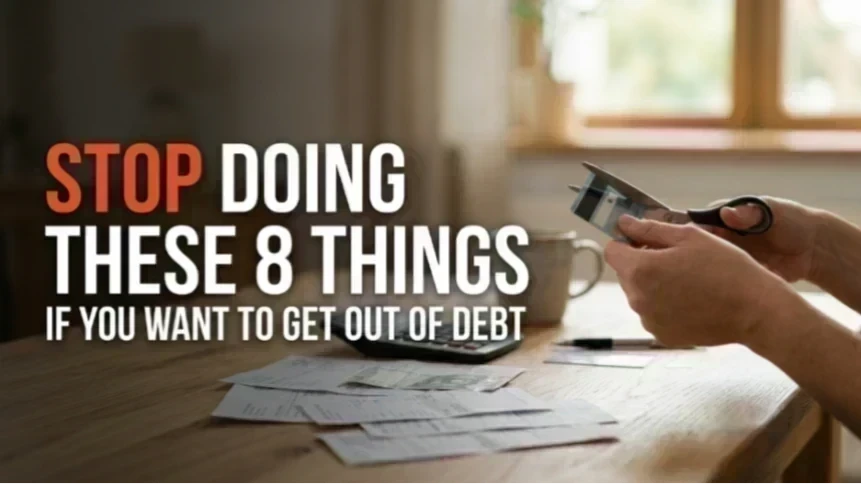





Stop doing these 8 things if you want to get out of debt. Not because you are irresponsible. Not because you need to become obsessed with every dollar. And definitely not because you need another complicated financial system to manage on top of everything else you already carry.
Sometimes debt becomes less about the numbers and more about the mental weight attached to them. You can be functioning, working, paying bills, taking care of other people, answering messages, making dinner, and getting through the week while quietly feeling like something is very wrong with your money.
That feeling matters.
When mental fatigue and financial stress pile up, even small money decisions can feel exhausting. You may avoid checking your balance because you already know it will make you anxious. You may use a credit card because it gets you through a difficult week. You may promise yourself that next month will be different.
Then next month arrives.
The good news is that getting out of debt does not require fixing your entire life overnight. It starts by identifying the behaviors that keep the cycle alive and replacing them with simpler decisions you can actually repeat.
1. Stop Avoiding Your Debt Because It Makes You Anxious
The first step to get out of debt is not always paying more. It is facing the numbers. Avoidance feels like relief for a few minutes, but it quietly increases uncertainty. And uncertainty is fuel for financial anxiety.
If you have ever opened a banking app, seen a balance you did not expect, and immediately closed it, you are not alone. When your brain is already overloaded, another uncomfortable number can feel like one more problem you cannot solve.
But debt becomes less frightening when it becomes specific.
Write down each balance, minimum payment, interest rate, and due date. You do not need to solve everything that day. You simply need to stop letting the unknown control you.
Make the problem visible
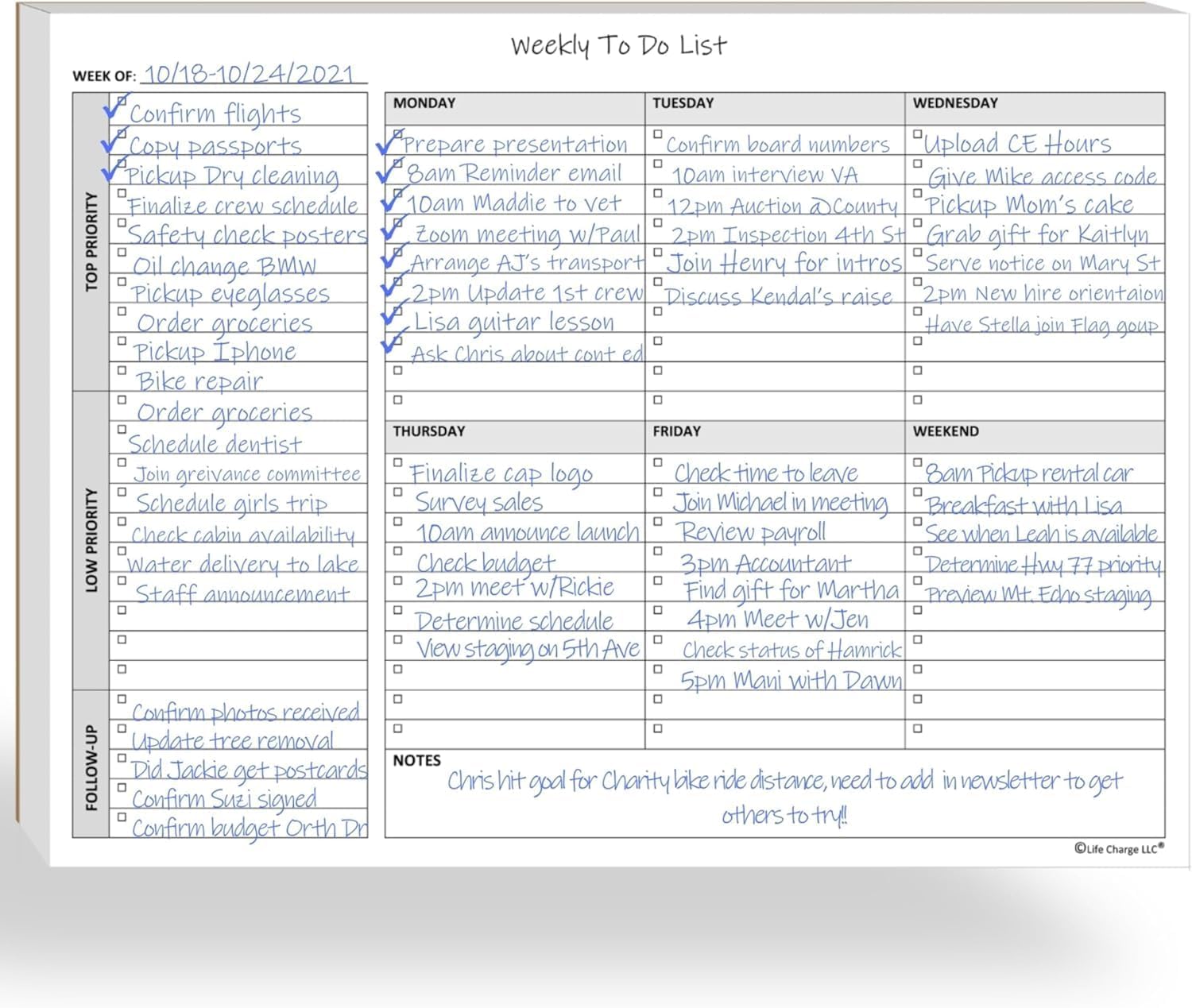
A simple notebook or financial journal can help turn vague worry into something concrete. A Rhodia Goalbook Journal, for example, can be used as a dedicated money reset space where you record balances, payments, questions, and small wins without turning the process into another complicated project.
Moreover, seeing a debt decrease by even $50 can create something powerful: evidence that your actions are working.
2. Stop Treating Credit Like Extra Income
A credit card can make a financial problem feel temporarily invisible, but the problem does not disappear. If you routinely use credit to cover groceries, utilities, entertainment, or everyday expenses because your income is already committed, it becomes much harder to get out of debt.
This is especially difficult when you are emotionally exhausted. Modern life makes convenience incredibly easy. One tap can solve dinner. Another tap can buy something you need tomorrow. A few days later, the transactions can blend together.
In other words, the issue is not always a lack of discipline. Sometimes it is a system that makes spending effortless while making the consequences feel distant.
Before using credit, ask yourself one uncomfortable but useful question: If I could not put this purchase on a card, would I still buy it today?
If the answer is no, pause.
That pause is not deprivation. It is awareness.
Build friction into everyday spending
One practical approach is to separate money for regular expenses before discretionary spending begins. A budgeting app such as YNAB can help you give your available money specific jobs instead of mentally treating your entire bank balance as spendable.
The goal is not to create a perfect budget. The goal is to make tomorrow's financial reality visible before today's purchase happens.
3. Stop Paying Attention Only to the Minimum Payment
The minimum payment keeps an account current, but it may not move you toward freedom quickly. When debt carries interest, paying only the minimum can allow a balance to remain for years.
That does not mean you should neglect other essentials just to make a dramatic debt payment. Rent, food, utilities, insurance, and minimum payments still matter. But once your necessities are covered, look for a repeatable amount you can send toward one priority debt.
Even an extra $25 or $50 can matter because the habit compounds over time.
Choose a debt payoff strategy
Some people prefer the debt avalanche method, which focuses extra payments on the highest-interest debt first. Others prefer the debt snowball method, which targets the smallest balance first for quicker psychological wins.
The best method is the one you can actually follow.
And remember this: progress that feels boring is still progress. You do not need a dramatic transformation every month.
4. Stop Using Shopping as Your Emotional Reset Button
Sometimes the purchase is not about the product at all. It is about how you want to feel afterward.
When you are burned out, lonely, overwhelmed, or mentally exhausted, spending can create a brief sense of control. You choose something. You receive something. You get a moment of anticipation.
Then the feeling fades.
This is where emotional spending can quietly interfere with your goal to get out of debt. The solution is not to shame yourself. Shame usually creates more stress, and more stress can create more spending.
Instead, identify the emotion before you identify the purchase.
Ask what you actually need
Before buying something nonessential, ask: Am I hungry, tired, bored, stressed, lonely, or genuinely interested in this item?
Sometimes what you need is not another package arriving at the door. It is sleep, quiet, a walk, a conversation, or fifteen minutes without anyone asking anything from you.
That realization can feel surprisingly powerful because it separates the emotional need from the financial decision.
5. Stop Trying to Fix Your Entire Financial Life at Once
Trying to change everything simultaneously can create another form of mental overload. You decide you will cancel every subscription, cook every meal, stop shopping, save an emergency fund, pay off three cards, invest, track every transaction, and never make another mistake.
It sounds motivating for about three days.
Then real life happens.
You have a difficult week at work. Someone gets sick. The car needs attention. You are exhausted. Suddenly the perfect financial plan feels impossible, and you may interpret that as failure.
You did not fail. The system was too demanding.
Make your plan smaller
Pick one debt priority. Pick one spending leak. Pick one weekly money check-in. That is enough to begin.
A simple 15-minute reset once a week can be more valuable than spending two hours creating a budget you will never open again.
Moreover, smaller habits reduce decision fatigue. When a behavior becomes familiar, it requires less emotional energy to repeat.
6. Stop Ignoring the Small Expenses That Keep Repeating
Small expenses are not automatically bad, but repeated expenses deserve attention. The problem is rarely one coffee or one streaming subscription. The bigger issue is when dozens of automatic or habitual expenses continue without anyone consciously choosing them.
Look for subscriptions, delivery fees, forgotten memberships, convenience purchases, app charges, duplicate services, and recurring expenses that no longer match your current life.
You may discover that your financial problem is not one enormous mistake. It is a collection of decisions running quietly in the background.
Do a recurring-expense audit
Go through the last 30 days of transactions and mark every recurring expense. Keep what genuinely improves your life. Question what you barely use.
For example, a Rocketbook Smart Reusable Notebook can be useful for keeping a simple recurring-expense list and weekly money notes in one place, especially if you prefer writing things down but do not want piles of paper.
The point is not to eliminate every enjoyable expense. It is to stop paying for things you have mentally forgotten.
7. Stop Comparing Your Financial Life to Everyone Else's
Comparison can make debt feel like a personal failure when it may simply be a hidden reality you cannot see.
You see someone buying a house, taking a vacation, renovating a kitchen, upgrading a car, or posting a perfectly organized financial life online. What you cannot see is their income, family support, debt, savings, credit limits, inheritance, stress, or private financial decisions.
Social media gives you the highlight reel. It rarely gives you the balance sheet.
That matters because comparison can trigger two destructive responses: hopelessness or spending.
You may think, I will never have what they have. Or you may decide to buy something because you feel behind.
Neither reaction helps you get out of debt.
Measure against your previous self
Instead, track meaningful indicators: total debt, monthly interest, emergency savings, credit utilization, and how often you avoid unnecessary borrowing.
If your debt was $18,000 and is now $16,800, that is progress. If you stopped adding new debt for three months, that is progress too.
Financial freedom is built in private long before it becomes visible in public.
8. Stop Believing You Have to Be Perfect to Get Out of Debt
Perfection is one of the most underrated enemies of debt payoff. You do not need to make the perfect purchase every time. You do not need to follow your budget flawlessly. You do not need to become a different person before you deserve financial stability.
You need a system that survives imperfect weeks.
There will be birthdays. Emergencies. Exhausting days. Unexpected bills. Meals you do not have the energy to cook. Mistakes.
The goal is not to eliminate every setback. The goal is to recover faster.
Create a reset rule
Instead of saying, I ruined my budget this month, create a simple rule: The next decision is a reset.
If you overspend on Tuesday, you do not need to wait until Monday. If you use your credit card unnecessarily, you do not need to give up on the entire plan. If you miss a debt payment target, you adjust and continue.
This mindset is especially important when burnout and mental fatigue are already present. You can be functioning and still not be okay. You can be responsible and still be overwhelmed. And you can be making progress without feeling financially confident yet.
What Getting Out of Debt Really Requires
Getting out of debt requires clarity, consistency, and fewer decisions that work against your future self. It does not require becoming obsessed with money.
Start by facing your numbers. Stop adding unnecessary debt. Choose a payoff strategy. Create friction around emotional spending. Simplify your financial routine. Audit recurring expenses. Stop comparing your life to other people's highlight reels. And most importantly, stop expecting perfection.
These changes may look small from the outside. But small changes repeated consistently can completely alter the direction of your finances.
Your first reset can happen today
Take 15 minutes. Write down your debts. Look at your last 30 days of spending. Find one recurring expense you no longer need. Decide which debt receives your next extra payment. Then stop.
You do not need to solve the next five years tonight.
You only need to make your next financial decision more intentional than your last one.
Do not wait until you feel less overwhelmed to take control of your debt. Open your accounts, face the numbers, choose one debt, and make one clear decision today. The version of you who wants financial peace is counting on the decision you make next.
And when the process feels slow, remember what you are really working toward. It is not just a lower balance. It is fewer financial emergencies, fewer nights replaying purchases in your head, less dependence on credit, and more room to breathe.
That is why learning to get out of debt is about more than money. It is about getting some of your mental space back.
What should I stop doing if I want to get out of debt?
Stop treating debt as something you can deal with “later.” Avoiding balances, relying on credit for everyday expenses, making only minimum payments when you can afford more, and spending to cope with stress can keep you trapped in the same cycle. The first move is to face the numbers and identify which habits are quietly keeping your debt alive.
Can I really get out of debt if I am already overwhelmed?
Yes. Feeling overwhelmed does not mean you are bad with money or incapable of becoming debt-free. In fact, mental fatigue can make financial decisions much harder. Instead of trying to fix everything at once, start with one debt, one spending habit, and one simple weekly money check-in. Clarity often comes before confidence.
What is the biggest mistake people make when trying to pay off debt?
One of the biggest mistakes is creating an extreme plan that works for a few weeks and then becomes impossible to maintain. Cutting everything, tracking every penny, and expecting perfection can create burnout. A realistic strategy that you can follow during stressful, ordinary weeks is far more powerful than a perfect plan you eventually abandon.
Should I stop using credit cards completely to get out of debt?
Not necessarily. The important question is whether your credit card is helping you manage planned spending or allowing you to spend money you do not actually have. If you regularly use credit to cover basic expenses because your income is already committed, continuing to borrow can make debt harder to escape.
How can I stop emotional spending when I am stressed?
First, identify what you are actually trying to change about how you feel. Emotional spending often provides a short burst of relief when someone is exhausted, bored, anxious, lonely, or overwhelmed. Before making a nonessential purchase, pause and ask whether you need the item or whether you need rest, comfort, connection, or a break. That small pause can interrupt the pattern.
Is it better to pay the smallest debt first or the debt with the highest interest?
Both approaches can work. The debt snowball method focuses on the smallest balance, which can provide quick psychological wins and motivation. The debt avalanche method focuses on the highest interest rate, which can reduce interest costs more efficiently. The best strategy is the one you can consistently follow without creating additional financial stress.
Can small changes really make a difference when I have a lot of debt?
Absolutely. A small change may not feel dramatic today, but repeated decisions can change your financial trajectory. Avoiding new debt, canceling an unused subscription, making an extra $25 payment, or redirecting one recurring expense can become meaningful over months and years. Debt freedom is often built through ordinary decisions repeated consistently.
What should I do first if I have no idea how much debt I actually have?
Create a complete debt snapshot. List every debt, current balance, interest rate, minimum payment, and due date. Do not worry about solving everything immediately. Knowing exactly what you owe removes some of the uncertainty that makes debt feel larger and more frightening than it already is.
Do I have to give up everything I enjoy to become debt-free?
No. A sustainable debt plan should leave room for being human. Completely eliminating every enjoyable expense can make your plan feel like punishment, increasing the chance that you eventually abandon it. The goal is to spend intentionally, reduce unnecessary borrowing, and direct more money toward your priorities without making your entire life miserable.
What if I mess up while trying to get out of debt?
Reset immediately instead of waiting for a new month, a new paycheck, or a new year. One overspending mistake does not erase your progress. The most important skill is learning how to recover without turning one bad decision into an entire week or month of financial avoidance. Progress does not require perfection.
Continue Building Your Financial Clarity
Now that you understand why money anxiety doesn’t go away even when you earn more, the next step is learning how to build a healthier and more peaceful relationship with your money.
You don’t need to fix everything at once.
Start with one small change — one habit, one tool, or one moment of awareness — and observe how your financial mindset begins to shift over time.
You may also like:
👉 The Truth About Money Discipline No One Talks About)
👉 You Don’t Have a Money Problem — You Have a Behavior Pattern
👉 Why You Struggle With Money Even When You Know What To Do
👉 You're Not Bad with Money: You're Repeating Patterns