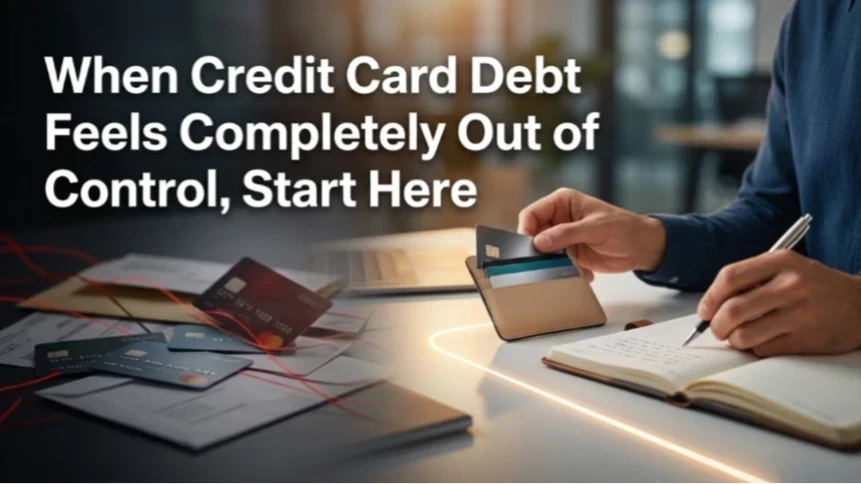
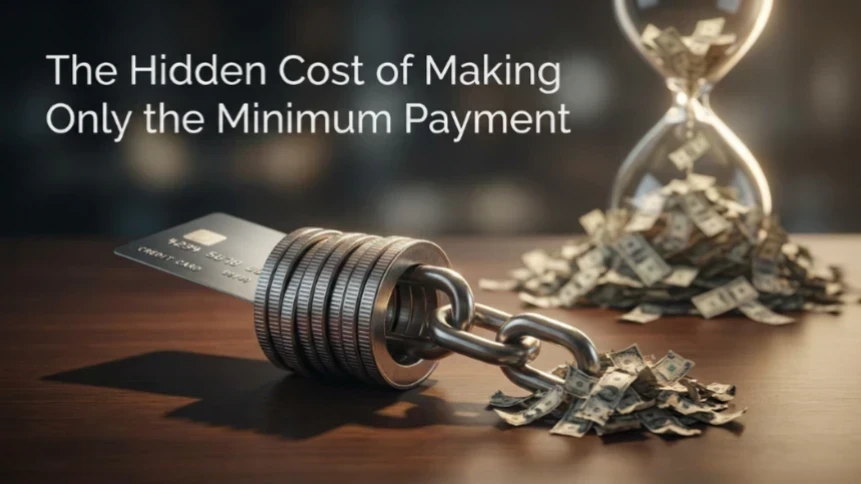





The hidden cost of making only the minimum credit card payment is not just the interest you see on your statement. It is the time, mental energy, flexibility, and future choices that quietly disappear while a balance stays alive.
Maybe you know the feeling. You open your credit card statement, see a minimum payment that seems manageable, and think, “At least I can handle that this month.” Then life happens. Groceries cost more. The car needs something. A child needs something. Work is exhausting. You are already carrying a hundred decisions in your head, so paying the minimum feels like one less problem to solve.
And honestly, that makes sense.
The problem is that a minimum payment can create a dangerous illusion of control. You are technically keeping the account current, but the balance may barely move. Meanwhile, interest continues accumulating, and tomorrow's income is already being recruited to pay for yesterday's spending.
This is especially difficult when you are functioning but not okay. Mental fatigue can make financial decisions feel heavier than they should. When you are overwhelmed, the easiest option often wins. The minimum payment is easy. The long-term cost is invisible.
The Minimum Credit Card Payment Is Designed to Feel Manageable
The first thing to understand is simple: a minimum credit card payment is usually designed to keep your account current, not to help you become debt-free quickly. That distinction changes everything.
Your card issuer calculates a required minimum based on its terms. Depending on the account, the amount may be a percentage of your balance, a fixed amount, interest and fees, or a combination. The exact formula varies, but the emotional experience is often the same: the number looks small enough to fit into a difficult month.
That is where the trap can begin.
Imagine a credit card balance of $5,000 with a relatively high annual percentage rate. If you continue adding new purchases while making only the required minimum payments, you can spend a surprisingly long time paying for the same original balance. Even when you stop adding new debt, interest can consume a meaningful portion of each payment.
In other words, the minimum payment can protect you from a late payment today while keeping you financially attached to the balance for much longer.
A useful tool for people who want a clearer picture is a simple budgeting app such as YNAB. You do not need an elaborate financial system. The point is to make the invisible visible: what comes in, what goes out, and how much of your income is already committed before the month begins.
Why the number feels safer than it really is
Human beings tend to focus on immediate relief. That is not a character flaw. It is how decision-making works under pressure. When you are mentally exhausted, avoiding a large uncomfortable number can feel like self-protection.
The minimum payment says, “You can get through this month.”
But it does not necessarily say, “You are getting closer to financial freedom.”
That difference is the hidden cost.
The Real Cost of Making Only the Minimum Credit Card Payment
Making only the minimum credit card payment can turn a temporary financial problem into a long-term expense. The longer a balance remains outstanding, the more opportunities there are for interest charges to accumulate.
Consider a hypothetical $5,000 balance at a 24% APR. The monthly interest rate is roughly 2%. Before you make any progress against the principal, that balance could generate around $100 of interest in a month. The actual result depends on the card's terms, daily balance calculations, payment timing, and new purchases, but the illustration shows why high-interest debt can feel like it refuses to move.
Now imagine repeating that experience month after month.
The cost is not merely dollars. It is momentum.
Money that could have gone toward an emergency fund stays tied to the credit card. Money that could have reduced another debt is absorbed by interest. Money that could have created breathing room disappears before you ever get to decide what you want to do with it.
This is why credit card debt can create such intense emotional pressure. You may earn a decent income and still feel strangely poor because part of your paycheck belongs to financial decisions you made months ago.
The opportunity cost nobody puts on the statement
Your statement tells you what you owe. It does not always make the opportunity cost emotionally obvious.
That extra $150 could have started an emergency fund.
That $300 could have reduced a high-interest balance faster.
That $500 could have covered an unexpected car repair without reaching for another card.
That monthly interest charge could have been money available for your future instead.
Moreover, debt can affect your sense of safety. When every unexpected expense feels like a potential crisis, your nervous system never really gets to stand down. You may find yourself checking your bank account repeatedly, avoiding statements, or mentally calculating purchases before you even need them.
That is financial stress becoming mental fatigue.
Why Credit Card Debt Can Feel Impossible When You Are Already Overwhelmed
Credit card debt is not only a math problem; it can become a mental-load problem. And this matters because people often blame themselves for behavior that is partly driven by exhaustion, uncertainty, and emotional overload.
Modern life normalizes functioning while emotionally overwhelmed. You answer emails. You get everyone where they need to go. You work. You cook. You remember appointments. You handle problems. From the outside, everything looks fine.
Inside, however, you may be operating on autopilot.
When your brain is overloaded, long-term financial planning can feel impossible. A minimum payment provides immediate closure. You make it, receive confirmation that the account is current, and move on to the next problem.
There is no shame in recognizing this pattern. In fact, recognition is where change begins.
The emotional cycle behind minimum payments
An unexpected expense creates financial pressure.
The credit card provides immediate relief.
The balance becomes another monthly obligation.
The minimum payment keeps the account current.
The balance remains large because interest continues accumulating.
The next unexpected expense creates pressure again.
Eventually, you may feel like you are working constantly without moving forward.
That feeling is not imaginary. When debt payments consume future income, your financial flexibility shrinks. And when flexibility shrinks, even small problems can feel enormous.
A simple journaling tool such as Day One can be useful here, not because writing magically solves debt, but because putting financial fears into words can help separate an actual problem from the vague feeling that everything is falling apart. Clarity is powerful when your mind has been running in circles.
What You Should Do Instead of Automatically Paying the Minimum
The goal is not to panic and throw every dollar at your credit card. The goal is to create a realistic plan that reduces the balance without creating another cycle of financial stress.
Start with the numbers you can control.
1. Find your exact balance and APR
Do not rely on memory. Log into your account and write down the current balance, APR, minimum payment, and due date. If you have multiple cards, list each one separately.
This can feel uncomfortable, especially if you have been avoiding the numbers. Do it anyway. What you can see, you can plan for.
2. Stop treating the minimum as your debt-payoff plan
The minimum is the floor, not the destination.
If your budget allows an additional $25, $50, $100, or more, decide on that amount intentionally. Consistency matters. A payment you can repeat every month is often more useful than an ambitious payment that leaves you short of cash two weeks later.
3. Build a small cash buffer
This step surprises people. If you put every available dollar toward debt and then have no cash for an unexpected expense, you may simply end up using the credit card again.
A modest emergency cushion can create the breathing room necessary to stop repeating the cycle.
4. Avoid adding new purchases when possible
Paying down a balance while continuing to charge new expenses can feel like walking on a treadmill. If you can reduce new card spending while attacking the existing balance, your progress becomes easier to see.
For people who prefer a physical reminder of spending, a simple budgeting notebook such as GoGirl Planner can turn an abstract debt goal into something visible. The tool itself is not the solution. The awareness and consistency it encourages are what matter.
A Simple Credit Card Debt Reset You Can Start This Week
You do not need to fix your entire financial life tonight. You need to interrupt the autopilot pattern.
Set aside 20 minutes. Put your phone on silent. Open your credit card statements. Write down every balance and APR. Then answer three questions honestly:
How much am I paying in minimum payments each month?
How much additional money can I realistically direct toward debt?
What usually causes me to reach for my credit card when I am stressed?
The third question is more important than it looks.
Maybe you spend when you are exhausted. Maybe convenience purchases have become normal because you are too mentally drained to plan. Maybe shopping gives you a brief feeling of control when everything else feels chaotic. Maybe you are covering expenses that your current income simply does not comfortably support.
Understanding the trigger does not excuse the behavior. It gives you something you can actually change.
Then choose a payoff strategy. The debt avalanche method prioritizes the highest-interest balance first, which can reduce interest costs mathematically. The debt snowball method focuses on the smallest balance first, which can create faster psychological wins. Neither method is universally perfect. The best strategy is the one you can realistically follow.
The Moment You Stop Seeing Debt as a Personal Failure
One of the most powerful financial shifts is realizing that being in debt does not mean you are bad with money.
You may have made mistakes. You may have ignored statements. You may have spent more than you should have. You may have used a credit card because there was genuinely no better option at the time.
None of that means you have to keep doing it.
The goal is not to punish your past self. The goal is to give your future self more choices.
Imagine opening your statement six months from now and seeing a balance that is meaningfully lower. Imagine an unexpected expense arriving without immediately producing panic. Imagine receiving a paycheck and knowing more of it belongs to you.
That is what paying more than the minimum can ultimately buy: not just a lower balance, but breathing room.
And breathing room is one of the most valuable forms of financial freedom.
What to remember when progress feels slow
Interest makes high-rate credit card debt expensive over time.
The minimum payment keeps an account current but may not reduce the balance quickly.
Small additional payments can matter when they are consistent.
A cash buffer can help prevent new debt when emergencies happen.
Understanding emotional spending triggers can make a payoff plan easier to maintain.
You do not need perfection; you need a repeatable system.
Do not let another month disappear into the minimum payment. Open your credit card statement today, write down the balance and APR, and choose one specific amount you will pay above the minimum. It does not have to be huge. It has to be intentional. Take the first step now, because the version of you six months from today deserves to inherit more freedom, not another balance.
Making only the minimum credit card payment can feel harmless because the immediate number is small. But the hidden cost is measured in interest, time, stress, and lost financial flexibility.
That said, you do not need to solve everything at once. Start with visibility. Then create a realistic extra payment. Protect a small emergency cushion. Notice the emotional patterns behind your spending. Keep going even when progress feels boring.
Because financial change rarely arrives as one dramatic decision. More often, it begins with a quiet moment when you finally look at the number, stop avoiding it, and decide that your money gets to work for your future again.
FAQ — The Hidden Cost of Making Only the Minimum Credit Card Payment
1. What really happens if I only make the minimum credit card payment every month?
Making only the minimum payment keeps your account current, but it can leave you paying interest for months or even years. If your APR is high, a significant portion of each payment may go toward interest instead of reducing the principal. The result is a debt that feels like it barely moves while the total cost keeps growing.
2. Can making the minimum payment actually make my credit card debt worse?
Yes, especially if you continue using the card while paying only the minimum. New purchases are added to the existing balance, while interest continues to accumulate according to your card's terms. This can create a cycle where you make payments every month but your overall balance stays high or even increases.
3. Why does my credit card balance barely decrease even though I pay every month?
The most common reason is interest. With a high APR, interest can consume a meaningful portion of your payment before much money reaches the principal balance. If you are also making new purchases, the balance can become even harder to reduce.
4. Is it better to pay more than the minimum even if I can only afford a little extra?
Absolutely. You do not need to make enormous payments to start changing the trajectory of your debt. Even a consistent additional amount can reduce the principal faster and potentially reduce the amount of interest you pay over time. The key is choosing an amount you can sustain without creating another financial crisis.
5. Should I pay off my credit card before saving money?
Not necessarily. If you have no emergency savings at all, putting every available dollar toward credit card debt can leave you vulnerable to the next unexpected expense. A small cash cushion can help prevent you from immediately putting an emergency back on the credit card. After that, you can aggressively focus on high-interest debt.
6. What is the fastest way to get rid of high-interest credit card debt?
Start by stopping unnecessary new charges, listing every credit card balance and APR, and choosing a payoff strategy. The debt avalanche method targets the highest APR first and can minimize interest mathematically. The debt snowball method targets the smallest balance first and can provide psychological momentum. The best method is the one you will actually stick with.
7. Does paying only the minimum hurt my credit score?
Making the minimum payment on time is generally much better for your credit than missing a payment. However, carrying a high balance can increase your credit utilization ratio, which may negatively affect your credit score. So you can technically pay on time while still having a credit profile that is affected by high revolving balances.
8. Why do I keep using my credit card even when I know I am already in debt?
Sometimes the problem is not a lack of financial knowledge. Stress, exhaustion, convenience, emotional spending, and mental overload can all influence financial decisions. When you are overwhelmed, immediate relief can feel more important than a future benefit. Recognizing the emotional trigger behind your spending can be just as important as creating a debt payoff plan.
9. Is credit card debt a sign that I am bad with money?
No. Debt is a financial situation, not a personality trait. You may have made poor decisions, faced unexpected expenses, experienced a difficult period, or simply never learned how credit card interest works. What matters most is what you do once you understand the situation. Awareness gives you the opportunity to change the pattern.
10. How can I stop living on minimum payments and finally feel in control of my money?
Start small but make the change concrete. Look at every credit card balance, identify the APR, calculate your total minimum payments, and choose one realistic amount to pay above the minimum. Then work on reducing new credit card spending and building a small emergency cushion. You do not need to transform your finances overnight. You need to stop repeating the same cycle every month.
Continue Building Your Financial Clarity
Now that you understand why money anxiety doesn’t go away even when you earn more, the next step is learning how to build a healthier and more peaceful relationship with your money.
You don’t need to fix everything at once.
Start with one small change — one habit, one tool, or one moment of awareness — and observe how your financial mindset begins to shift over time.
You may also like:
👉 The Truth About Money Discipline No One Talks About)
👉 You Don’t Have a Money Problem — You Have a Behavior Pattern
👉 Why You Struggle With Money Even When You Know What To Do
👉 You're Not Bad with Money: You're Repeating Patterns