





Why Middle-Class Americans Are Struggling to Get Ahead
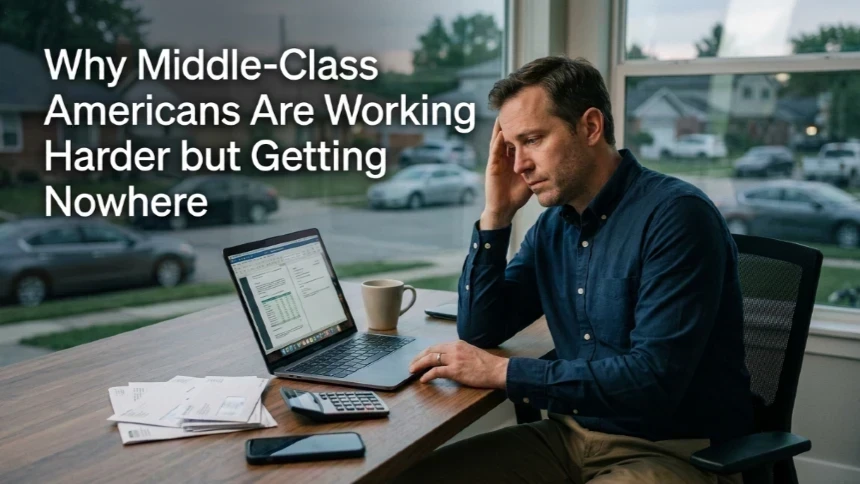
Why are middle-class Americans struggling to get ahead when so many are working harder than ever? Because the problem is often bigger than one bad financial decision. You can have a steady paycheck, pay your bills on time, avoid reckless spending, and still feel like your financial life is standing still.
That feeling can be deeply confusing. You may look around and think, I should be doing better than this. You work. You plan. You try to be responsible. Yet somehow the money disappears into housing, groceries, insurance, transportation, subscriptions, debt payments, and the dozens of small expenses that make modern life feel expensive from every direction.
And there is another layer that rarely gets discussed: mental fatigue. When you are functioning but not okay, money decisions become harder. You postpone the budget. You ignore the bank balance. You tell yourself you will deal with everything next month.
The truth is that many middle-class households are not failing. They are operating inside a system that demands more decisions, more spending, and more emotional energy than people realize.
The Middle-Class Squeeze Is More Than a Money Problem
The first thing to understand is simple: being middle class does not automatically mean feeling financially comfortable. Income can look respectable on paper while disposable income feels surprisingly small in real life.
Housing is one of the clearest examples. A mortgage or rent payment can consume a large portion of a household's monthly income before groceries, utilities, insurance, transportation, healthcare, and other necessities even enter the picture. Then there are the expenses that arrive irregularly but predictably: car repairs, medical bills, school costs, home maintenance, annual fees, and family emergencies.
As a result, many people experience what feels like a permanent financial squeeze. There is enough money to survive, but not enough breathing room to feel safe.
When a bigger paycheck changes less than expected
One of the most frustrating parts of modern personal finance is that a raise does not always create the emotional relief people expect. Income rises, but expenses rise too. A better apartment, a newer car, higher insurance premiums, more expensive groceries, or additional family responsibilities can quietly absorb the difference.
This is known as lifestyle inflation, but the phrase can make the situation sound like a personal failure. Sometimes it is not about luxury at all. Sometimes the higher cost simply reflects the cost of living a normal life.
For households trying to understand where their money is going, a simple tool such as the YNAB budgeting app can provide a clearer picture of what income is actually doing each month. The value is not in creating a perfect budget. It is in making invisible decisions visible.
Moreover, visibility can reduce anxiety. When you know which expenses are fixed, which are flexible, and which are quietly draining your cash flow, you can finally stop treating every financial problem as one giant emergency.
Why Financial Stress Feels So Exhausting
Money stress does not stay inside your bank account. It follows you into your mornings, your workday, your relationships, and your sleep.
You might be answering emails while mentally calculating whether the credit card payment will clear. You might be cooking dinner while remembering that the car needs maintenance. You might be lying in bed at night thinking about a bill you have not even received yet.
This is mental overload, and it changes how people behave with money.
When the brain is tired, complicated decisions feel heavier. Instead of comparing insurance options, reviewing subscriptions, or analyzing spending patterns, you may choose the fastest solution. Sometimes that means putting something on a credit card. Sometimes it means ordering takeout because cooking feels impossible. Sometimes it means avoiding the entire subject.
None of this means you lack discipline.
It means you are human.
Functioning is not the same as feeling okay
There is a particular kind of burnout that looks deceptively successful from the outside. You go to work. You take care of your family. You pay the bills. You answer messages. You keep appointments. You appear responsible.
Inside, however, you feel permanently behind.
That emotional contradiction matters because financial progress requires attention. If every spare ounce of energy is spent simply keeping life moving, long-term planning gets pushed to tomorrow.
That is why a small wellness habit can indirectly support better financial decisions. Something as simple as using the Hatch Restore 3 to create a more consistent evening routine may seem unrelated to money, but sleep and mental recovery can make it easier to approach difficult decisions with a clearer head.
In other words, financial health is not completely separate from everyday wellbeing. A person running on exhaustion has fewer resources available for thoughtful planning.
The Silent Expenses That Keep Middle-Class Families Stuck
Sometimes the problem is not one enormous expense. It is the accumulation of ordinary expenses that never seem individually important.
Recurring subscriptions you rarely use
Convenience spending during exhausting weeks
Credit card interest that compounds quietly
Insurance premiums that have not been reviewed in years
Food waste and unplanned grocery purchases
Small purchases made to relieve stress
Fees, memberships, and forgotten annual charges
Buy-now-pay-later balances spread across multiple purchases
None of these automatically makes someone irresponsible. In fact, many are symptoms of a life that has become too complicated.
The danger is that invisible spending creates invisible pressure. You may not remember the individual transactions, but your checking account remembers every one of them.
The emotional spending loop
There is another uncomfortable truth: sometimes spending is not really about the thing being purchased.
It can be about relief.
A stressful day creates the desire for convenience. A difficult week creates the desire for comfort. Feeling deprived creates the desire for a reward. Then the purchase provides a brief emotional lift, followed by guilt when the statement arrives.
That cycle can become particularly powerful when someone is already mentally exhausted.
A better response is not to declare war on every small pleasure. That approach usually fails because extreme restriction creates its own rebound effect. Instead, identify which purchases genuinely improve your life and which ones are mostly attempts to escape an uncomfortable feeling.
That distinction can change everything.
A simple journal such as the Five Minute Journal can also be used as a low-pressure reflection tool, not as a financial product but as a way to notice patterns between mood, stress, and spending. Awareness comes before change.
Why Saving Feels Impossible Even When You Know You Should
Saving money sounds simple until every dollar already has a job.
For many households, the issue is not that they do not understand the importance of an emergency fund. They understand it perfectly. The problem is that saving feels like competing with immediate needs.
If your car needs new tires, your child needs something for school, and your insurance bill is due next week, putting money into savings can feel almost irresponsible.
This is why the traditional advice to simply save more can feel disconnected from reality.
Start with a system instead of motivation
One of the most useful shifts is to stop asking, How can I become more disciplined? and start asking, How can I make the right action easier?
Automating even a modest transfer after payday can remove one decision from your week. Keeping a separate emergency savings account can reduce the temptation to treat savings as available spending money. Setting specific goals can make the sacrifice feel tangible.
For example, instead of saying, “I need to save more,” define a first target such as $500, then $1,000, and eventually enough to cover several months of essential expenses.
The first goal is not perfection. It is creating evidence that your financial situation can change.
Credit Card Debt Can Make Progress Feel Like a Mirage
Credit cards are especially frustrating because they can make today's budget look manageable while quietly making tomorrow more expensive.
High-interest debt can consume money that could otherwise become savings. You may make the required payment every month and still feel as though the balance barely moves.
This creates a psychological trap. Because progress is slow, motivation disappears. Because motivation disappears, the debt remains. Then another unexpected expense pushes the balance higher.
The solution starts with clarity. List every balance, interest rate, minimum payment, and due date. Once everything is visible, choose a repayment strategy that fits your situation, whether that means prioritizing the highest interest rate or focusing on the smallest balance for quicker psychological wins.
Most importantly, do not confuse a slow process with a failed process.
Paying down debt is often boring. It rarely produces an exciting before-and-after moment. But month after month, the numbers can move in the right direction.
The Middle-Class Reset: What Actually Helps
If you feel like you are constantly working but never getting ahead, you do not necessarily need a completely new life. You may need a financial reset.
Calculate your true monthly baseline. Separate essential expenses from flexible spending and irregular costs.
Find your biggest pressure points. Focus on housing, transportation, debt, insurance, and recurring expenses before obsessing over tiny purchases.
Create a small emergency buffer. Even a modest cash reserve can reduce the need to reach for credit when something unexpected happens.
Automate one positive behavior. A recurring savings transfer is often more reliable than trying to remember every month.
Review your financial life once a week. A 15-minute check-in can prevent small problems from becoming overwhelming.
Protect your mental energy. Financial planning works better when it is treated as a routine rather than an emergency.
That last point deserves more attention. You do not need to think about money all day to become better with money. In fact, constantly worrying about money can make clear decision-making harder.
You Are Not Behind Just Because You Feel Behind
This may be the most important part of the conversation.
There is enormous pressure to believe that everyone else has figured life out. Social media makes financial progress look effortless. Someone is buying a house. Someone is investing aggressively. Someone is taking expensive vacations. Someone is announcing a new business.
You see the highlight reel while living inside your own behind-the-scenes reality.
That comparison can create shame, and shame rarely produces good financial decisions.
If you are working hard, carrying responsibilities, feeling mentally exhausted, and wondering why your paycheck does not create the security you expected, you are not alone.
The answer is not always to work harder.
Sometimes the answer is to make your financial life simpler.
Fewer decisions. Fewer leaks. Fewer unnecessary obligations. More automation. More visibility. More intentionality.
That shift can feel surprisingly powerful because it replaces the exhausting question, Why can't I get ahead? with a much more useful question: What is actually standing between my income and the life I want?
Getting Ahead Starts With One Honest Look
Middle-class Americans are struggling to get ahead for many different reasons, and there is no single solution that works for every household. Rising costs, debt, housing, family responsibilities, lifestyle inflation, and emotional exhaustion can all interact.
But you do not have to solve everything at once.
Start with one honest look at your numbers. Find the expense that creates the most pressure. Identify one habit that is costing more than it is giving back. Automate one small financial win. Then repeat.
Progress often feels invisible while it is happening.
One month of better decisions may not look dramatic. Six months can feel different. A year can look completely different.
Stop waiting for the month when everything magically gets easier. Take 15 minutes today, open your accounts, write down your essential expenses, identify your biggest financial pressure, and choose one action you can automate or change. Your future does not need a perfect version of you. It needs a version of you willing to start.
Getting ahead is not about proving that you are disciplined enough, wealthy enough, or successful enough. It is about creating enough clarity and breathing room that your money starts supporting your life instead of constantly demanding your attention.
And sometimes, that is where the reset finally begins.
Frequently Asked Questions
Why are middle-class Americans struggling to get ahead despite earning a decent income?
Because earning a decent income does not guarantee financial breathing room. Housing, healthcare, groceries, insurance, transportation, childcare, taxes, and debt can consume most of a paycheck before meaningful savings begin. Many households are not necessarily spending recklessly—they simply have less room between income and essential expenses than they expected.
Why does making more money sometimes not improve financial security?
A higher income can disappear surprisingly quickly when expenses rise alongside it. Lifestyle inflation, larger housing payments, expensive cars, higher insurance costs, and increased family responsibilities can absorb a raise. Without deliberately protecting part of the additional income, earning more may improve your lifestyle without improving your financial security.
Are middle-class Americans struggling because they are bad with money?
Not always. Financial behavior matters, but it is too simplistic to blame every struggle on poor money management. Rising essential costs, debt, housing expenses, and economic uncertainty can put significant pressure on responsible households. Sometimes the issue is not a lack of discipline—it is a lack of financial margin.
How does mental fatigue affect your finances?
Mental fatigue can make even simple financial decisions feel exhausting. When you are constantly overwhelmed, you may postpone budgeting, ignore account balances, rely on convenience spending, or use credit to avoid dealing with an immediate problem. Over time, emotional exhaustion can become an invisible financial expense.
What is the biggest financial mistake middle-class families make?
One of the biggest mistakes is assuming that a stable income automatically means financial stability. A household can have a good salary and still have no emergency fund, significant credit card debt, or enough monthly cash flow to handle unexpected expenses. Income matters, but what you keep and how you structure it matters just as much.
How can I start getting ahead financially if I feel completely overwhelmed?
Start smaller than you think. Look at your current income, essential expenses, debt, and savings. Identify the single expense or financial problem creating the most pressure and address that first. You do not need to rebuild your entire financial life in one weekend. You need one clear decision that creates momentum.
Why does credit card debt keep people financially stuck?
High-interest credit card debt can consume money that could otherwise go toward savings, investing, or financial goals. Even when you make every payment on time, interest can slow your progress dramatically. Reducing expensive debt can create financial breathing room and make future income more effective.
Can small money habits really change your financial future?
Yes, especially when they become automatic. Saving a manageable amount every payday, reviewing recurring expenses, limiting unnecessary debt, and checking your finances regularly may not feel dramatic. But repeated consistently, these habits can create thousands of dollars in difference over time.
Why do I feel financially behind even though I work hard and pay my bills?
Because financial progress is not always visible. You can be responsible and still feel exhausted when most of your income goes toward maintaining your current life. Social media also makes other people's financial progress look easier than it really is. Feeling behind does not automatically mean you are failing.
What is the fastest way to regain control of my money?
Stop trying to fix everything simultaneously. Get clear on your numbers, identify your biggest financial leak, protect a small emergency fund, and create an automatic system for saving or debt repayment. The goal is not perfection. The goal is to make your next financial decision easier than your last one.
Continue Building Your Financial Clarity
Now that you understand why money anxiety doesn’t go away even when you earn more, the next step is learning how to build a healthier and more peaceful relationship with your money.
You don’t need to fix everything at once.
Start with one small change — one habit, one tool, or one moment of awareness — and observe how your financial mindset begins to shift over time.
You may also like:
👉 The Truth About Money Discipline No One Talks About)
👉 You Don’t Have a Money Problem — You Have a Behavior Pattern
👉 Why You Struggle With Money Even When You Know What To Do
👉 You're Not Bad with Money: You're Repeating Patterns