





Paying off debt feels impossible when you are mentally exhausted, emotionally overwhelmed, and making payments that seem to disappear the moment they leave your bank account. You may be working hard, paying bills on time, cutting back where you can, and still wondering why the balance barely moves. That feeling is not a character flaw. It is what happens when a financial problem becomes a constant mental background noise.Maybe you check your credit card balance before buying groceries. Maybe you avoid opening certain emails. Maybe you promise yourself that next month will be different, only to reach the end of the month feeling like you somehow spent an entire paycheck without creating any real breathing room.And there is another part people rarely talk about: you can be functioning and still not be okay.You can go to work, take care of your family, answer messages, make dinner, meet deadlines, and look completely fine from the outside while privately feeling financially trapped. Debt does not only affect your bank account. It can occupy your attention, interrupt your sleep, and make even small purchases feel emotionally loaded.The good news is that paying off debt does not require becoming a completely different person overnight. You need a strategy that works with your real life, especially when your mental energy is already limited.
Why Paying Off Debt Feels Impossible in the First Place
The first thing to understand is simple: debt can create a psychological loop that makes action harder precisely when action matters most.
When you owe money, your brain tends to focus on the size of the problem. A $12,000 balance can feel enormous. A $20,000 balance can feel almost abstract. Instead of seeing individual decisions, you see one giant financial mountain.
That creates mental fatigue. And mental fatigue changes how we make decisions.
You may start avoiding your budget because looking at it feels stressful. You may spend a little for comfort because you desperately need something that feels good. Then guilt arrives. The guilt creates more stress. The stress makes planning harder. Eventually, you feel as though you are constantly thinking about money without actually improving your situation.
This is why debt repayment is not purely a math problem. It is also an attention problem, an emotional problem, and sometimes a burnout problem.
The minimum payment illusion
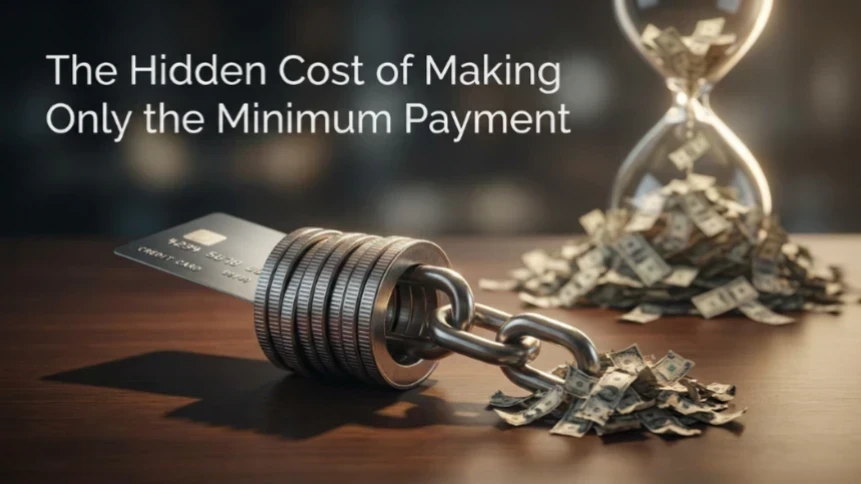
Credit card minimum payments can create one of the most frustrating experiences in personal finance: you are paying money every month, yet the balance barely changes.
The payment is real. The effort is real. But interest can absorb a meaningful portion of what you send to the lender. As a result, your brain does not receive the satisfying signal of progress it expects.
That is why simply telling yourself to try harder often fails. You do not necessarily need more discipline. You need a system that makes progress easier to see.
A simple tool such as a YNAB Budgeting App can help some people give every dollar a specific purpose and make upcoming expenses more visible. The point is not the app itself. The point is reducing the number of financial decisions you have to make while you are already mentally tired.
You are not lazy because you feel overwhelmed
There is a dangerous belief that people with debt simply need to stop buying unnecessary things and become more responsible. Sometimes spending does need to change. But that explanation is incomplete.
Modern life is expensive, distracting, and exhausting. Housing, food, transportation, insurance, childcare, subscriptions, emergencies, and unexpected bills can compete for the same limited paycheck. When your financial margin is tiny, one inconvenient expense can undo weeks of progress.
So before you create an extreme repayment plan, recognize what is actually happening. You may not need punishment. You may need clarity.
The Strategy That Makes Debt Feel Smaller
The most powerful shift is to stop treating all of your debt as one enormous problem. Turn it into a sequence of smaller decisions.
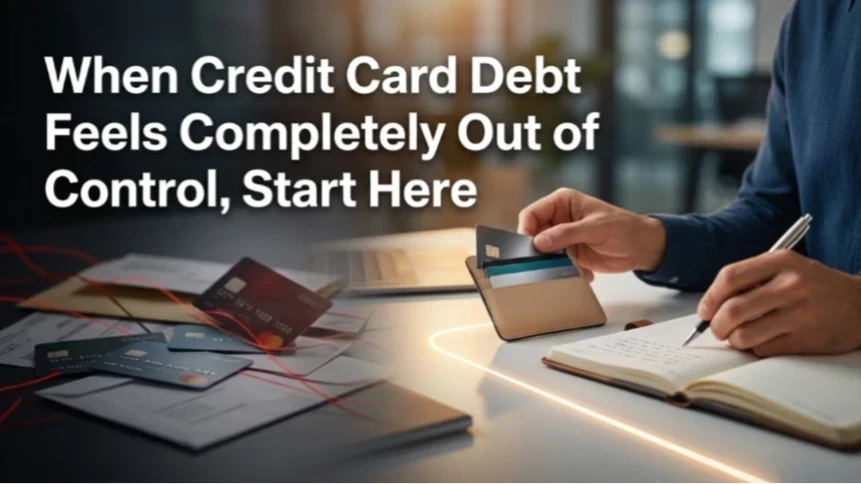
Start by writing down every debt in one place. Include the current balance, interest rate, minimum payment, and due date. Do not estimate. Use the actual numbers.
Seeing everything together may feel uncomfortable for a few minutes, but uncertainty is often more stressful than a difficult number. Once the information is visible, you can finally make decisions based on reality.
Step 1: Protect your basic financial stability
Before aggressively attacking debt, make sure essential expenses are covered. Housing, utilities, food, transportation, insurance, and other necessary obligations come first.
Also make the minimum payment on each debt according to your obligations. Missing payments can create additional fees, damage your credit history, and make an already difficult situation more expensive.
Step 2: Choose one debt as your target
This is where the strategy becomes psychologically powerful.
Instead of sending random extra payments across several balances, choose one debt to attack with any available extra money while continuing minimum payments on the others.
You generally have two popular approaches.
Debt avalanche: prioritize the debt with the highest interest rate first. This can reduce the amount of interest you pay over time.
Debt snowball: prioritize the smallest balance first. This can create faster emotional wins and may help you stay motivated.
Neither method is magic. The better strategy is the one you can realistically maintain. A mathematically efficient plan that you abandon after three weeks is less useful than a slightly different plan that you follow consistently for a year.
Step 3: Create a visible progress system
This part is surprisingly important.
Do not make your only measurement the total amount of debt remaining. That number may move slowly, especially at the beginning.
Instead, track smaller victories: the first $100 paid off, the first account reduced by 25 percent, the first month without adding new credit card debt, or the first week you successfully followed your spending plan.
Your brain needs evidence that your actions matter. Visible progress creates that evidence.
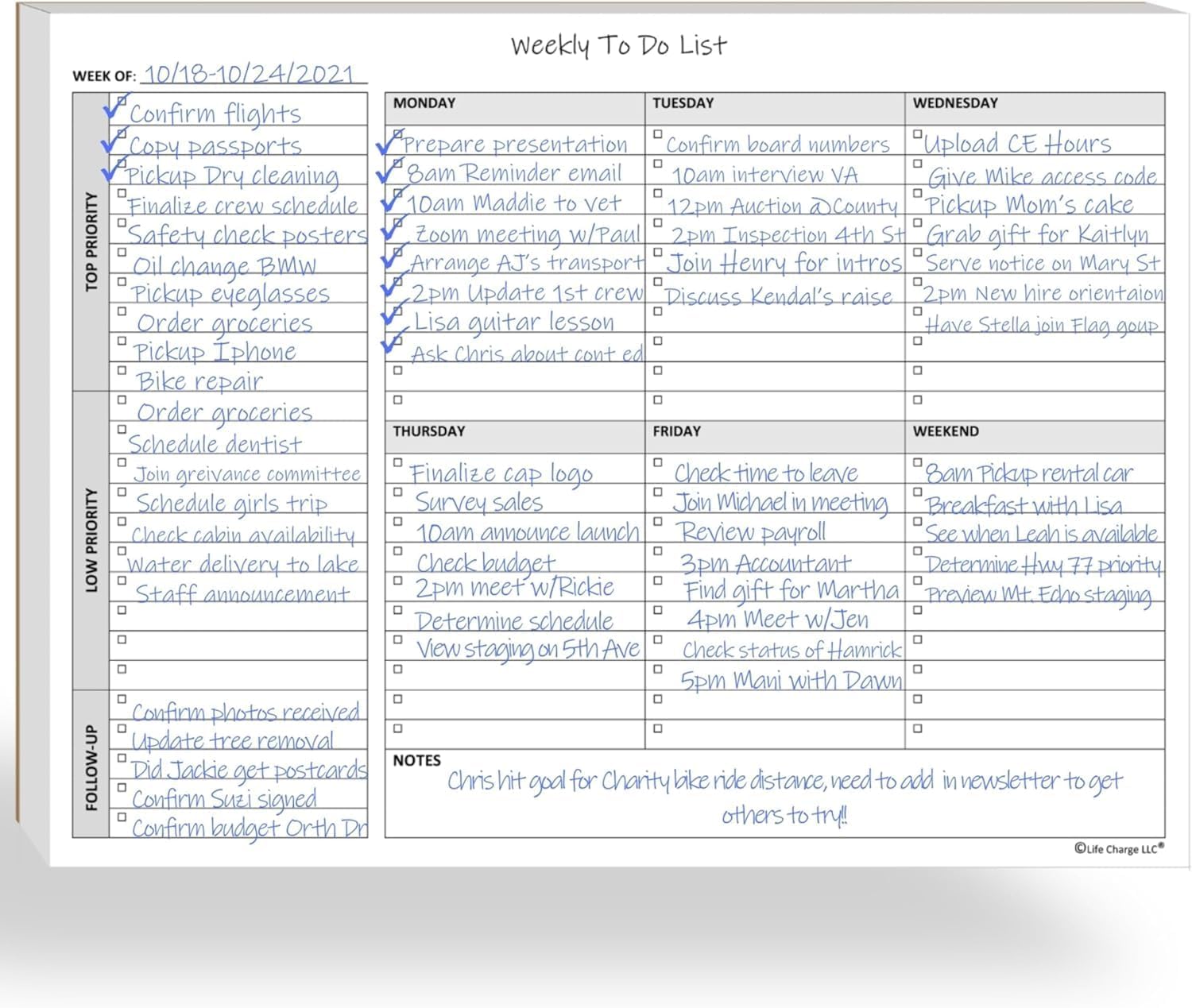
A simple Erin Condren Budget Planner or another physical money planner can be useful if writing things down feels more satisfying than checking an app. For someone experiencing mental overload, a paper system can also create a small moment of separation between financial planning and the endless notifications of daily life.
What to Do When You Are Functioning but Financially Burned Out
There is a point where financial advice can become another source of pressure. If every article tells you to optimize every dollar, track every purchase, start a side hustle, invest, meal prep, refinance, negotiate bills, and never spend money on yourself, your brain may simply shut down.
You do not need another full-time job managing your personal finances.
You need a repeatable routine that is small enough to survive difficult weeks.
Create a 15-minute money reset
Once a week, set aside 15 minutes. Not an entire Sunday afternoon. Not a complicated spreadsheet session. Just 15 focused minutes.
Check your current account balances.
Look at upcoming bills.
Review your debt target.
Check whether you added new debt.
Choose one financial action for the coming week.
That final step matters. Choose only one.
Maybe you will cancel a subscription. Maybe you will move $25 toward your target debt. Maybe you will call a service provider and ask about a lower bill. Maybe you will plan three inexpensive meals before grocery shopping.
Small actions can look insignificant when you are staring at a five-figure balance. But consistency is where their power appears.
Stop using exhaustion as evidence that you are failing
Debt repayment can take months or years. There will be weeks when you feel motivated and weeks when you do not. There will be unexpected expenses. There may be birthdays, repairs, medical bills, travel, or moments when you simply need something that makes life feel human again.
That does not mean the plan failed.
A sustainable debt strategy has room for imperfect months. The goal is not to prove that you can suffer the longest. The goal is to create a financial life that becomes more stable over time.
If money worries are keeping you awake, a simple Hatch Restore sleep routine can be a helpful example of separating nighttime recovery from financial problem-solving. You do not need to solve your debt at 1 a.m. Your brain deserves a boundary.
The Hidden Shift: Make Your Future Self Easier to Help
One of the most important changes is moving from reactive money decisions to predetermined decisions.
When every financial choice has to be made in the moment, your tired self has to negotiate with your stressed self. That is exhausting.
Instead, automate what you can. Schedule minimum payments. Set a recurring transfer toward your debt when your cash flow allows it. Create reminders for bills. Keep your debt target visible.
The purpose of automation is not perfection. It is reducing friction.
Think about the difference between saying, I need to remember to pay this every month, and knowing the payment is already scheduled. One requires repeated mental effort. The other removes a decision.
Give your money a job before your emotions give it one
This does not mean eliminating every enjoyable purchase. In fact, an overly restrictive plan can backfire.
If your budget contains nothing for enjoyment, convenience, or personal needs, eventually you may feel deprived and rebel against the entire system. A small, intentional spending category can be more sustainable than pretending you will never want a coffee, dinner out, hobby, or small comfort again.
The question is not whether you spend money. The better question is whether your spending is supporting the life you actually want.
What Progress Really Looks Like
Debt freedom rarely arrives with a dramatic movie moment. More often, it looks boring at first.
You stop adding to one credit card. Then the balance drops by $300. Then another $500. One account eventually reaches zero. Suddenly, the minimum payment you were sending there becomes available for the next target.
That is where momentum begins.
The first victory may not feel life-changing. But psychologically, it changes the story you are telling yourself.
You go from I can never get out of this to I paid off one account.
Then I reduced another balance.
Then I went three months without adding new debt.
Those statements are evidence. And evidence is more powerful than positive thinking alone.
The goal is not just a lower balance
Ultimately, paying off debt is about buying back options.
A lower monthly debt burden can create more room for savings. Savings can make emergencies less frightening. A stronger cash buffer can reduce the temptation to reach for a credit card. Less debt can create more flexibility when an opportunity appears.
In other words, the real reward is not simply seeing a zero on a statement. It is waking up one day and realizing that money is no longer taking up every available corner of your mind.
You may sleep better. You may stop avoiding your bank account. You may finally make plans without calculating which credit card will absorb the next expense.
That is why the strategy matters.
A Simple Debt Payoff Plan You Can Start This Week
If everything above feels like too much, make it smaller. You can begin with five decisions.
Write down every debt. Stop guessing and get the real numbers.
Pay every required minimum. Protect your accounts and avoid unnecessary damage.
Choose one target debt. Use the avalanche or snowball approach.
Send extra money to that target. Even small amounts count when repeated.
Track every milestone. Give your brain visible proof that you are moving forward.
Then repeat the process next week.
Not perfectly. Not dramatically. Just consistently.
If you are emotionally exhausted, remember this: you do not have to fix your entire financial life today. You only need to make the next useful decision.
Stop waiting for the perfect month to take control. Open your accounts, write down the numbers, choose one debt, and make your first intentional move today. Your debt may not disappear overnight, but your feeling of helplessness can start disappearing the moment you replace confusion with a plan.
Paying off debt feels impossible when you are carrying the entire problem in your head at once. Break it down. Protect your essentials. Choose one target. Make progress visible. Build routines that work even when you are tired.
Most importantly, do not confuse being overwhelmed with being incapable.
You can be tired and still make progress. You can have made mistakes and still change direction. You can be behind where you hoped to be and still build a completely different financial future.
The reset does not begin when you finally feel confident. It begins when you decide that your next small action is worth taking.
FAQ: Paying Off Debt When It Feels Impossible
Why does paying off debt feel impossible even when I keep making payments?
Because making payments is not always the same as making noticeable progress. High interest rates, minimum payments, multiple balances, and new expenses can make your balance barely move. Add financial anxiety and mental fatigue, and debt can start feeling like a problem you will never escape. The answer is not more shame—it is a repayment system that makes progress visible.
What is the smartest strategy for paying off debt?
Start by listing every debt, including the balance, interest rate, minimum payment, and due date. Continue making required minimum payments on all accounts, then direct your extra money toward one target debt. The avalanche method prioritizes the highest interest rate, while the snowball method targets the smallest balance first. The best strategy is the one you can actually maintain.
Should I pay off credit card debt before building savings?
Not necessarily. Having no emergency cushion can force you to rely on your credit cards again when an unexpected expense appears. A small emergency fund can provide breathing room while you work aggressively on high-interest debt. The goal is to break the cycle of paying off debt only to create new debt when life happens.
What if I am making payments but my debt keeps growing?
That is an important warning sign. If your balance continues increasing, your current repayment strategy may not be addressing the underlying problem. Review your interest rates, spending, recurring expenses, and whether you are still using credit to cover everyday costs. You may need to reduce expenses, increase income, negotiate certain bills, or seek guidance from a qualified financial professional.
How can I pay off debt when I am completely mentally exhausted?
Make the process smaller. You do not need to spend an entire weekend rebuilding your financial life. Create a simple 15-minute weekly money routine: check your balances, review upcoming bills, confirm your debt target, and choose one action for the week. When you are experiencing burnout or mental overload, a simple system you repeat is far more useful than a perfect system you abandon.
Is the debt snowball actually better than the debt avalanche?
It depends on what keeps you moving. The avalanche can save more interest by attacking the highest-rate debt first. The snowball can create faster wins by eliminating smaller balances first. If motivation is your biggest obstacle, seeing an account reach zero can be incredibly powerful. If minimizing interest is your priority and you can stay committed, the avalanche may make more sense.
How do I stop feeling ashamed about being in debt?
Remember that your debt balance is a financial number, not a measure of your worth. People can fall into debt because of emergencies, income changes, unexpected expenses, high living costs, or years of difficult circumstances. Shame keeps you focused on the past. A clear plan moves your attention toward the future. You do not need to punish yourself to become better with money.
How long does it realistically take to become debt-free?
There is no universal timeline. It depends on your total debt, interest rates, income, expenses, and how much you can consistently pay above the minimums. Instead of obsessing over a distant debt-free date, focus on the next milestone. Your first $500 reduction, first paid-off account, or first month without adding new debt can be meaningful evidence that your situation is changing.
How do I stay motivated when debt payoff takes years?
Stop expecting yourself to feel motivated every day. Motivation comes and goes. Your system is what keeps you moving when motivation disappears. Track your progress visually, celebrate legitimate milestones without creating new debt, automate payments when possible, and remind yourself what becoming debt-free will give you: more flexibility, fewer monthly obligations, and less financial pressure.
Can paying off debt really help with money anxiety?
Yes, although debt repayment alone may not solve every source of financial stress. Reducing balances can lower interest costs and eventually free up money in your monthly budget. More importantly, having a clear plan can replace some of the uncertainty that fuels financial anxiety. You may still have difficult days, but you are no longer facing the problem without a direction.
What should I do today if I feel completely trapped by debt?
Do not try to solve your entire financial life today. Open your accounts, write down exactly what you owe, and choose one debt to prioritize. Then make the next realistic payment or financial adjustment you can afford. The first victory is not becoming debt-free overnight. The first victory is replacing helplessness with a plan.
What is the biggest mistake people make when trying to get out of debt?
Trying to change everything at once. Extreme budgets, unrealistic spending restrictions, and unsustainable repayment targets can create a cycle of motivation, exhaustion, and giving up. A better approach is to build a strategy that works during ordinary life—not just during the weeks when you feel highly motivated. Debt freedom is built through repeatable decisions, not financial perfection.
Continue Building Your Financial Clarity
Now that you understand why money anxiety doesn’t go away even when you earn more, the next step is learning how to build a healthier and more peaceful relationship with your money.
You don’t need to fix everything at once.
Start with one small change — one habit, one tool, or one moment of awareness — and observe how your financial mindset begins to shift over time.
You may also like:
👉 The Truth About Money Discipline No One Talks About)
👉 You Don’t Have a Money Problem — You Have a Behavior Pattern
👉 Why You Struggle With Money Even When You Know What To Do
👉 You're Not Bad with Money: You're Repeating Patterns