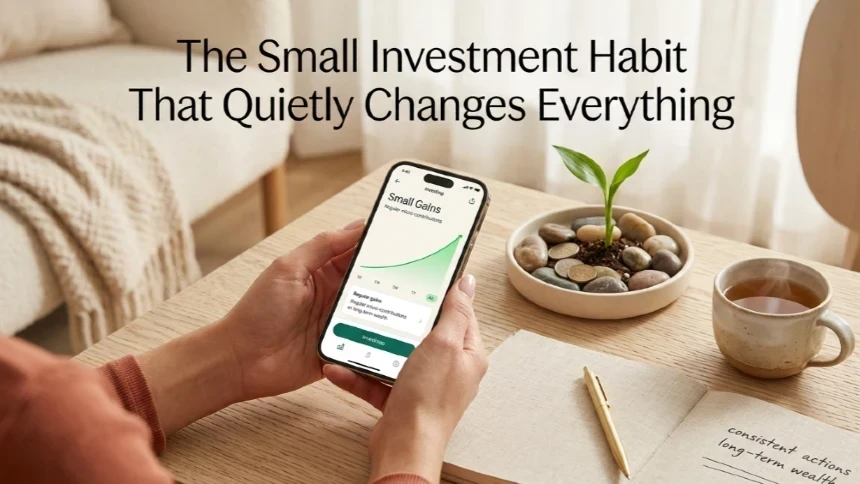





If you've been searching for how to start investing with little money, there's a good chance you've been carrying a quiet belief for years: that investing is something other people do. People with six-figure salaries. People who understand Wall Street. People who somehow have everything figured out.
But here's the hidden truth. Most successful investors didn't begin with huge portfolios. They started with uncertainty, small amounts of money, and one decision to stop waiting.
If you've been feeling emotionally overwhelmed, mentally exhausted, or stuck in survival mode, you're not alone. Modern life has normalized burnout. Many people are functioning every day while silently feeling like they're falling behind. Financial stress only amplifies that feeling.
The good news is that building wealth doesn't begin when you have more money. It begins when you create a healthier relationship with the money you already have.
How to Start Investing With Little Money Without Feeling Overwhelmed
The biggest obstacle isn't your bank balance. It's the belief that small actions don't matter.
Many beginners delay investing because they think waiting until they can invest thousands will somehow make everything easier. Ironically, waiting often costs far more than starting small because compound growth depends on time, not perfection.
Instead of asking whether $20 or $50 is enough, ask yourself a different question: what happens if I wait another five years?
That small mental shift changes everything.
Moreover, investing shouldn't create additional stress. It should reduce future stress by giving your money a purpose.
Many new investors also find that tracking their progress inside a simple journal creates clarity. A tool like the Five Minute Journal can help establish mindful financial habits by encouraging consistent reflection alongside investing goals.
Focus on building the habit first
Your first investment isn't about becoming rich overnight. It's about proving to yourself that you can become someone who invests consistently.
Automate small monthly contributions.
Ignore daily market headlines.
Celebrate consistency instead of account size.
Think in years instead of weeks.
In other words, your behavior predicts your future more accurately than your starting balance.
Why Emotional Burnout Makes Investing Feel Impossible
Money decisions are rarely just about money.
When you're mentally fatigued, every financial decision feels heavier than it actually is. You postpone learning. You avoid checking accounts. You promise yourself you'll start next month.
That pattern isn't laziness. It's emotional overload.
Modern life constantly demands attention. Notifications, bills, work deadlines, family responsibilities, and endless comparison through social media leave very little mental space for long-term planning.
As a result, investing feels like another complicated task rather than a tool that creates freedom.
Recognizing this changes the conversation completely.
Create a system instead of relying on motivation
Motivation disappears. Systems remain.
Choose one day each month when money automatically moves into an investment account. Remove as many decisions as possible.
Likewise, reducing mental clutter helps maintain consistency. Some beginners use the Kindle Paperwhite to read personal finance books without distractions, making learning feel calmer and more approachable.
Remember that you don't need perfect knowledge before you begin. You simply need enough understanding to take the first step.
For more practical budgeting strategies, explore our guide on creating a realistic monthly budget that supports long-term investing goals.
The Simplest Beginner Investment Strategy That Actually Works
If investing seems confusing, simplify it.
Most successful long-term investors don't spend hours picking stocks every week. Instead, they invest consistently into diversified index funds or ETFs that track the overall market.
This approach removes much of the emotional pressure.
Instead of wondering which company will become the next superstar, you invest in hundreds or thousands of businesses simultaneously.
Historically, diversified investing has rewarded patient investors who stayed invested through market ups and downs.
Keep your investment process simple
Create an emergency fund first.
Pay off high-interest debt whenever possible.
Open a beginner-friendly brokerage account.
Choose diversified index funds.
Invest automatically every month.
Leave your investments alone.
That's it.
The simpler your strategy becomes, the easier it is to stay consistent during difficult markets.
If you enjoy organizing goals visually, the Rocketbook Smart Notebook offers a practical way to track financial milestones while reducing paper clutter.
Small Investments Become Big Through Time
One of the biggest surprises for beginners is realizing that time often matters more than the amount invested.
Someone investing modest amounts consistently for decades can outperform someone who waits years before investing large sums.
This happens because compound growth rewards patience.
Every dollar invested today has more opportunities to generate future returns than a dollar invested years later.
That said, consistency only works if you stay invested.
Markets rise. Markets fall. Headlines become dramatic.
Yet history repeatedly shows that disciplined long-term investors are usually rewarded for ignoring short-term noise.
Don't compare your beginning to someone else's middle
Comparison quietly destroys financial confidence.
You might see people discussing six-figure portfolios online while you're investing only $25.
What you don't see are the years of consistent contributions that happened before those screenshots.
Your timeline is different.
Your goal isn't to impress strangers. It's to create freedom for your future self.
Common Mistakes That Keep Beginners Stuck
Understanding what not to do can save years of frustration.
Waiting until you have more money.
Trying to time the market perfectly.
Checking investments every day.
Following social media hype.
Investing without clear goals.
Stopping contributions during market declines.
Instead, focus on the habits you actually control.
Invest regularly.
Keep learning.
Stay patient.
Repeat.
The Quiet Financial Reset You May Need Right Now
If you've been functioning but not truly feeling okay, investing may represent something much deeper than growing money.
It can become proof that you're choosing your future despite today's uncertainty.
Every contribution says, 'I believe tomorrow matters.'
That emotional shift often becomes more valuable than the investment itself.
You don't need to know everything today.
You don't need perfect timing.
You don't need thousands of dollars.
You simply need to begin.
Continue exploring our beginner investing resources and our guide to building healthy financial habits to strengthen every step of your wealth-building journey.
Stop waiting for the perfect moment. Open your first investment account, automate your first contribution today—even if it's only a few dollars—and give your future self the opportunity to benefit from years of steady growth. The best time to start was years ago. The next best time is today.
Frequently Asked Questions
Can I start investing with only a small amount of money?
Yes. Many investment platforms let you begin with as little as $1 by purchasing fractional shares or low-cost index funds. The most important step is starting consistently, even with a small amount.
What is the best investment for beginners?
For most beginners, diversified index funds or ETFs are a great choice. They spread your money across many companies, helping reduce risk while providing long-term growth potential.
How much should I invest each month?
Invest an amount you can comfortably afford every month. Whether it's $25, $50, or $100, building a consistent investing habit is more valuable than making occasional large investments.
Is investing better than keeping money in a savings account?
Both have their purpose. A savings account is ideal for emergency funds and short-term goals, while investing is generally more effective for growing wealth over the long term because it offers higher potential returns.
How long should I keep my money invested?
Investing works best with a long-term mindset. While markets fluctuate in the short term, staying invested for at least five to ten years gives your investments more time to recover from downturns and benefit from compound growth.
What are the biggest mistakes new investors should avoid?
Common mistakes include waiting too long to start, trying to time the market, investing based on emotions, and chasing trending stocks. A simple, diversified strategy combined with consistent contributions is usually the most successful approach for beginners.
Continue Building Your Financial Clarity
Now that you understand why money anxiety doesn’t go away even when you earn more, the next step is learning how to build a healthier and more peaceful relationship with your money.
You don’t need to fix everything at once.
Start with one small change — one habit, one tool, or one moment of awareness — and observe how your financial mindset begins to shift over time.
You may also like:
👉 The Truth About Money Discipline No One Talks About)
👉 You Don’t Have a Money Problem — You Have a Behavior Pattern
👉 Why You Struggle With Money Even When You Know What To Do
👉 You're Not Bad with Money: You're Repeating Patterns